
ملعقة إلكترونية ميزان
وفر 54%! اشترِ ملعقة إلكترونية ميزان بسعر 159.36 د.ل فقط في ليبيا. متوفر حالياً،
🛒 تسوق الآن Libya Press
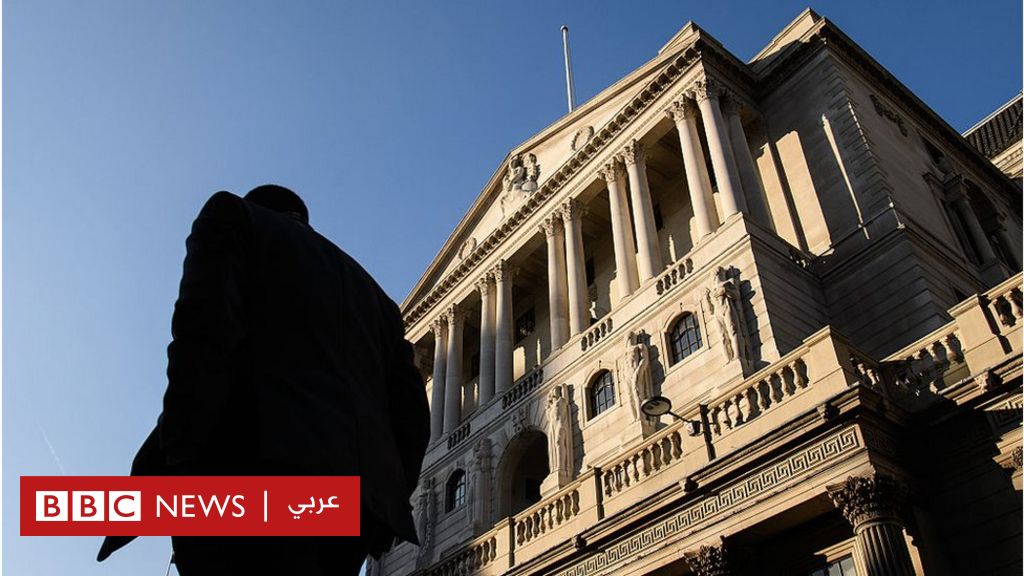
A senior Bank of England official has raised alarm that the central bank's shift toward publishing multiple alternative scenarios and individual member forecasts could undermine its ability to present a unified monetary policy vision to financial markets and the public.
Megan Greene, an external member of the Bank's Monetary Policy Committee, warned that the new communication approach — which replaced a single unified economic forecast with three alternative scenarios — risks creating confusion rather than clarity in an already uncertain economic environment.
In April 2026, the Bank of England made a significant methodological change. It abandoned its practice of publishing a single set of central economic projections. Instead, the MPC began releasing three alternative economic scenarios alongside individual explanations from each committee member about their own policy preferences and assumptions.
According to Greene, this structural shift in communication strategy carries real risks. "The move toward presenting multiple scenarios and individual views may weaken our ability to reach a collective unified vision," she stated. The concern is that markets, businesses, and households rely on a clear and coherent policy signal to make long-term financial decisions.
Financial analysts have noted that central bank communication is most effective when it provides a clear directional signal. When multiple competing scenarios are presented simultaneously without a hierarchy or probability weighting, markets struggle to price risk accurately.
Greene's warning comes at a particularly sensitive time. The World Bank recently projected that global economic growth could fall to just 1.6 percent in 2026, driven by the Middle East conflict, an ongoing energy crisis, and persistent supply chain disruptions. A worse-case scenario could see even sharper declines.
"In an environment where the baseline outlook is already fragile, adding multiple unweighted scenarios without a clear central narrative risks amplifying uncertainty rather than managing it," Greene explained.
The Bank's shift reflects a wider debate within the global central banking community about the right balance between transparency and clarity. Proponents of the new approach argue that presenting multiple scenarios honestly reflects the genuine uncertainty in the economic outlook and avoids the false precision that single-point forecasts can imply.
Critics, however, contend that too much information can be as damaging as too little. When every MPC member publishes individual assumptions and preferred policy paths, the public signal becomes fragmented, making it harder for businesses and consumers to plan ahead with confidence.
For Libya and the broader North African region, the Bank of England's communication shift carries indirect but meaningful implications. Libya's economy remains heavily dependent on global oil markets and international financial conditions. When major central banks send mixed signals, it increases volatility in global capital flows that directly affect oil prices and investment confidence in emerging markets.
Libyan businesses and policymakers closely monitor signals from the Bank of England, the Federal Reserve, and the European Central Bank, as these institutions set the tone for global borrowing costs and risk appetite. Any fragmentation in their communication could add another layer of uncertainty to an already challenging economic environment for the region.
The Bank of England faces a difficult path forward. It must balance the intellectual honesty of acknowledging deep economic uncertainty with the practical need to provide markets and the public with a coherent policy framework.
Greene's intervention signals that the debate within the MPC itself is far from settled. As global economic headwinds intensify, the pressure on central banks to communicate with both precision and transparency will only grow. The coming months will test whether the Bank's new approach strengthens credibility or deepens the fog of uncertainty.
— LibyaPress / Economy Desk
===END_ENGLISH===