
معقم للقدمين بزيت شجرة الشاي
وفر 27%! اشترِ معقم للقدمين بزيت شجرة الشاي بسعر 166.08 د.ل فقط في ليبيا. متوفر
🛒 تسوق الآن Libya Press
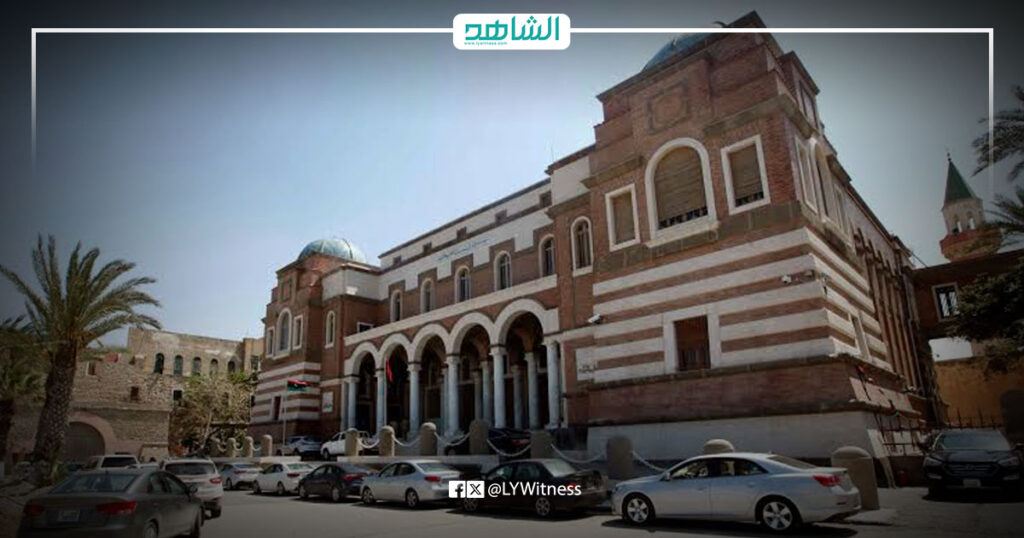
The Central Bank of Libya (CBL) has issued an urgent warning that the government’s wage bill could exceed available budget allocations by the end of the 2026 fiscal year, creating a projected 40% deficit in dedicated wage funding. The alert, confirmed in a statement released yesterday, has reignited concerns over the sustainability of public finances amid persistent inflation and a weakening dinar.
According to CBL data, public sector wages currently absorb 68% of the annual budget — up from 62% in 2025 — while oil revenue, the nation’s primary income source, has declined by 12% year-on-year due to production disruptions and global price volatility.
The warning follows a series of internal assessments conducted by the CBL’s Fiscal Monitoring Unit and shared with international partners, including the International Monetary Fund (IMF). In its latest Staff Concluding Statement (April 2026), the IMF noted that “without fiscal discipline, measures by the Central Bank of Libya (CBL) to contain exchange rate pressures can only provide temporary relief.”
Meanwhile, the World Bank’s 2026 Economic Monitor highlights that foreign direct investment (FDI) has dropped by 74% since 2014, significantly eroding foreign reserves and limiting the state’s capacity to absorb wage-related shocks. The Libyan dinar (LD) has lost 9% of its value against the US dollar in the first five months of 2026 alone.
“We’re working 12-hour days, grading papers and planning lessons — but salaries arrive late, sometimes three months behind,” said Amina Al-Mahdi, a 14-year public school teacher in Misrata. “When my son got sick last month, I couldn’t afford the medicine. I asked: How long must we choose between feeding our families and doing our jobs?”
Her testimony echoes broader concerns raised by the Libyan Human Rights Commission, which warned in a February 2026 report that “economic collapse could undermine social cohesion and trigger mass displacement if wage arrears continue unchecked.”
For Libyans, this isn’t abstract fiscal theory — it’s daily survival. With over 60% of the population reliant on public sector wages or state-linked subsidies, the looming deficit directly threatens household stability across Tripoli, Benghazi, Sebha, and Derna. The CBL’s warning coincides with rising food prices (+22% YoY) and fuel shortages in 12 municipalities — all factors that amplify social unrest risk.
What’s unique this time is the transparency: CBL officials have begun briefing local media on revenue shortfalls — a shift from years of opaque decision-making. That openness, coupled with IMF-backed reform plans, offers a narrow window for dialogue — but only if political actors prioritize fiscal realism over short-term patronage.
The solution lies not in printing more dinars or delaying payments — but in structural reform: modernizing payroll systems, broadening non-oil revenue, and aligning wage growth with productivity. The IMF has offered technical support to audit public employment rolls and identify inefficiencies — but implementation requires political will, not just technical capacity.
This isn’t just about balancing a ledger. It’s about protecting the 1.1 million families who depend on predictable income to plan for school, healthcare, and housing. The Central Bank’s warning is clear: the time for deferred action ends in December 2026 — not a day later.
— LibyaPress / Economy Desk