
مرتبة هوائية للمقعد الخلفي v2
وفر 7%! اشترِ مرتبة هوائية للمقعد الخلفي v2 بسعر 405.12 د.ل فقط في ليبيا. متوفر
🛒 تسوق الآن Libya Press
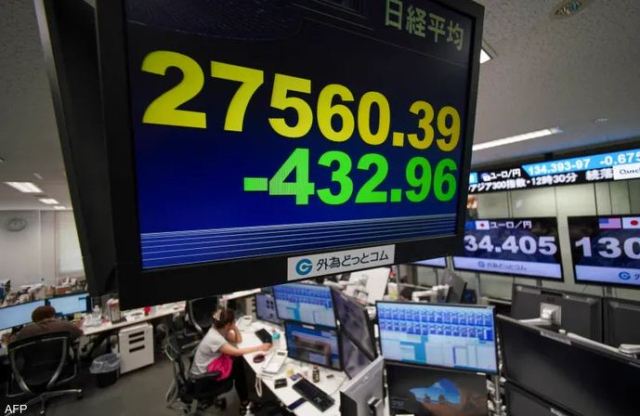
Japan's Nikkei 225 index slipped 0.19% to close at 62,713.65 points on Friday, retreating from an all-time high as shares of SoftBank Group Corp. triggered a broader sell-off across Tokyo's equity markets. The decline came just one day after the index surged 5.6% to a record close, breaching a key psychological level that had eluded investors for months.
According to Reuters, SoftBank shares experienced significant losses during the session, acting as the primary catalyst for the index's pullback. The conglomerate, led by billionaire founder Masayoshi Son, had been one of the biggest drivers of the Nikkei's historic rally, and its reversal sent ripples through the broader market. The Nikkei had briefly traded above the 63,000-point threshold before retreating as profit-taking accelerated.
Market analysts noted that the decline was largely technical in nature, following an unusually sharp 5.6% single-day gain on Thursday that pushed the index to unprecedented territory. Investors moved swiftly to lock in profits, particularly in technology and growth stocks that had led the recent rally.
Beyond SoftBank's decline, broader geopolitical risks weighed on investor sentiment across Asia. Escalating tensions in the Middle East, a region critical to global energy supplies, prompted a flight to safe-haven assets. The Nikkei had already shown vulnerability earlier in the week, dropping 1.3% to 63,360.96 points on Monday as the conflict intensified. This marked the first time the index had fallen below the 63,000 level since the beginning of the month.
Reuters reported that the combination of regional instability and profit-taking after the index's record run created a perfect storm for Japanese equities. Analysts warned that further escalation could trigger additional volatility in the coming sessions.
Financial strategists at major Japanese brokerages described the pullback as a healthy correction rather than the start of a sustained downturn. Market economist Hadeil Almahmoud noted that such corrections are typical following sharp rallies, particularly when driven by a single heavyweight stock like SoftBank. "The fundamental story for Japanese equities remains intact," Almahmoud said. "Corporate governance reforms and continued foreign investment are structural tailwinds that should support the market over the medium term."
However, Almahmoud cautioned that the geopolitical dimension introduces uncertainty that markets have not yet fully priced in. "If energy prices spike due to Middle East disruptions, Japan as a net energy importer would face headwinds that could extend this correction," the economist added.
For Libyan investors and businesses monitoring global financial markets, the Nikkei's movement carries important signals. Japan is one of the largest holders of foreign reserves and a major participant in international capital flows. A sustained decline in Asian equities could reduce global risk appetite, affecting commodity prices and investment flows into emerging markets, including North Africa.
Libya's economy, heavily dependent on oil exports, is particularly sensitive to the geopolitical tensions driving the market volatility. Any escalation in the Middle East that disrupts energy supplies or raises shipping costs could directly impact Libya's oil revenues and, by extension, the country's economic recovery trajectory. Libyan traders and policymakers should monitor these developments closely in the coming days.
Investors will be watching for any new developments in the geopolitical landscape, as well as key economic data releases from Japan next week. The Bank of Japan's recent policy stance and corporate earnings reports will also provide direction. For now, market participants view the current dip as a buying opportunity rather than a structural shift, but caution remains warranted given the unpredictable nature of global tensions.
The Nikkei's record-breaking rally has demonstrated the resilience of Japanese equities, and many analysts maintain their bullish outlook for the second half of 2026. As always, diversification and disciplined risk management remain the best tools for navigating uncertain markets.
— LibyaPress / Economy Desk
===END_ENGLISH===