
مرتبة هوائية للمقعد الخلفي v2
وفر 7%! اشترِ مرتبة هوائية للمقعد الخلفي v2 بسعر 405.12 د.ل فقط في ليبيا. متوفر
🛒 تسوق الآن Libya Press
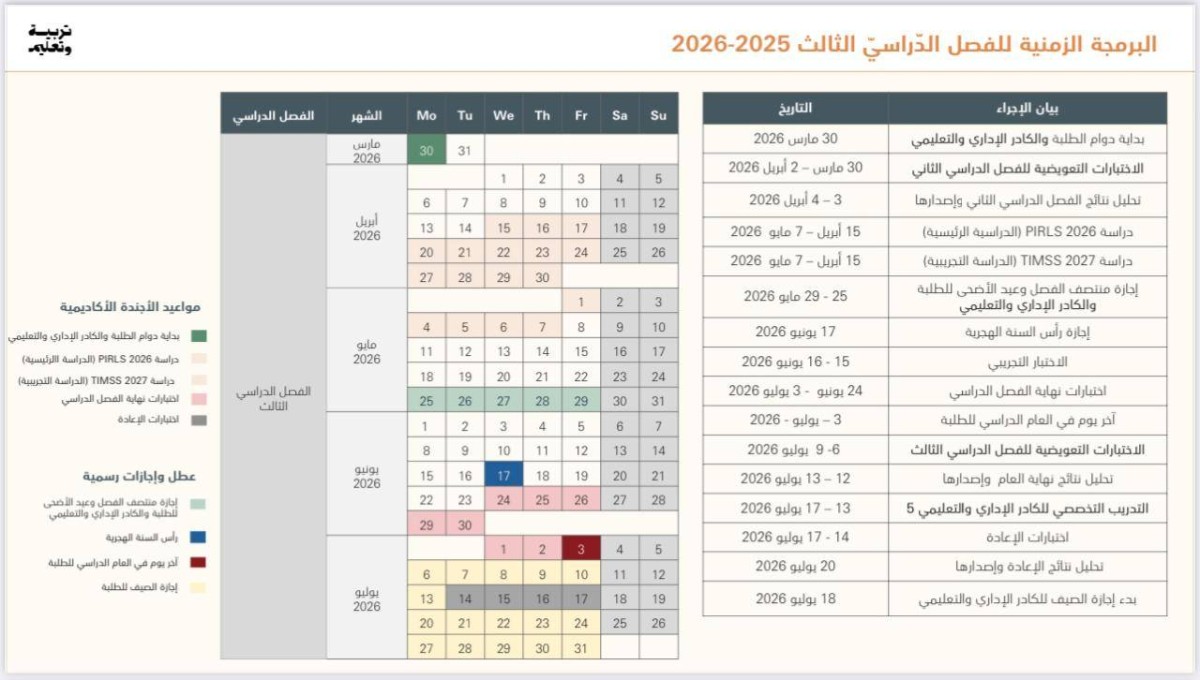
The Ministry of Education in Libya has officially announced the academic calendar for the 2026-2027 school year, detailing study schedules, examination dates, and public holidays for all educational levels across the country and abroad. Ministerial Decision No. 1197 for the year 2026 AD provides a comprehensive timetable that schools and universities must follow this academic year. This unified calendar represents a significant step toward educational standardization in a country where regional variations have historically created challenges for students and families.
The new academic schedule encompasses all stages of education, including primary schools, secondary schools, and religious education institutions. According to Al Wasat news agency, the unified calendar applies to educational institutions both within Libya and in the diaspora, ensuring consistency for Libyan students worldwide. This coordination is particularly important for families who have relocated abroad but still require their children to maintain alignment with Libyan educational standards.
The examination schedule has been carefully structured to accommodate end-of-year assessments at each educational level. Primary school final exams are scheduled for mid-June 2027, while secondary school students will complete their assessments in late June. Religious education examinations follow the same timeline, allowing for proper grading and result processing. According to EAN Libya, an accredited educational news source, the examination periods are designed to avoid conflicts with religious observances and major cultural events.
This careful planning ensures that students can perform their best without overlapping commitments, particularly during Ramadan and Eid celebrations when many families observe traditional practices. The scheduling also provides adequate time for teachers to prepare comprehensive assessments and for administrative staff to process results efficiently across all educational levels.
The calendar incorporates national holidays, religious observances, and planned academic breaks. The mid-year break typically occurs in December 2026, providing students with a two-week rest period before the second semester begins in January 2027. International holidays such as Christmas and New Year's Day are observed with modified schedules, allowing students in international schools and overseas Libyan institutions to maintain cultural connections while adhering to local academic calendars.
The calendar also recognizes Libya's Independence Day, Revolution Day, and other significant national commemorations, ensuring that students and teachers have appropriate time to reflect on these important historical milestones. The inclusion of these observances helps maintain a connection to Libya's rich heritage and the sacrifices made by previous generations.
All educational institutions, including private schools and international Libyan schools abroad, are required to implement the new calendar immediately. The Ministry of Education has issued strict guidelines for adherence, with provisions for emergency adjustments in cases of unforeseen circumstances. According to LANA (Libyan News Agency), the decision was announced on July 20, 2026, following consultations with educational boards across Libya's major cities.
The unified approach addresses previous inconsistencies between different regions and educational levels, creating a more equitable environment for all students regardless of their location. This standardization is particularly valuable for Libyan families living abroad who seek to maintain strong cultural and educational ties with their homeland.
For Libyan families, both inside and outside the country, this unified calendar provides much-needed clarity for planning the academic year. Parents can now coordinate work schedules, childcare arrangements, and travel plans with greater confidence. The predictable structure allows families to make informed decisions about educational investments and extracurricular activities.
The calendar also facilitates better communication between Libyan educational institutions in the diaspora and their counterparts in Libya, strengthening the educational experience for expatriate students. This coordination helps ensure that students returning to Libya after studying abroad can seamlessly reintegrate into the local educational system without disruption to their academic progress.
— Libya Press / News Desk