
كرسي تخييم قابل للطي يسمح بمرور الهواء
وفر 6%! اشترِ كرسي تخييم قابل للطي يسمح بمرور الهواء بسعر 189.6 د.ل فقط في ليبيا
🛒 تسوق الآن Libya Press
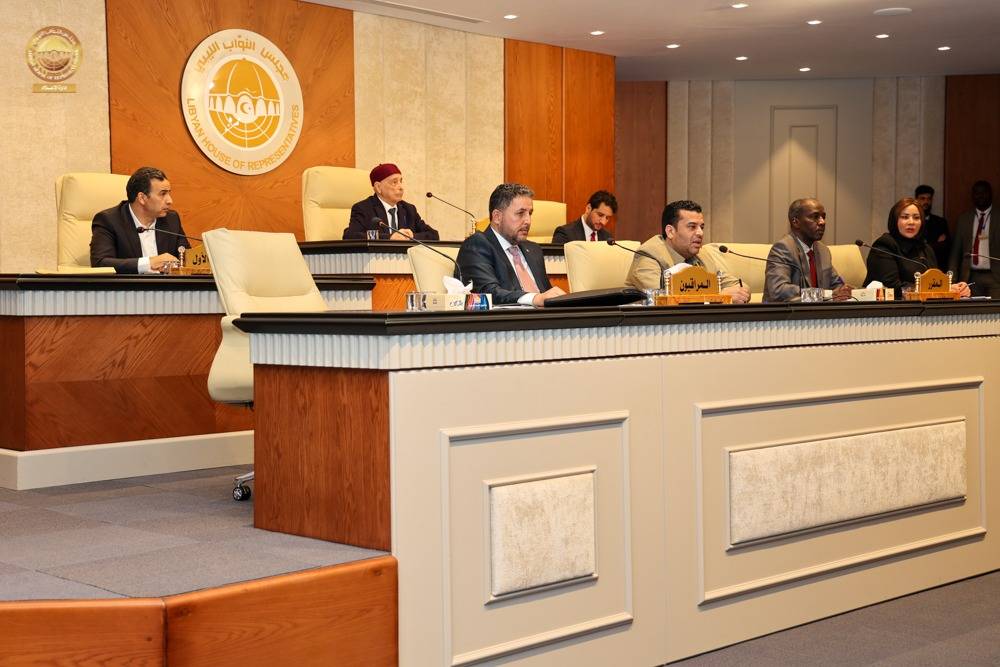
Tripoli — Libya has taken a significant step forward in its fight against financial crime, as the country's Anti-Money Laundering and Counter-Terrorism Financing (AML/CFT) apparatus convened a specialized seminar on preventive planning in the capital. The event signals a renewed push to align Libyan financial oversight with international standards ahead of an upcoming mutual evaluation by the Financial Action Task Force (FATF).
The seminar, hosted by Libya's financial intelligence and regulatory bodies, brought together representatives from the Central Bank of Libya, the Financial Information Unit, the judiciary, and law enforcement agencies. The focus was on strengthening preventive frameworks that detect and disrupt money laundering operations before they infiltrate the legitimate economy.
Experts at the event emphasized that preventive planning — rather than reactive enforcement — is the most effective strategy for combating financial crime in a rapidly digitizing economy. Discussions centered on risk assessment methodologies, suspicious transaction reporting mechanisms, and cross-institutional coordination protocols.
A key driver behind the intensified efforts is Libya's preparation for the mutual evaluation process by the FATF, the global standard-setting body for AML/CFT. According to previous statements from the Central Bank of Libya, the country has been working to address technical compliance gaps and improve the effectiveness of its AML framework.
The FATF evaluation assesses both legal frameworks and their practical implementation. Libya, like many countries in the region, has faced challenges in translating legislative provisions into operational outcomes. The preventive planning seminar was designed to bridge that gap by equipping frontline institutions with practical tools and standardized procedures.
During a prior meeting in August 2025, Central Bank Governor Naji Isa chaired the second regular session of the National Committee for Anti-Money Laundering and Counter-Terrorism Financing, where officials reviewed international reports and discussed Libya's roadmap for compliance.
Money laundering poses a particular threat to economies in transition, where informal financial networks, cash-based transactions, and regulatory gaps create vulnerabilities. Libya's dual-banking system and the legacy of institutional fragmentation since 2011 have compounded these risks.
International observers have noted that illicit financial flows can undermine reconstruction efforts, fuel corruption, and erode public trust in financial institutions. By prioritizing preventive planning, Libyan authorities are signaling a commitment to protecting the national economy from these threats.
The seminar also explored emerging risks in digital finance, including cryptocurrency transactions and mobile money platforms, which create new channels for potential abuse if left unregulated.
Libya's AML efforts are not happening in isolation. The country is part of the Middle East and North Africa Financial Action Task Force (MENAFATF), a FATF-style regional body that facilitates peer learning and mutual evaluations. Regional cooperation allows Libyan authorities to benchmark their practices against neighboring countries and adopt proven methodologies.
Technical assistance from international partners — including the United Nations, the European Union, and the World Bank — has supported the development of Libya's legal and institutional capacity in this domain. Training programs for judges, prosecutors, and financial investigators have been a priority area.
For ordinary Libyans, stronger anti-money laundering measures translate into greater financial transparency and accountability. A robust AML framework helps ensure that public funds intended for development and services are not diverted through illicit channels. It also strengthens the banking sector's integrity, making it easier for businesses and individuals to access formal financial services with confidence.
The seminar concluded with a set of actionable recommendations, including the establishment of a centralized database for suspicious transactions, enhanced training programs for compliance officers, and a public awareness campaign to educate citizens about the risks of financial crime.
As Libya continues its broader stabilization and reconstruction journey, the fight against money laundering is increasingly recognized as a cornerstone of good governance and economic resilience. The preventive planning seminar in Tripoli represents one more step toward building a financial system that serves the Libyan people — not those who seek to exploit it.
— Libya Press / News Desk