
قناع الوجه المقشر والمنعم بالأعشاب
وفر 18%! اشترِ قناع الوجه المقشر والمنعم بالأعشاب بسعر 176.26 د.ل فقط في ليبيا.
🛒 تسوق الآن Libya Press
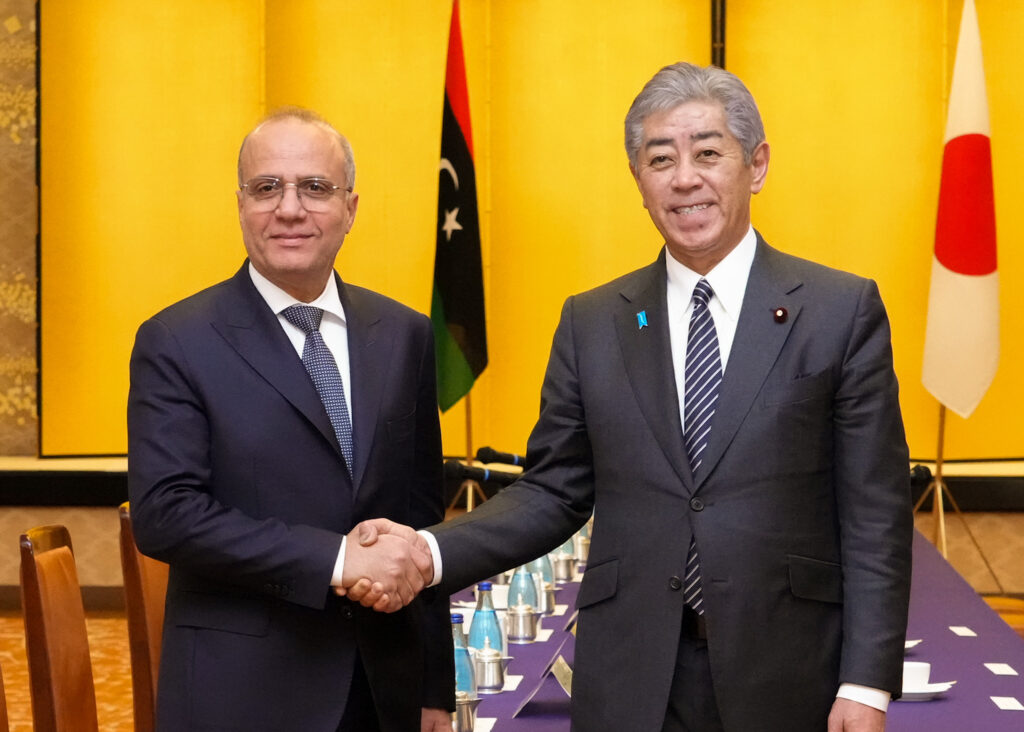
Libya and Japan are entering a new phase of economic cooperation, driven by improved security conditions and Japan's strategic need for energy diversification. The Libyan-Japanese economic relationship, dormant for over a decade, is now showing concrete signs of revival.
According to a report by Libya Herald, the improving security landscape in Libya is directly translating into renewed economic engagement with Japan. The North African nation's stabilization efforts, including unified security forces and reduced conflict zones, have created a more favorable environment for foreign investment.
"Japan and Libya are deepening economic relations, focusing on energy and investment, following improvements in Libya's security situation," the report stated. This shift marks a significant departure from the cautious approach Japanese firms had maintained since 2011.
Libya holds Africa's largest proven crude oil reserves, estimated at over 48 billion barrels. For Japan, the world's third-largest economy and a major energy importer, access to Libyan hydrocarbons represents a critical component of its energy security strategy.
The renewed engagement is expected to focus on upstream oil and gas exploration, refining technology partnerships, and potential LNG supply agreements. Japanese engineering firms are well-positioned to contribute to Libya's aging energy infrastructure, which requires significant modernization after years of underinvestment.
Japanese companies like JGC Corporation and Mitsubishi Heavy Industries have historically been involved in Libyan energy projects, and analysts anticipate their return as security improves.
The economic relationship extends beyond hydrocarbons. Japanese automotive and electronics manufacturers see potential in Libya's reconstruction market, estimated to require hundreds of billions in infrastructure investment over the coming decade.
The timing of this economic rapprochement is strategic. Global energy markets remain volatile following geopolitical tensions in Eastern Europe and the Middle East. Japan, which imports approximately 90 percent of its crude oil from the Middle East, is actively pursuing supply diversification.
Libya's geographical proximity to Europe and its high-quality, low-sulfur crude oil make it an attractive alternative source. The country's production capacity of 1.2 million barrels per day, with potential to reach 1.6 million, offers meaningful volume for Japanese refineries.
Despite the positive trajectory, challenges remain. Political fragmentation within Libya's institutions, occasional security disruptions, and the need for legal framework modernization continue to concern potential Japanese investors.
Japanese businesses typically require robust legal protections, transparent regulatory environments, and reliable security guarantees before committing significant capital. Libya's progress on these fronts will determine the pace of investment.
The Libyan government has signaled its commitment to creating a business-friendly environment through recent reforms to investment laws and the establishment of economic zones.
Bilateral trade volumes between Libya and Japan have shown modest increases in the first half of 2026. Japanese delegations have visited Tripoli and Benghazi for exploratory talks, while Libyan officials participated in investment forums in Tokyo.
The Libyan Ministry of Economy and Trade has identified Japan as a priority partner for economic diversification under its Vision 2030 plan, which aims to reduce dependence on oil revenues.
For ordinary Libyans, stronger economic ties with Japan translate into job creation, technology transfer, and improved public services. Japanese investment in infrastructure and healthcare directly impacts quality of life, while energy partnerships generate government revenue for public spending.
The revival of economic relations with Japan also signals to the international community that Libya is open for business, a message that could encourage other major economies to follow suit.
— Libya Press / Economy Desk