
مصباح تخييم معلق قابل للشحن مقاوم للماء – 3 مستويات إضاءة
وفر 4%! اشترِ مصباح تخييم معلق قابل للشحن مقاوم للماء – 3 مستويات إضاءة بسعر 147
🛒 تسوق الآن Libya Press
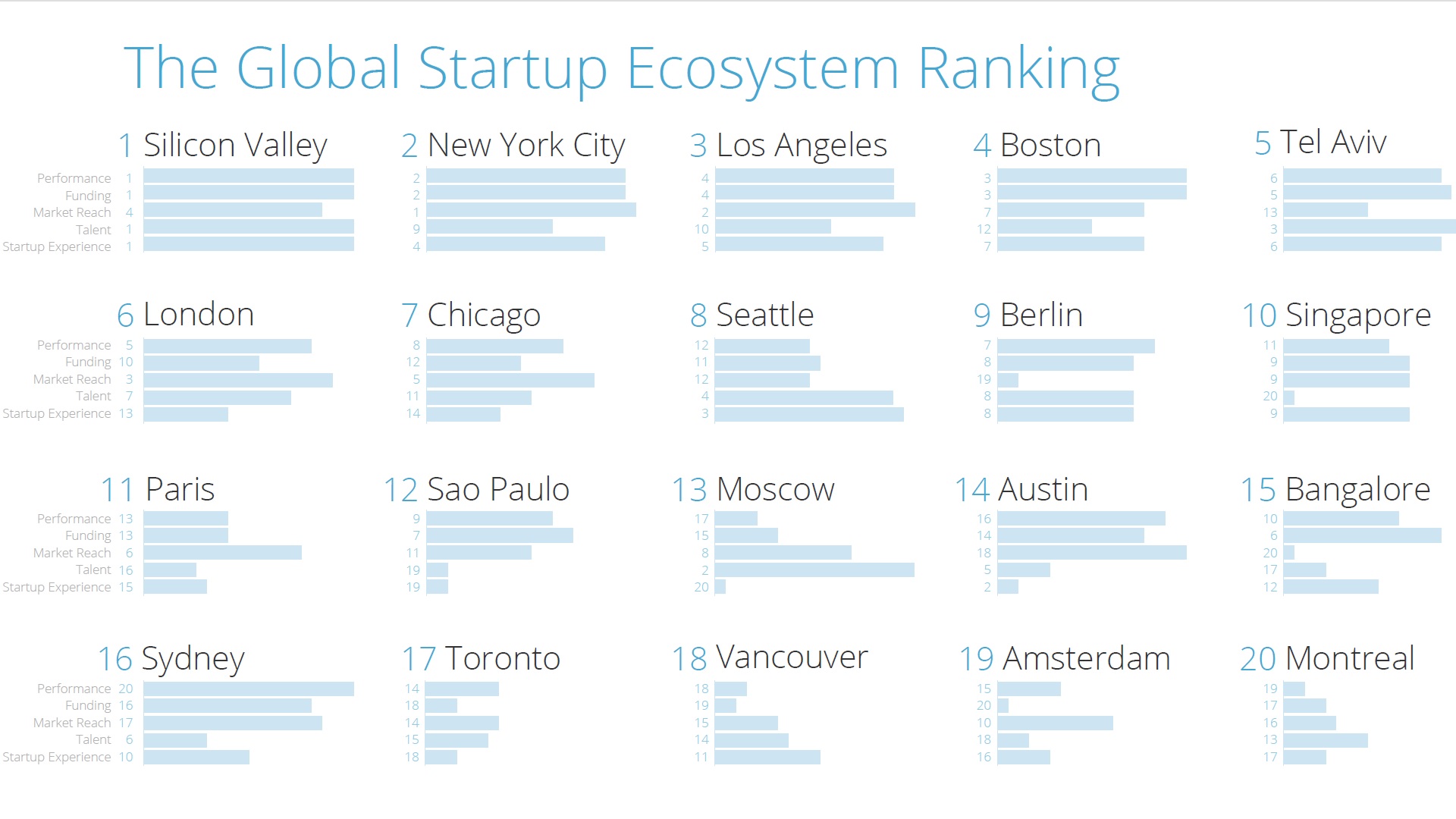
The latest Global Startup Ecosystem Report (GSER) 2026 represents a comprehensive analysis of the entrepreneurial world, encompassing over 5.5 million startups across 350 distinct ecosystems. The findings are clear: the recovery observed in 2025 was not a return to the previous "golden era" of venture capital, but rather the birth of a new phase defined by volatile geopolitical shifts and rigid institutional forces.
As we enter this new era, the metrics for success have shifted. The "growth at all costs" mentality has been replaced by a demand for "sustainable utility," where startups must prove their value through tangible efficiency gains powered by advanced intelligence systems.
Artificial Intelligence has transitioned from a speculative trend to the primary driver of national competitiveness. According to GSER 2026, AI is no longer a standalone vertical; it has become a foundational layer integrated into every sector, from decentralized finance to precision healthcare and sustainable energy.
This systemic integration is forcing a global re-evaluation of talent acquisition. We are seeing a move away from generalist software engineering toward "domain-specific AI architects"—experts who blend deep industry knowledge with the ability to orchestrate complex model workflows. The report highlights that ecosystems investing in this hybrid talent pool are scaling 3x faster.
Investors are now aggressively backing "future-defining" technologies, pivoting toward "Hard Tech" and "Deep Tech," where AI is used to solve physical-world problems, such as carbon capture or next-generation semiconductor design, rather than just optimizing digital advertising.
One of the most striking revelations of the 2026 report is the erosion of the traditional "monopoly" held by Silicon Valley and London. We are witnessing a significant redistribution of influence toward Asia and select markets in the Global South, fueled by aggressive domestic policy reforms and the rise of regional sovereign wealth funds.
For the tech scene in Libya, the 2026 trends present a unique window of opportunity. The global rebalancing of capital means that "under-tapped" markets with high digital hunger and a young workforce are becoming increasingly attractive to niche venture funds seeking high-alpha returns.
Libyan entrepreneurs can employ the "Hub-and-Spoke" model, establishing a local "spoke" for innovation and connecting it to regional "hubs" in Cairo or Tunis, accessing critical scaling infrastructure without losing local agility.
Furthermore, there is a massive gap in the application of AI for local governance and logistical optimization in Libya. Startups bridging the gap between global AI capabilities and local operational realities will likely become the "national champions" of the next decade.
Despite the growth, GSER 2026 warns of "cognitive offload," where founders rely so heavily on AI for strategy that they lose the ability to critically audit their own business logic. This leads to "hallucinated business models"—companies that look perfect on paper but fail in real-world execution.
The ultimate conversion metric for 2026 is no longer the "pitch," but "proof density." Success now requires a combination of institutional transparency, verifiable data, and human-led strategic editing that AI cannot replicate.
Scaling from "survival" to "global powerhouse" requires an obsession with sentiment analysis and a willingness to pivot based on real-time human behavior, rather than static data projections.
— Libya Press / Tech Desk