
كاشف الكاميرات الخفية
وفر 17%! اشترِ كاشف الكاميرات الخفية بسعر 390 د.ل فقط في ليبيا. متوفر حالياً، ال
🛒 تسوق الآن Libya Press
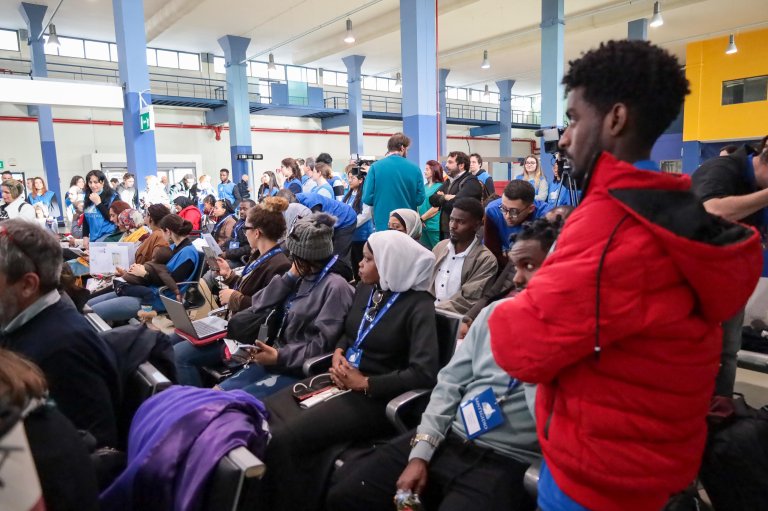
The Community of Sant'Egidio has successfully transferred 131 refugees from Libya to Italy through the "Humanitarian Corridors" initiative, a cooperative programme with the United Nations High Commissioner for Refugees. The humanitarian flight departed from Tripoli, carrying vulnerable individuals selected on the basis of health conditions and social vulnerability, marking another significant step in international efforts to provide safe alternatives to the perilous Mediterranean sea crossings that continue to claim hundreds of lives each year.
The transfer was carried out under a protocol originally signed in December 2023 between the Italian Ministries of Interior and Foreign Affairs, the UN refugee agency, and the cultural association ARCI. Under this agreement, a total of 766 people have now reached Europe safely through the humanitarian corridors programme since its inception. The 131 refugees evacuated in this latest operation originate from several African countries affected by armed conflict and violence, as well as from Palestine. Upon arrival in Italy, they were received at designated reception centres and are expected to be distributed across various Italian regions through humanitarian organisations and partner associations that operate refugee reception and integration programmes. An additional 13 people are expected to arrive in Rome in the coming days as part of the programme's regularly scheduled operations, further extending the reach of this life-saving initiative.
The "Humanitarian Corridors" initiative was specifically designed to reduce the risks associated with irregular migration across the Mediterranean by providing legal and safe transfer routes for vulnerable groups, including women, children, the sick, and individuals living in extremely difficult humanitarian conditions inside Libya. According to the Italian news agency AKI, the programme is based on close cooperation between international humanitarian organisations, Italian government authorities, and the UN refugee agency. Evacuation operations are organised periodically through carefully pre-approved lists to ensure the safety and dignity of all beneficiaries. The Community of Sant'Egidio, a lay Catholic movement widely recognised for its peace mediation and humanitarian work across the globe, has been a key partner in organising and facilitating these corridor operations, working alongside Italian and international institutions.
Libya continues to serve as one of the main departure points for migrants and refugees attempting to reach Europe, prompting international organisations to steadily strengthen safe evacuation mechanisms as an alternative to dangerous sea crossings that continue to result in frequent and tragic fatalities in the Mediterranean. Despite the demonstrated success of the humanitarian corridors, demand for safe passage far outstrips available places, and thousands of refugees and migrants remain trapped in detention centres and precarious living conditions across Libya. Human rights organisations have repeatedly called on the international community to significantly expand safe and legal pathways for refugees, while also addressing the root causes of forced displacement in sub-Saharan Africa and the Middle East. The continuation and expansion of the humanitarian corridors programme remains a critical lifeline for the most vulnerable populations stranded in Libya, offering them hope and a chance at rebuilding their lives in safety.
As the Mediterranean migration crisis shows no signs of abating, the humanitarian corridors model offers a proven and replicable framework for protecting vulnerable refugees while maintaining orderly, dignified, and humane reception processes in Europe.