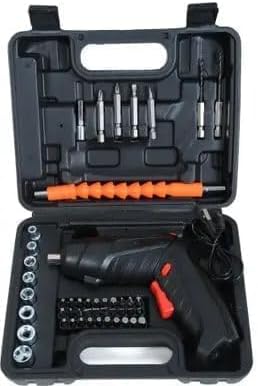
كوب قهوة بغطاء
وفر 41%! اشترِ كوب قهوة بغطاء بسعر 158.02 د.ل فقط في ليبيا. متوفر حالياً، الدفع
🛒 تسوق الآن Libya Press
Libya's Prime Minister Abd al-Hamid al-Dabaiba held a phone conversation on Monday with Massad Boulos, Senior Advisor to U.S. President Donald Trump for Arab and Middle Eastern Affairs, focusing on enhancing military and security cooperation between eastern and western Libya, according to a statement released by Boulos's office.
The call marks the latest in a series of high-level engagements between Libyan and American officials as Washington intensifies its push for military unification in the conflict-scarred North African nation. Boulos, who has shuttled between Tripoli, Benghazi, and Washington in recent months, described the discussions as "constructive and forward-looking."
Central to the discussions was the long-stalled process of unifying Libya's fractured military establishment. The country has been split between rival armed factions since the 2011 uprising, with the Libyan National Army (LNA) under Khalifa Haftar dominating the east and government-aligned forces controlling the west.
Both sides acknowledged that a unified military command structure is essential for lasting stability, according to sources familiar with the call. The conversation also touched on ongoing international mediation efforts aimed at merging command chains and integrating security institutions under a single civilian authority.
A key topic was Libya's participation in Exercise Flintlock 2026, U.S. Africa Command's premier annual multinational special operations exercise. For the first time, Libya is hosting a portion of the drills, with an opening ceremony held in Sirte in April 2026. The exercise brings together special operations forces from more than 30 nations across Côte d'Ivoire and Libya.
Boulos has previously described Flintlock 2026 as "a vital stride toward fostering internal military cohesion and bolstering regional security cooperation." The inclusion of Libyan forces from both eastern and western commands in the exercise is seen as a confidence-building measure that could pave the way for broader military integration.
Monday's call is part of a broader pattern of U.S.-Libya engagement. Last week, Deputy Defense Minister Major General Abdul Salam al-Zoubi was in Washington to discuss security cooperation and military unification with Boulos and the deputy commander of U.S. Africa Command (AFRICOM).
Prior to that, Boulos held meetings in Benghazi with House of Representatives Speaker Agila Saleh, LNA Deputy Commander Saddam Haftar, and Libya Reconstruction Fund Head Bilgassem al-Haftar, describing those talks as "fruitful." The flurry of diplomatic activity signals that Washington is prioritizing Libyan stability as a cornerstone of its North Africa strategy under the Trump administration.
Despite the positive tone of recent talks, significant obstacles remain. Libya's military landscape remains deeply fragmented, with competing militias, foreign mercenaries, and political rivalries complicating unification efforts. The country has also grappled with budget disputes between eastern and western authorities, further hindering progress.
Military analysts note that while high-level diplomatic engagement is necessary, sustainable progress will require buy-in from local commanders and armed groups on the ground. The Flintlock 2026 exercise provides a neutral platform for cooperation, but translating tactical coordination into lasting institutional reform remains a formidable challenge.
A unified Libyan military would have significant implications for regional security. Libya sits at the crossroads of North Africa and the Sahel, and instability there has fueled arms trafficking, migration flows, and the spread of militant groups across borders. The United States, European Union, and neighboring states all view Libyan stabilization as a strategic priority.
The phone call between al-Dabaiba and Boulos also comes amid shifting regional dynamics, with international actors recalibrating their approaches to Libya. Washington's active diplomatic engagement, coupled with the Flintlock exercise, signals a renewed commitment to seeing the Libyan unification process through.
As the dialogue continues, all eyes will be on Sirte, where the Flintlock 2026 exercises will serve as a test case for whether eastern and western forces can operate side by side — and whether that cooperation can translate into a unified military future for Libya.
— Libya Press / Politics Desk