
عطر التبغ العربي 100 مل
وفر 46%! اشترِ عطر التبغ العربي 100 مل بسعر 213.89 د.ل فقط في ليبيا. متوفر حاليا
🛒 تسوق الآن Libya Press
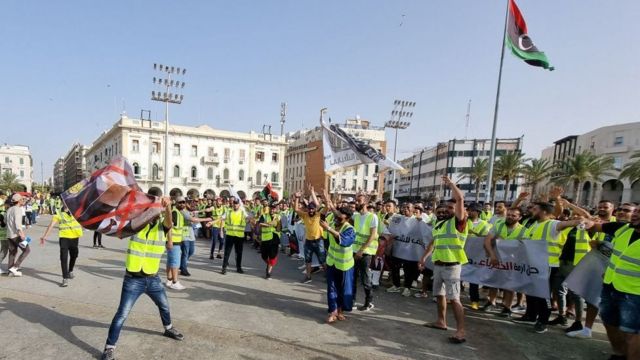
TRIPOLI — Angry protests have brought the Libyan capital to a standstill as residents declared civil disobedience in response to the complete collapse of essential services. Demonstrators blocked major roads, set fire to tires, and gathered outside government buildings in scenes reminiscent of the 2011 uprising.
The protests erupted Sunday evening and continued into Monday, with heavy security presence across several districts of Tripoli. Hundreds of protesters were seen chanting against the Government of National Unity and demanding immediate action to restore electricity, water, and fuel supplies.
Libya has been grappling with a severe economic crisis exacerbated by political deadlock between competing governments. The Central Bank crisis earlier this year deepened the divide, leaving public sector salaries unpaid for months and essential imports stalled at ports.
The electricity sector has been hit particularly hard, with residents facing up to 18 hours of daily power cuts during the scorching summer months. Water supply in several Tripoli neighborhoods has become intermittent, forcing families to rely on expensive private tankers.
Protest organizers announced an open-ended civil disobedience campaign through social media channels. "We are done waiting. The government has failed us, and we will no longer cooperate with a system that treats citizens as beggars," one activist told Libya Press.
The declaration includes a call for a general strike, refusal to pay utility bills, and peaceful roadblocks to disrupt government operations. Similar tactics have been used in recent months in southern and eastern Libya, but this marks the first coordinated campaign in the capital.
Security forces have adopted a largely restrained approach, avoiding direct confrontation with demonstrators. However, witnesses described an escalation at dawn Monday when units dispersed a crowd near the Prime Minister's office using tear gas.
The Ministry of Interior urged calm and called for dialogue, but protesters rejected the appeal, demanding the resignation of Prime Minister Abdul Hamid Dbeibeh and the formation of a technocratic government capable of delivering basic services.
The United Nations Support Mission in Libya expressed deep concern over the escalating situation, calling on all parties to exercise restraint. UNSMIL urged Libyan authorities to address the legitimate grievances of citizens and engage in meaningful dialogue.
Regional powers including Egypt, Tunisia, and Algeria have intensified diplomatic contacts, with sources suggesting an emergency Arab League meeting may be convened. The European Union reiterated its call for a unified Libyan government capable of managing the country's resources effectively.
The Libyan dinar has lost over 60% of its value against the US dollar on the black market since 2022, while fuel subsidies alone consume more than 15% of the national budget, leaving little for health, education, and infrastructure.
Oil production, once the backbone of the Libyan economy, has suffered repeated shutdowns due to political blockades. The National Oil Corporation reported that revenues in the first half of 2026 fell 35% compared to the same period in 2025, further straining the state's ability to provide services.
Political analysts warn that without immediate and concrete measures, the protests could spiral into broader unrest. "This is a tipping point. The social contract between Libyans and their government has effectively collapsed," said Dr. Ahmed Al-Mismari, a political analyst based in Tripoli.
The coming days will be critical. If the government fails to respond with tangible reforms and accountability, the civil disobedience campaign could expand to other cities, including Benghazi and Misrata.
— Libya Press / News Desk