
مجموعة مكياج متكاملة
وفر 7%! اشترِ مجموعة مكياج متكاملة بسعر 297.6 د.ل فقط في ليبيا. متوفر حالياً، ال
🛒 تسوق الآن Libya Press
Libya's parallel political institutions are consuming massive budget allocations that far exceed sustainable fiscal limits, according to economic expert Abubakr Abu Al-Qasim. Speaking exclusively to LibyaPress today, he warned that the competing budgets of rival political bodies are draining national resources at an alarming rate. The country now faces a deepening economic crisis despite record oil revenues in 2025.
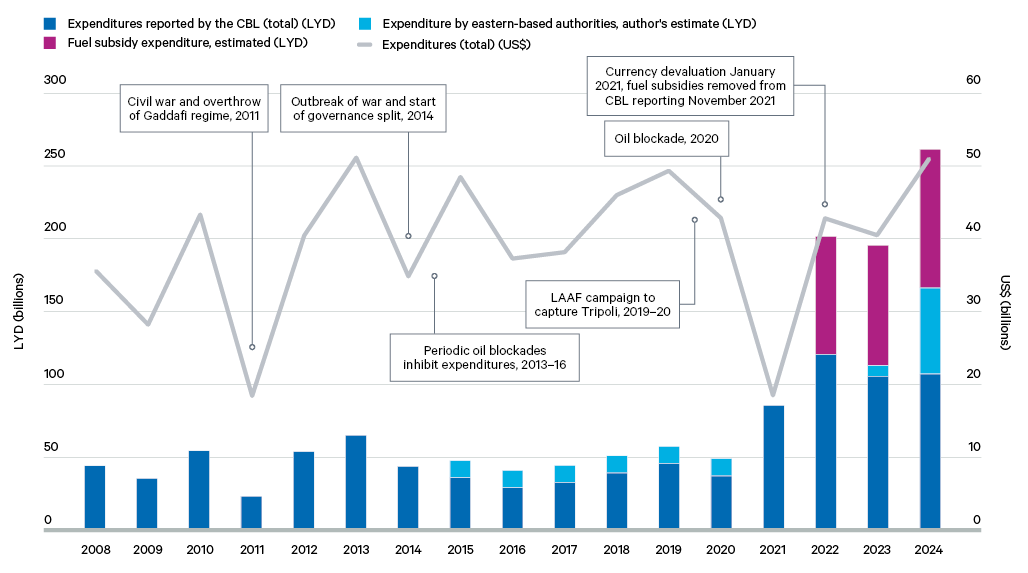
The International Monetary Fund's 2025 Article IV Consultation report, published this week, confirms that continued political division has severely hindered Libya's ability to control public expenditure. The report states that widespread fragilities across institutions have prevented authorities from enacting necessary fiscal reforms. Libya currently operates without a unified national budget, with two rival governments each maintaining separate spending programs and competing claims over oil revenues.
Economic expert Abubakr Abu Al-Qasim told LibyaPress in an exclusive statement that Libya's economy, amid the imbalances of 2025 and the continuation of institutional division into 2026, has entered a phase of deep concern. He stressed that the budgets consumed by competing political bodies represent one of the most serious threats to national stability. "The drain on public funds through parallel political structures is unsustainable and directly harms every Libyan citizen," Abu Al-Qasim stated.
This budget crisis directly affects millions of Libyans who depend on government services, salaries, and subsidies. When political bodies drain competing budgets, ordinary citizens in Tripoli, Benghazi, and across the south bear the cost through failing healthcare, crumbling infrastructure, and delayed salary payments. The IMF has repeatedly warned that Libya's economic future depends on institutional unification. Every dinar spent duplicating governance structures is a dinar stolen from schools, hospitals, and roads that Libyans desperately need.
Despite the grim assessment, economic analysts note that Libya possesses the resources to rebuild if political consensus emerges. The country's oil wealth, strategic location, and young population remain powerful assets. What Libya urgently needs is a single unified budget, transparent expenditure oversight, and an end to the institutional competition that drains public funds. The coming weeks will be critical as international pressure mounts for meaningful fiscal reform.
— LibyaPress / Economy Desk