
ملعقة إلكترونية ميزان
وفر 54%! اشترِ ملعقة إلكترونية ميزان بسعر 159.36 د.ل فقط في ليبيا. متوفر حالياً،
🛒 تسوق الآن Libya Press
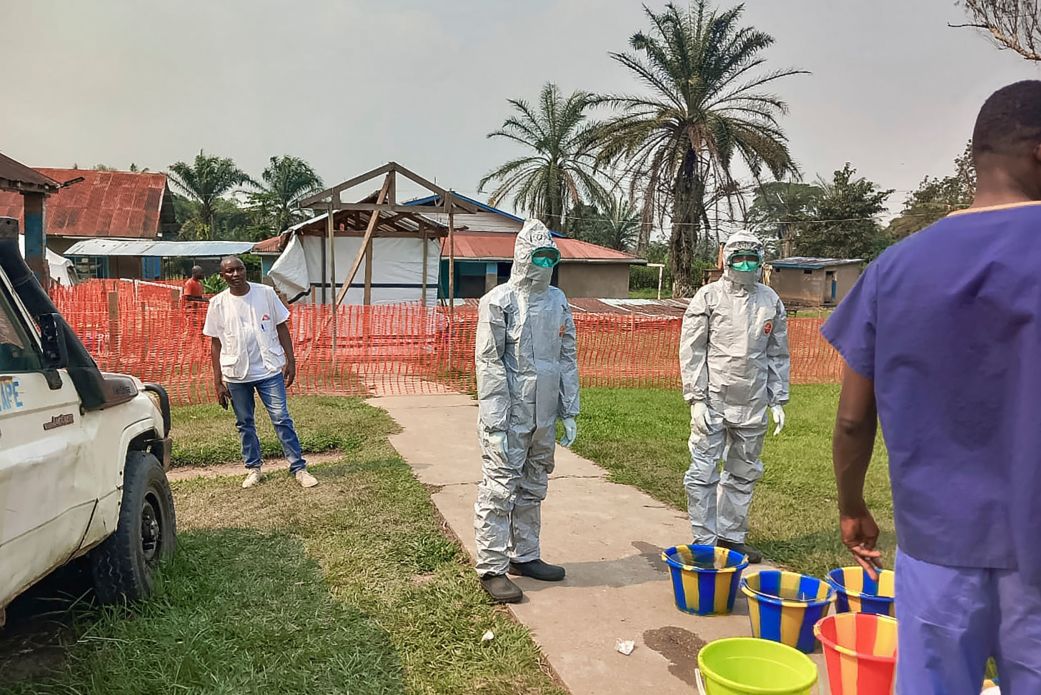
The ebola virus is spreading rapidly in the eastern territories of the Democratic Republic of Congo (DRC), triggering urgent warnings from the United Nations World Food Programme (WFP). Health authorities have confirmed new cases across multiple provinces, raising fears that the outbreak could spiral beyond containment without immediate international intervention and community engagement on the ground.
The WFP issued a stark statement today, warning that food assistance is not merely a humanitarian gesture but a critical pillar of the public health response. Without adequate nutrition and food security for affected and quarantined populations, containment efforts face serious obstacles, as hungry populations on the move can inadvertently carry the virus across borders and into new communities.
According to the latest reports from the Africa Newsroom and partner agencies, the ebola outbreak in eastern Congo has intensified over recent weeks. The virus, identified as the Bundibugyo strain, has appeared in remote and conflict-affected areas of North-Kivu and Ituri provinces, making access for health workers extremely difficult and dangerous. This marks the DRC's tenth recorded Ebola outbreak, and health experts warn it could become the second most devastating in the country's history if containment fails.
The Centers for Disease Control and Prevention (CDC) confirmed that cases of Ebola disease caused by the Bundibugyo virus have been detected in remote areas of both the DRC and neighboring Uganda. To date, the confirmed case count remains low, but epidemiologists caution that early-stage outbreaks often show significant underreporting due to limited surveillance infrastructure in rural and conflict zones where health systems are already overwhelmed.
The WFP's warning underscores a critical but often overlooked dimension of epidemic response. When communities under quarantine lack food, families are forced to break isolation to seek sustenance, directly undermining containment protocols. The UN humanitarian office emphasized that food distributions reduce population movement, build trust with affected communities, and ensure that vulnerable patients have the nutritional support needed to survive the virus, as malnutrition significantly reduces survival rates among Ebola patients.
Research from previous Ebola outbreaks in West Africa and the DRC has consistently shown that food insecurity is one of the primary drivers of non-compliance with quarantine measures. The WFP's approach integrates food aid with health messaging, creating a dual-benefit strategy that addresses both the immediate nutritional needs and the longer-term goal of stopping transmission chains before they can spread further.
The spread of Ebola in eastern DRC carries significant implications for the broader Great Lakes region. Uganda, Rwanda, and South Sudan all share porous borders with the affected provinces, and population movement across these borders is constant and largely informal. The CDC has already confirmed cases in Uganda, confirming that cross-border transmission is no longer a theoretical risk but a present reality requiring coordinated regional surveillance and rapid response capabilities.
The World Health Organization has classified the outbreak as a public health emergency of international concern, triggering additional funding mechanisms and diplomatic coordination. International donors are being urged to increase their contributions to the response, as funding gaps remain a persistent challenge in containing outbreaks in conflict-affected settings where infrastructure is minimal and logistical costs are extremely high.
Health authorities are focusing on three pillars: rapid case identification through expanded surveillance, community engagement to build trust and compliance, and the continuation of WFP food assistance programs in quarantine zones. Vaccination campaigns using the rVSV-ZEBOV vaccine are being prepared for deployment in the highest-risk areas, though cold-chain logistics in remote eastern DRC present formidable challenges that require innovative solutions and additional resources.
The international community faces a narrow window of opportunity. If containment efforts are adequately resourced and sustained in the coming weeks, health experts believe the outbreak can be brought under control before it reaches the scale of the 2018-2020 eastern DRC epidemic that claimed over 2,200 lives. The WFP has called on donors to act swiftly, stressing that every day of delay increases the risk of a regional health catastrophe with consequences far beyond the borders of the Democratic Republic of Congo.
— LibyaPress / Health Desk
===END_ENGLISH===