
نظارات واقية للدراجات النارية
وفر 34%! اشترِ نظارات واقية للدراجات النارية بسعر 190.08 د.ل فقط في ليبيا. متوفر
🛒 تسوق الآن Libya Press
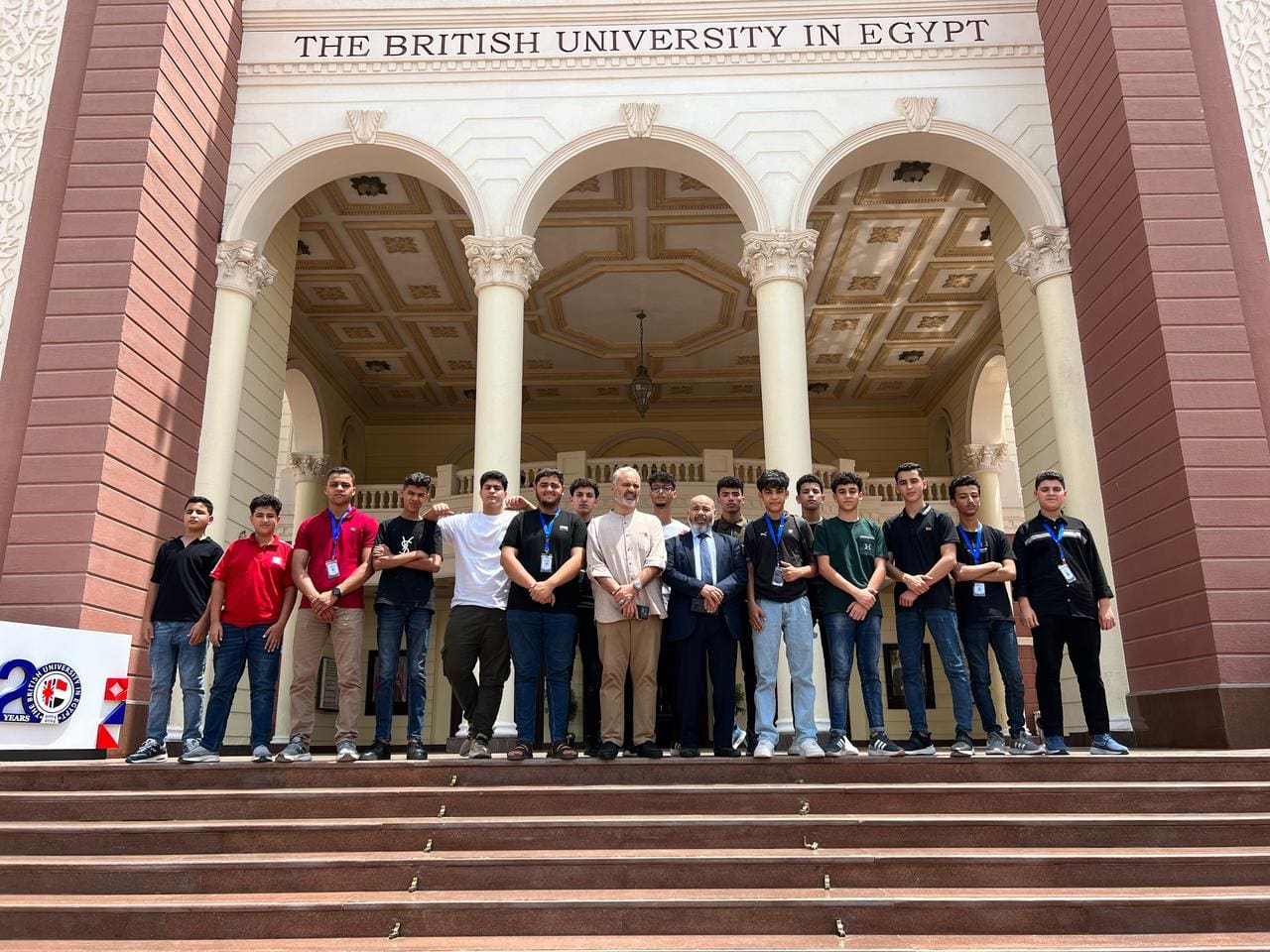
The British University in Cairo (BUE) received on Sunday a high-level delegation from the Libyan Cultural Attaché's office at the Libyan Embassy in Egypt, accompanied by the administrative staff of Khutuwat al-Taqadum Libyan School — one of the Libyan community schools operating in Cairo.
According to official sources, the visit was hosted by the Faculty of Energy and Environmental Engineering and comes within a broader framework of enhancing bilateral cooperation between the British University and the Libyan Cultural Attaché. The two sides are developing a series of joint programs and activities designed to serve shared educational interests.
Professor Attia Attia, Dean of the Faculty of Energy and Environmental Engineering, led the reception for the visiting delegation. He presented an overview of the college's academic, scientific, and research programs, highlighting the extracurricular scientific activities that complement the academic experience and directly contribute to developing students' academic and professional capabilities.
The meeting discussed potential training programs specifically designed for school students, leveraging regional and international cooperation opportunities available through the university's network. The faculty team showcased the various programs and activities implemented to enrich student learning through simulation systems and practical hands-on experiences.
Furthermore, the delegation explored training opportunities available for school students through the University's College of Continuing Education. The Faculty of Energy and Environmental Engineering will offer several specialized programs aimed at introducing students to modern engineering and environmental sciences.
Khutuwat al-Taqadum Libyan School (also referred to locally as Madrast Khutuwat al-Taqadum) is one of several Libyan educational institutions operating in Cairo to serve the Libyan community. These schools play a vital role in maintaining educational continuity for Libyan families residing in Egypt, providing curricula that align with both Libyan and Egyptian educational standards.
The collaboration between the British University and Libyan educational institutions reflects a growing trend of cross-border academic partnerships that benefit Libyan students seeking quality higher education opportunities in Egypt.
This visit is part of ongoing efforts by the Libyan Cultural Attaché in Cairo to strengthen academic and cultural cooperation with Egyptian universities. The Libyan community in Egypt includes thousands of families, making educational cooperation a priority for both countries. Previous visits by the Cultural Attaché have included trips to Damanhour University and other Egyptian institutions of higher learning.
Libyan students in Egypt represent a significant demographic within the broader Libyan diaspora, and initiatives like this visit aim to create clearer pathways between Libyan community schools and Egyptian universities. The British University in Cairo, known for its British-style education and international accreditation, represents an attractive destination for Libyan students seeking globally recognized qualifications.
Both sides expressed optimism about the potential outcomes of this enhanced cooperation. The proposed training programs and joint activities are expected to create new opportunities for Libyan students at Khutuwat al-Taqadum School and potentially other Libyan community schools in Cairo.
The British University's commitment to providing practical, hands-on learning experiences aligns well with the educational needs of Libyan students who benefit from exposure to international academic standards and modern teaching methodologies. As discussions continue, concrete programs are expected to be announced in the coming months.
— Libya Press / News Desk