
منظم مستحضرات التجميل
وفر 26%! اشترِ منظم مستحضرات التجميل بسعر 345.6 د.ل فقط في ليبيا. متوفر حالياً،
🛒 تسوق الآن Libya Press
The World Health Organization (WHO) has reported a significant expansion of the Ebola outbreak in the Democratic Republic of Congo, with confirmed cases now surpassing 500. According to the latest update from WHO, the outbreak, initially confined to remote areas, has now spread to multiple health zones in Kasai Province, affecting a population of approximately 3.5 million people.
The outbreak, caused by the Ebola Zaire strain, was first confirmed in early September 2026 by the Democratic Republic of Congo's National Institute of Biomedical Research in Kinshasa. Samples taken on September 3 tested positive for the virus, prompting an immediate response from national and international health agencies.
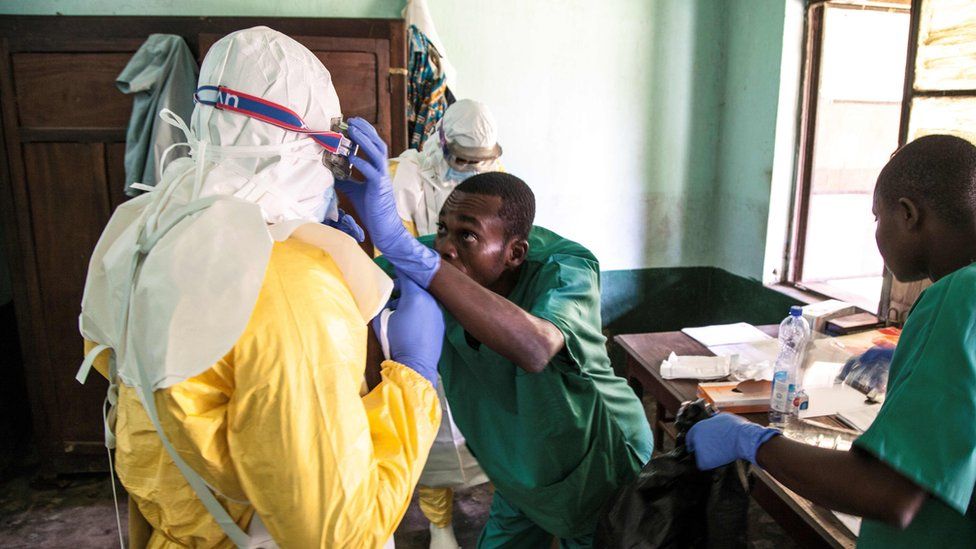
The Voice of Nigeria reported that the outbreak has affected the Bulape and Mweka health zones, where limited healthcare infrastructure has hampered containment efforts. Local health workers, supported by WHO and UNICEF, have deployed mobile testing units and treatment centers to reach remote communities.
The United Nations World Health Organization has warned that the outbreak continues to expand, with the death toll now exceeding 500. UN News highlighted that efforts are underway to accelerate testing and identify effective treatment options, particularly for the Bundibugyo species detected in eastern DRC.
Meanwhile, the U.S. Centers for Disease Control and Prevention (CDC) stated that while the risk of Ebola spreading to the United States remains low due to strong public health systems, they are actively supporting the response in DRC and Uganda. The CDC emphasized the importance of infection control measures and community engagement to prevent further transmission.
Kasai Province, home to over 3.5 million residents, faces significant challenges as health facilities struggle to cope with the influx of patients. Many remote villages lack access to basic medical supplies, forcing reliance on outreach programs. The outbreak has also disrupted agricultural activities, as farmers avoid markets fearing infection.
Health officials stress that early detection and isolation remain critical to controlling the outbreak. Vaccination campaigns using the rVSV-ZEBOV vaccine have been launched in high-risk areas, targeting healthcare workers and contacts of confirmed cases. Community education programs focus on promoting safe burial practices and reducing stigma against survivors.
As the situation evolves, WHO continues to coordinate with the DRC Ministry of Health and international partners to strengthen surveillance, improve access to treatment, and prevent cross-border transmission. The outbreak serves as a stark reminder of the ongoing threat posed by Ebola in Central Africa.
With continued monitoring from international health organizations and local health authorities, efforts are focused on strengthening disease surveillance systems and ensuring equitable access to medical care. This outbreak highlights the persistent threat of Ebola in Central Africa and underscores the need for sustained investment in public health systems and emergency preparedness. — Libya Press / Health Desk