
قناع الوجه المقشر والمنعم بالأعشاب
وفر 18%! اشترِ قناع الوجه المقشر والمنعم بالأعشاب بسعر 176.26 د.ل فقط في ليبيا.
🛒 تسوق الآن Libya Press
Egypt, Algeria and Tunisia have reactivated their dormant trilateral consultation framework on Libya, demanding a comprehensive political settlement with simultaneous elections and full withdrawal of all foreign forces and mercenaries. The initiative, coordinated through ministerial meetings in Cairo and Tunis, marks the most significant regional diplomatic effort on Libya since 2017.
The three foreign ministers — Badr Abdel-Aty of Egypt, Ahmed Attaf of Algeria, and Mohamed Ali Nafti of Tunisia — met in Tunis in January 2026, reviving a mechanism first created in 2017 but inactive since 2019 as proxy competition in Libya intensified.
Egyptian President Abdel-Fattah El-Sisi reinforced the initiative in separate Cairo talks, describing the trilateral mechanism as a "strategic diplomatic framework for Libya's neighbouring states." According to an Egyptian diplomatic source quoted by Al-Ahram Weekly, Cairo's approach runs on parallel political, security and economic tracks.
On security, Egypt backs the 5+5 Joint Military Committee uniting eastern and western Libyan officers. A large-scale joint military exercise is planned for Sirte in March 2026 under US sponsorship, symbolically linking political and security tracks.
Since late 2025, the United States has expanded diplomatic engagement on Libya. Massad Boulos, Senior Adviser to the US President for Arab and African Affairs, has visited Libya and regional capitals to float east-west power-sharing proposals. Foreign Minister Abdel-Aty praised Washington's role as "key to securing long-term unity and a better future" for Libyans.
The US initiative coincides with a major development: Libya's three main political bodies signed a trilateral power-sharing agreement in late 2025, setting a roadmap for elections before February 2027 and work toward a permanent constitution.
After years of confrontation over Libya, Egypt and Turkey have taken steps to de-escalate. Intelligence chiefs from both countries have visited eastern and western Libyan authorities. In recent talks, Abdel-Aty and Turkish Foreign Minister Hakan Fidan discussed using Cairo-Ankara coordination to resolve Libya's political divisions.
Both sides now support a "comprehensive Libyan-Libyan process" to unify institutions and remove foreign fighters. This signals Egypt shifting from primarily backing Khalifa Haftar's eastern camp toward a more balanced posture, aligning with US and UN frameworks while keeping channels open to European partners.
Algeria has been actively reshaping regional alignments, forming a "G3" pact with Tunisia and Libya in Carthage in 2024. The pact aims to move from a "Maghreb of rhetoric to a Maghreb of action," including plans for cross-border free trade zones. Tunisia has moved to what officials call "active neutrality" and increasingly aligns with Algeria, with both countries opposing international military intervention in Libya.
Libya holds Africa's largest proven oil reserves and is a key gas supplier to Europe via pipelines to Italy. Political instability has disrupted production and exports, raising risk premiums across the Mediterranean. A credible settlement would stabilise output and unlock reconstruction markets worth billions of dollars.
Analysts describe a Mediterranean "new Great Game" involving Turkey, Egypt, France and Italy. All have deployed military backing, arms supplies and intelligence in Libya to secure energy contracts and influence over migration flows.
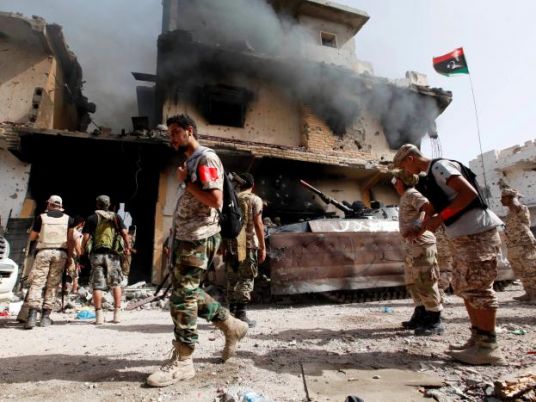
Major obstacles persist despite diplomatic momentum: the continued presence of foreign forces, deep institutional divisions between eastern and western factions, and competing great-power interests in Libya's energy wealth. Effective institution-building, withdrawal of armed groups, and enforcement of election timelines remain unproven.
The revived trilateral mechanism represents a calculated bid by Cairo, Algiers and Tunis to shape a UN-led political solution, curb foreign interference, and stabilise a fractured neighbour at the centre of Mediterranean geopolitics.
— Libya Press / Economy Desk