
قطاعة خضروات كهربائية
وفر 20%! اشترِ قطاعة خضروات كهربائية بسعر 209.28 د.ل فقط في ليبيا. متوفر حالياً،
🛒 تسوق الآن Libya Press
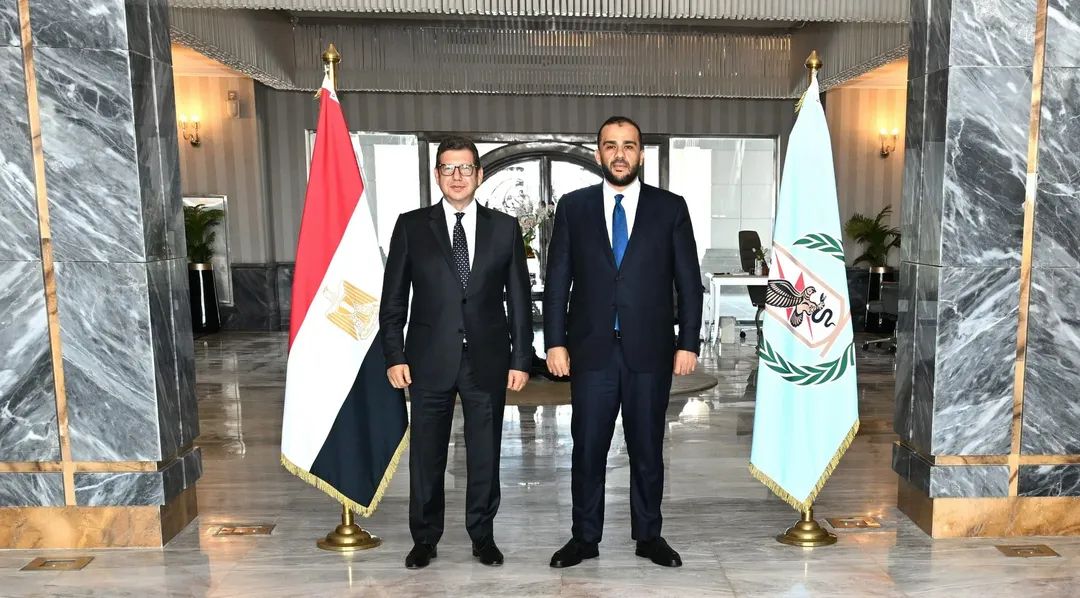
Lieutenant General Hassan Rashad, head of Egypt's General Intelligence Service, met with Abdul Salam al-Zoubi, Libya's Deputy Minister of Defense, in Cairo on Thursday, July 16, 2026. The high-level talks focused on strengthening security coordination between the two neighboring countries and advancing international efforts to unify Libya's military institutions under a comprehensive political framework.
According to Egyptian and Libyan officials, the meeting reflects a sustained push by Cairo to support stability in Libya through diplomatic and security channels. Egypt has long viewed Libya's security as directly tied to its national security, given the 1,200-kilometer shared border.
The discussions covered a range of strategic issues. At the forefront was the preservation of stability in Libya, which has witnessed a fragile peace since the 2020 ceasefire. Both sides emphasized the importance of preventing any renewed escalation that could disrupt the relative calm achieved in recent years.
Another major topic was the unification and integration of Libya's military forces — a longstanding prerequisite for any lasting political settlement. Libya remains divided between competing military and political factions despite numerous UN-brokered peace initiatives.
Rashad and al-Zoubi reviewed ongoing international initiatives aimed at consolidating Libya's armed forces under a single command structure. The unification of military institutions is widely viewed as essential to ending the cycle of conflict that has plagued Libya since 2011. Egypt has positioned itself as a key regional broker in this process, hosting multiple rounds of talks between Libyan factions in previous years.
The meeting also touched on the role of the 5+5 Joint Military Commission (JMC), which has been central to maintaining the ceasefire and overseeing the withdrawal of foreign forces. Sources familiar with the discussions indicated that Cairo supports accelerating the JMC's mandate to achieve tangible progress on military reunification.
Enhancing bilateral security cooperation was a central pillar of the talks. Egypt and Libya share deep historical ties, and Cairo has consistently reaffirmed its commitment to supporting Tripoli-based authorities in securing Libya's borders and combating terrorism and transnational crime.
Analysts note that Egypt's approach to Libya combines diplomatic engagement with security-backed deterrence. The meeting with al-Zoubi, who represents Libya's Defense Ministry under the Government of National Unity, signals continued Egyptian engagement with internationally recognized Libyan institutions.
The meeting comes amid a shifting regional landscape. International attention on Libya has fluctuated, but Egypt has maintained consistent engagement. With the United Nations and other international actors pushing for elections as a pathway to lasting stability, Cairo's role as a mediator and security partner remains critical.
Libya's vast energy resources also make its stability a matter of strategic interest beyond the region. The country holds Africa's largest proven crude oil reserves, and disruptions to production have direct implications for global energy markets. A stable Libya under a unified military command is seen as essential for safeguarding these resources and ensuring their equitable distribution.
While no major breakthrough was announced following the meeting, both sides described the talks as productive and constructive. The continued dialogue between Egyptian and Libyan security officials suggests that Cairo remains committed to a political resolution in Libya, even as other regional conflicts compete for international attention.
Al-Zoubi's visit to Cairo also underscores the Libyan Defense Ministry's recognition of Egypt's centrality to any viable security arrangement. With Libyan national elections still pending and political divisions persisting, meetings such as this one serve as building blocks for a broader reconciliation process.
— Libya Press / Politics Desk