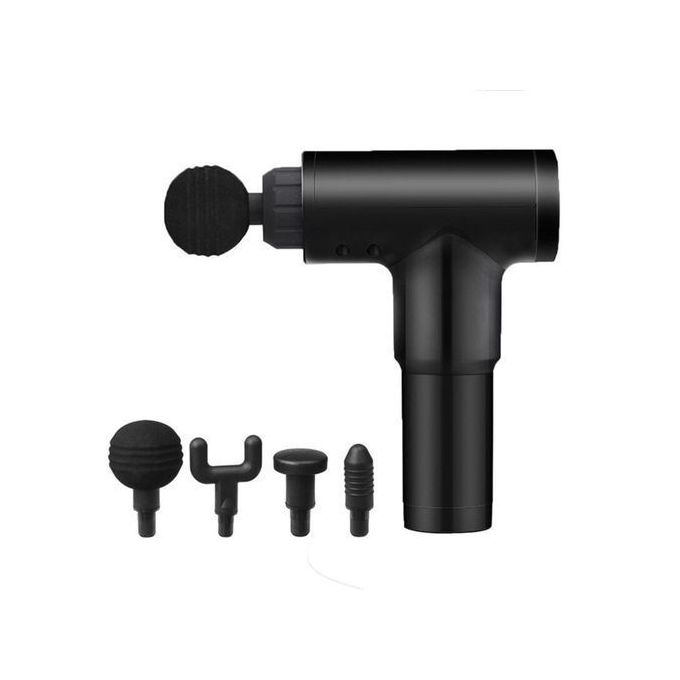
جهاز التدليك
وفر 26%! اشترِ جهاز التدليك بسعر 290 د.ل فقط في ليبيا. متوفر حالياً، الدفع عند ا
🛒 تسوق الآن Libya Press
Libya's economy is staging a remarkable rebound in 2025, with GDP projected to grow by 13.3 percent following a sharp contraction the previous year, driven primarily by a resurgence in oil production and rising global energy demand. Yet beneath the headline growth figures lies a deeply fragile economic structure that remains almost entirely dependent on hydrocarbons, leaving the North African nation vulnerable to the next political or military shock.
According to the World Bank, Libya's GDP is expected to reach approximately 7.9 billion in nominal terms by 2025, with GDP per capita standing at around ,800. The International Monetary Fund projects GDP growth of 17.3 percent for 2025, one of the highest rates in the region, before moderating to 4.3 percent in 2026 and settling near 1.8-1.9 percent in the following two years.
The recovery follows a turbulent 2024 in which the Central Bank of Libya (CBL) governance crisis disrupted oil output and widened exchange rate pressures. The crisis was resolved in late 2024, enabling a return to production levels averaging 1.3 million barrels per day. In April 2025, the CBL devalued the Libyan dinar to narrow the gap with the parallel market rate and safeguard foreign reserves, which stood at 4.7 billion at the end of 2017.
Oil remains the undisputed engine of the Libyan economy. Hydrocarbons accounted for 65 percent of GDP, 93 percent of exports, and 72 percent of government revenues in 2024. Oil revenues surged by 30 percent in 2025, pushing total government revenues to 53.6 percent of GDP. The fiscal balance is expected to register a surplus of 3.8 percent of GDP in 2025, while the current account deficit will narrow to about 4 percent.
Despite these encouraging macroeconomic indicators, structural weaknesses persist. The private sector remains underdeveloped, accounting for only 14 percent of the workforce. Years of conflict, underinvestment, weak infrastructure, and heavy public-sector dominance continue to constrain diversification efforts. The economy is characterized by extensive subsidies, state-owned enterprises, and a large informal sector.
Unemployment remains a critical challenge, standing at 18.74 percent as of 2023, with youth unemployment significantly higher. Social vulnerabilities are acute, with service delivery remaining weak in health, education, water, and electricity. Stark regional disparities persist, and high levels of corruption remain a public concern.
Libya's trade relationships reflect its geographic position at the crossroads of Africa, the Middle East, and Europe. The European Union accounts for 75 percent of exports, with Italy alone taking 24.6 percent, followed by Germany at 15.1 percent. On the import side, China is the largest partner at 17.1 percent, followed by Turkey at 13.4 percent and Egypt at 9.31 percent.
The country holds membership in OPEC, COMESA, CEN-SAD, and the Arab Maghreb Union, positioning it as a significant player in regional economic cooperation. Foreign direct investment stock reached 2.4 billion in 2023, reflecting continued international interest in Libya's energy sector.
Looking ahead, Libya's economic trajectory hinges on several critical factors. Investments targeting a capacity expansion to 2 million barrels per day by 2030 could sustain growth, but only if political stability holds. The absence of a unified 2025 budget and reliance on monthly fiscal allocations continue to constrain effective public financial management.
Reforms in subsidy rationalization, energy sector efficiency, financial modernization, and public financial management remain essential for long-term sustainability. Ending the oil-for-fuel swap system in April 2025 was a positive step toward improving transparency and channeling more revenue through the Central Bank.
The risks are significant: deepening political frictions, potential resumption of conflict, oil production disruptions, and climate shocks all threaten the recovery. However, upside potential exists in sustained oil stability, post-conflict reconstruction, and meaningful structural reforms that could finally diversify the economy beyond petroleum.
For now, Libya remains a nation of immense resource wealth and unfulfilled potential, where economic progress is perpetually held hostage to the unresolved political divisions that have defined the country since 2011.