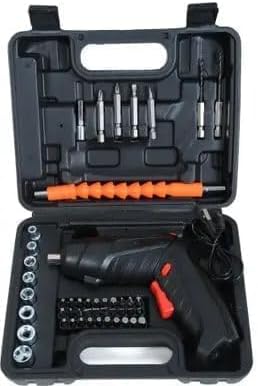
شنطة مفك كهربائي
وفر 20%! اشترِ شنطة مفك كهربائي بسعر 225 د.ل فقط في ليبيا. متوفر حالياً، الدفع ع
🛒 تسوق الآن Libya Press
Libya Stands at a Crossroads in 2026 as Political Fractures Deepen
Libya is entering one of the most consequential phases of its prolonged crisis in 2026, with competing domestic power centres and renewed international pressure converging to challenge a fragile political status quo that has held — however tenuously — for nearly four years.
After a period of relative stagnation throughout 2025, the North African nation now finds itself moving toward a new and deeply uncertain equilibrium. Political authority remains bitterly contested, economic pressures are mounting at an alarming rate, and both Libyan power brokers and foreign actors are increasingly pushing to reshape the country's governance landscape.
The fault lines driving Libya's instability remain rooted in competition over the nation's vast oil resources, questions of political legitimacy, and the raw exercise of power — sometimes negotiated through backroom deals and sometimes enforced by armed groups operating across the country's fractured territory.
What has changed most significantly over the past year is a growing recognition among Libya's ruling elites, as well as the international community, that the current arrangement is unsustainable. For years, it served the interests of multiple actors — both domestic and foreign — to keep Libya fragmented and its governance structures deliberately weak. That calculus is now shifting.
The increasing appetite for foreign investment, combined with the expanding ambitions of national politicians, is pushing the country toward a new political reality. While the shape of that reality remained opaque just twelve months ago, there is now considerably more clarity, with four distinct and competing visions beginning to consolidate across the Libyan political scene.
In the east, the Libyan National Army (LNA) under the Haftar family is actively working to extend its system of control across the entire country. Commander Khalifa Haftar has spent the past two years concentrating power within his family and solidifying a division of authority among his children, creating what analysts describe as a dynastic power structure that now seeks national reach.
In the west, Government of National Unity (GNU) Prime Minister Abdulhamid Dabaiba is maneuvering to secure a political future for himself and his family, potentially at the expense of his current allies and the GNU institution itself. Dabaiba's recent public outbursts — including a heated cabinet meeting where he accused eastern actors of sabotaging the Central Bank of Libya and reportedly threatened violence against political opponents — underscore the volatility of the moment.
Beyond Libya's borders, the United Nations is once again pushing a political process aimed at creating more inclusive governance, though few Libyan politicians appear genuinely interested in such a framework. Meanwhile, the United States is pursuing a more transactional approach, seeking to secure material and strategic gains through whatever new political arrangement ultimately emerges.
These competing visions are fundamentally at odds with one another, and 2026 is expected to witness intensified political maneuvering as each faction attempts to set a new trajectory for the country.
The economic dimension of the crisis adds further urgency. Prolonged financial instability is eroding the foundations of Libya's political architecture. Corruption continues to degrade governing capacity and fuel competition between militias, while public frustration grows over the deterioration of basic services and living standards.
Western Libyan politicians have increasingly taken to social media and public speeches to air grievances and deflect blame. Presidential Council Vice Chairman Mousa al-Koni recently used a U.S.-Libya business forum to denounce the country's divided state, foreign influence, and the GNU's inability to govern effectively. Khalid al-Mishri, contesting leadership of the High Council of State, raised alarms about economic corruption and migration challenges.
Yet words continue to substitute for meaningful action. Real progress will require concrete steps toward unifying Libya's divided institutions — particularly the Central Bank and the executive authority — and creating a genuine framework for elections that all major factions can accept.
The stakes could not be higher. Without a credible political breakthrough, Libya risks sliding deeper into institutional decay, economic collapse, and renewed armed conflict. For a country that has endured more than a decade of fragmentation, 2026 may prove to be the year that determines whether Libya can finally chart a path toward stability — or descends further into chaos.