
مروحة كهربائية توربينية لاسلكية
وفر 20%! اشترِ مروحة كهربائية توربينية لاسلكية بسعر 297.6 د.ل فقط في ليبيا. متوف
🛒 تسوق الآن Libya Press
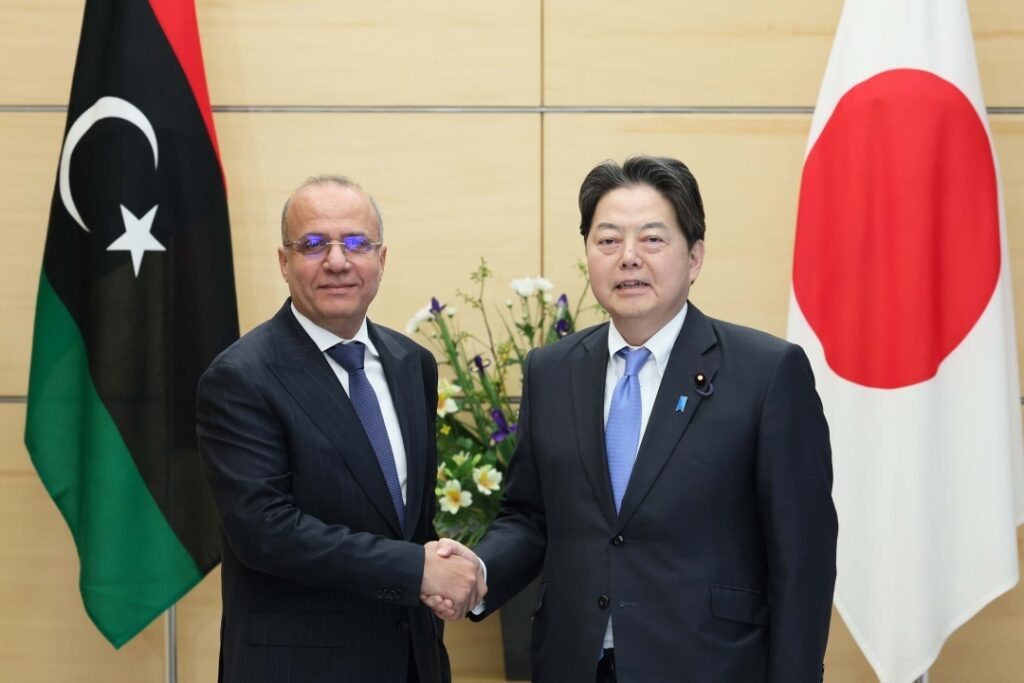
A high-level Libyan delegation visited Japan from July 7 to July 10, 2026, to discuss expanding cooperation in energy, trade, infrastructure, and development — marking one of the most significant bilateral engagements between the two nations in recent years.
The Libyan team included senior representatives from the Ministry of Foreign Affairs, the Oil and Gas Ministry, and the Office of the State Minister. On the Japanese side, Foreign Minister Keiichi Iwaya led discussions alongside officials from Japan's Ministry of Economy, Trade and Industry, reflecting Tokyo's growing interest in Libya's post-conflict economic recovery.
Libya's Oil and Gas Minister Khalifa Abdulsadek held dedicated meetings with Japan's minister for economic and fiscal policy, focusing on opportunities in oil and gas exploration, refining, and liquefied natural gas (LNG) supply chains. Japan, one of the world's largest importers of LNG, has long viewed Libya as a potential stable supplier of hydrocarbons.
The discussions explored avenues for Japanese technology and investment to help modernize Libya's aging energy infrastructure, including pipelines, export terminals, and refinery upgrades. Japanese firms have expressed interest in providing advanced equipment and technical expertise for enhanced oil recovery and gas processing.
In a parallel track of engagement, a Japanese diplomatic and business delegation visited Benghazi, Libya's economic hub in the east. The team included senior diplomats from Japan's foreign ministry and representatives from Japanese trading houses and infrastructure companies.
The visit to Benghazi signals Japan's willingness to engage directly with Libya's eastern economic institutions, reflecting growing confidence in the country's improving security and business climate. Discussions in Benghazi covered potential partnerships in transportation, urban development, and renewable energy projects.
Beyond energy, the talks explored a wide range of infrastructure projects where Japanese expertise could play a transformative role. Libya's reconstruction needs are vast after more than a decade of conflict, with estimates running into hundreds of billions of dollars. Japanese companies, known for their engineering excellence and project management, are well-positioned to bid for contracts in water treatment, power generation, road construction, and telecommunications.
Japanese development cooperation has traditionally focused on technical assistance and capacity building. Both sides discussed reactivating Libya-Japan development projects that were shelved during the years of instability.
The two sides agreed to establish a joint working group to identify and fast-track investment opportunities. The framework will cover investment protection, dispute resolution mechanisms, and facilitation of business visas — removing barriers that have historically limited Japanese corporate engagement in Libya.
Libyan officials presented a list of priority investment projects spanning petrochemicals, healthcare, education, and digital infrastructure. The Japanese side expressed particular interest in supporting Libya's digital transformation and vocational training programs.
This deepening of Libya-Japan ties comes at a crucial moment for Libya's economy. With oil production stabilizing and the political landscape showing signs of consolidation, international partners are increasingly looking at Libya as a viable investment destination. Japan's engagement provides a significant vote of confidence in Libya's economic trajectory.
For Libya, Japanese investment and technology transfer offer a pathway to rebuild infrastructure more efficiently and sustainably. The partnership also opens doors for Libyan exports beyond hydrocarbons, including petrochemicals and agricultural products, to the Japanese market.
Both sides committed to maintaining diplomatic momentum, with plans for follow-up visits and a Libya-Japan business forum later this year. The talks represent a concrete step toward a long-term strategic partnership that could reshape Libya's economic engagement with Asia.
— Libya Press / Economics Desk