
قطاعة خضروات يدوية متعددة الوظائف 4 في 1
وفر 21%! اشترِ قطاعة خضروات يدوية متعددة الوظائف 4 في 1 بسعر 198 د.ل فقط في ليبي
🛒 تسوق الآن Libya Press
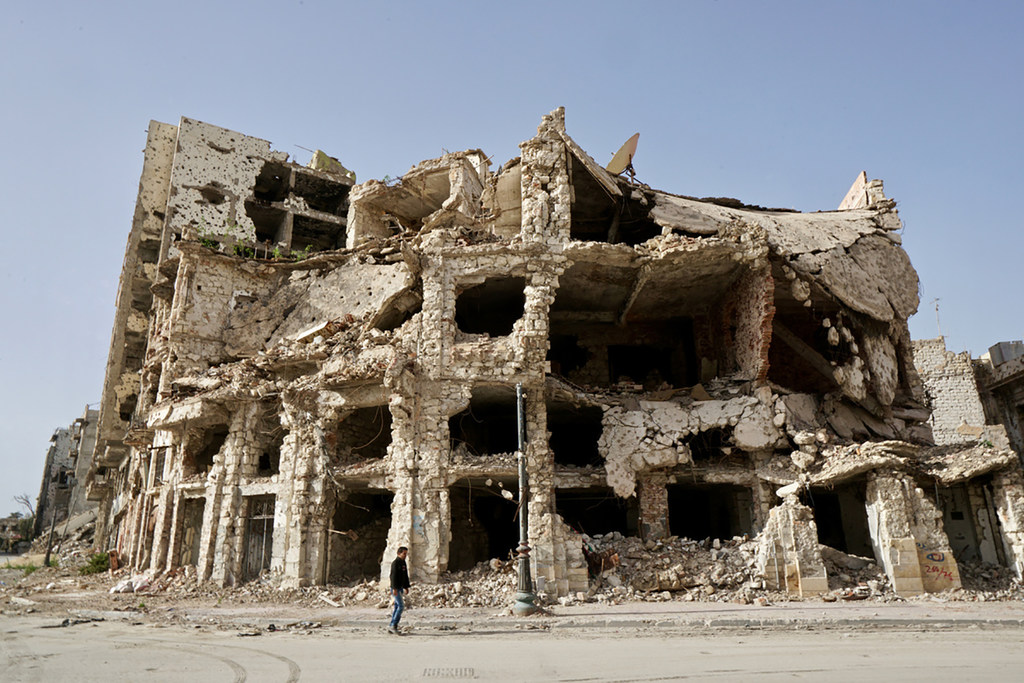
Fifteen years after the fall of Muammar Gaddafi, Libya remains trapped in political fragmentation that no international initiative has broken. Two concurrent diplomatic tracks — one American, one UN-led — have failed to produce a legitimate authority capable of ending the country's deep institutional divide. The real problem is not the absence of peace plans. It is that the plans themselves have become tools for managing, rather than resolving, Libya's partition.
Massad Boulos, senior adviser to the US President for Arab and African affairs, proposed replacing the Tripoli-based Presidential Council with a new body led by Saddam Haftar — son of Field Marshal Khalifa Haftar — while keeping Abd al-Hamid al-Dbeibah as head of a merged government. The plan prioritizes rapid stability through elite bargaining. Presidential Council head al-Munfi attacked it as a choice between "building the state" and "making deals," warning against foreign guardianship. Mohamed Takala, head of the State Council, rejected any settlement outside the existing Libyan Political Agreement.
UNSMIL's 112-page "Structured Dialogue" report supports budget unification and references the joint "Flintlock 26" military exercises in Sirte — the first to include eastern and western forces. But it reveals that budget unification is essentially a mechanism for sharing oil revenues among elites, and military coordination does not erase the ideological divide or the "militia veto." Political science researcher Alassan Abubakr Lahasi told Raseef22 that critics now see the unified budget as reflecting power balances rather than election priorities, raising fears it has become an apportionment tool.
Analyst Mahmoud Muhammad Fahail describes a "financial apportionment trap" in which the General Command and Reconstruction Fund guarantee their Central Bank shares. Oil remains the only functioning sector in a country plagued by chaos. Meanwhile, development in Fezzan and Barqa outpaces the west, satisfying eastern and southern residents but alienating the western partner. Haftar's Libyan National Army continues positioning itself as a national guarantor against militias and Islamist currents.
Russian experts were absent from the "Dignity Shield 2" exercises — the Libyan National Army's largest ever — marking a sharp decline from their previously frequent presence. Moscow has effectively tied its Libya file to the Ukraine conflict, seeking a broader deal with Washington. Russia's presence has receded both physically and politically.
Without unified governance, Libya cannot address crumbling infrastructure, failing services, or economic hardship. Oil wealth flows but benefits competing elites, not citizens. Over 700,000 Libyans remain internally displaced, and youth unemployment exceeds 50%. The cost of endless transition is measured in lost livelihoods, not political theory.
The UN's final warning is stark: elections must end the transitional phase, not reproduce it. Libya's tragedy is not absent initiatives — it is their multiplication. After fifteen years, the crisis functions as a system designed to perpetuate division. Until Libyans are placed at the center of a genuine, inclusive process that dismantles militia power and distributes oil wealth equitably, the country will remain caught between false stability and dead initiatives.
— LibyaPress / Politics Desk