
سلة مهملات تُعلق على باب خزانة المطبخ
وفر 7%! اشترِ سلة مهملات تُعلق على باب خزانة المطبخ بسعر 187.2 د.ل فقط في ليبيا.
🛒 تسوق الآن Libya Press
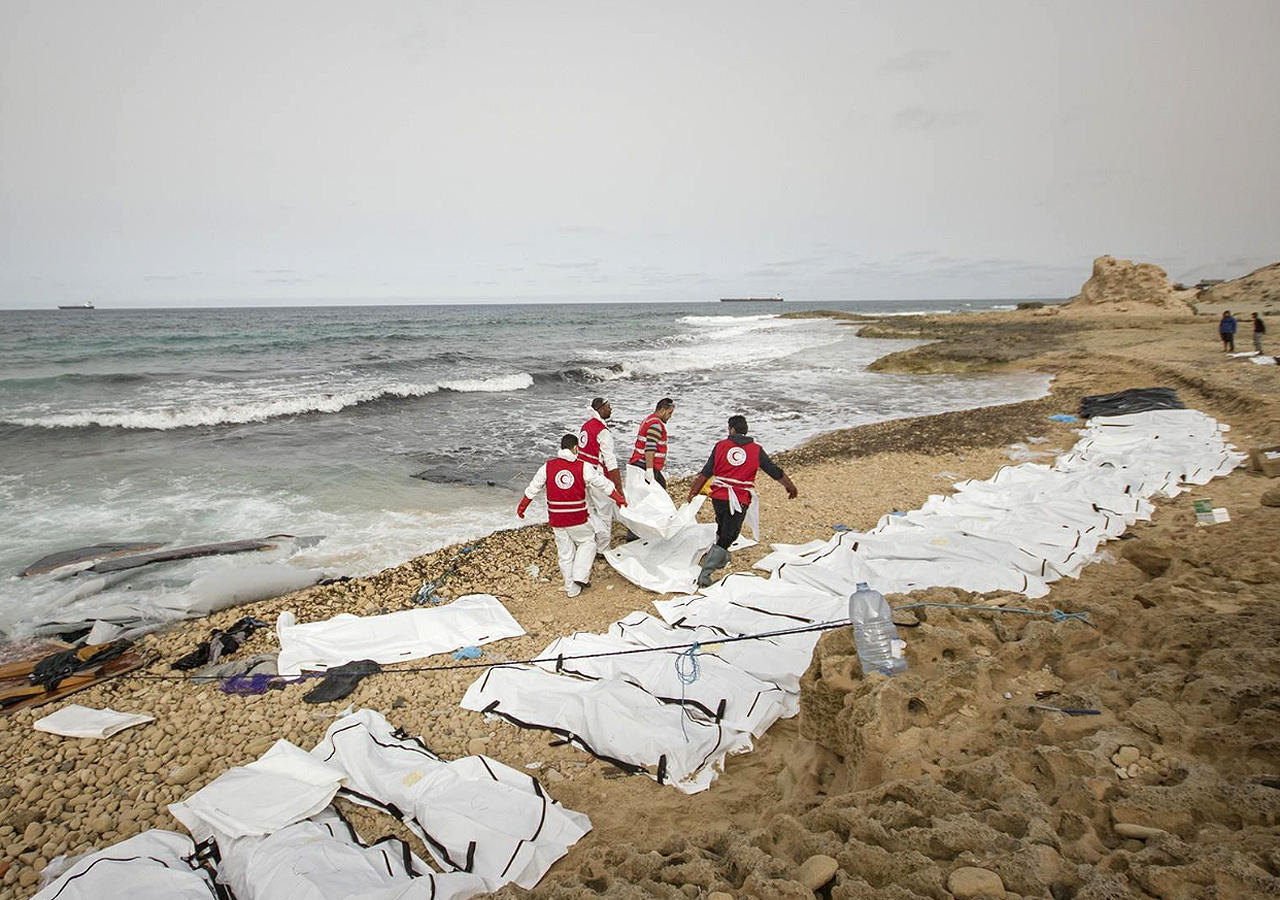
Libyan authorities recovered the bodies of at least 15 migrants, including one young girl, who were washed ashore on Libya's eastern Mediterranean coast over the past week, according to security and medical sources. The victims had been aboard a boat that capsized in the Mediterranean Sea, one of the deadliest migration routes in the world.
The bodies were discovered along the eastern coastline by local residents and fishermen before being retrieved by Libyan civil defense and coast guard units. A Libyan Navy spokesperson confirmed that search operations continued through Saturday, with fears that the death toll could rise as more vessels remain unaccounted for in the region.
Security and medical officials, along with a Libyan Navy source, confirmed on Saturday that no fewer than 15 bodies had been pulled from the sea. Among the victims was a young girl, underscoring the particular vulnerability of women and children on these perilous journeys. The boat had reportedly departed from a Libyan coastal town before encountering rough seas that led to its sinking.
The migrants were believed to be from various sub-Saharan African countries, though their exact nationalities had not been officially confirmed at the time of reporting. Libya has served as a primary departure point for migrants attempting to reach Europe since the fall of the Gaddafi regime in 2011, with thousands making the dangerous crossing each year.
A local fisherman from the eastern coast, who was among the first to discover the bodies, described the grim scene to reporters. "We found them scattered along the shore, one after another. It is something no human should have to witness. The sea does not discriminate — it takes everyone," he said, requesting anonymity due to the sensitivity of the situation.
Medical personnel at a nearby hospital confirmed that the bodies showed signs consistent with prolonged exposure to seawater, suggesting the boat had sunk several days before the remains washed ashore. Efforts to identify the victims were ongoing, with authorities coordinating with international organizations that handle migrant affairs.
This tragedy places Libya at the center of one of the world's most pressing humanitarian crises. The country remains the primary transit point for migrants and refugees attempting to cross the Mediterranean into Europe, a route that the International Organization for Migration (IOM) has consistently labeled as the deadliest in the world.
The Libyan Coast Guard, despite limited resources and ongoing challenges stemming from the country's political instability, continues to conduct search and rescue operations. However, human rights organizations have repeatedly criticized conditions in Libyan detention centers and the broader framework governing migrant treatment in the country.
The European Union's policy of supporting Libyan coast guard interceptions has also drawn criticism from the United Nations and humanitarian groups, who argue that returning migrants to Libya exposes them to abuse, exploitation, and inhumane conditions. The latest shipwreck intensifies calls for safer, legal pathways for migration and greater international responsibility-sharing.
According to the IOM's Missing Migrants Project, more than 28,000 people have died or gone missing on the Central Mediterranean route since 2014. Libya, due to its geographic position and prolonged instability, has become the epicenter of this crisis. Smuggling networks operate with relative impunity across the country's vast coastline, exploiting desperate individuals fleeing conflict, poverty, and persecution.
The UNHCR has repeatedly urged the international community to increase funding for search and rescue operations and to expand resettlement quotas for refugees. Without systemic change, aid workers warn that tragedies like this will continue with devastating regularity along Libya's shores.
Libyan authorities are expected to continue recovery operations along the eastern coast in the coming days. The international community faces renewed pressure to address the root causes driving mass migration through Libya, including conflict in sub-Saharan Africa, economic hardship, and the absence of legal migration pathways to Europe.
For Libya, this incident is yet another painful reminder of the human cost of the migration crisis unfolding on its shores. Until lasting solutions are found — through international cooperation, humanitarian investment, and political stabilization — the Mediterranean will continue to claim lives with tragic frequency.
— LibyaPress / Libya Desk