
كم الركبة الضاغط
وفر 45%! اشترِ كم الركبة الضاغط بسعر 142.08 د.ل فقط في ليبيا. متوفر حالياً، الدف
🛒 تسوق الآن Libya Press
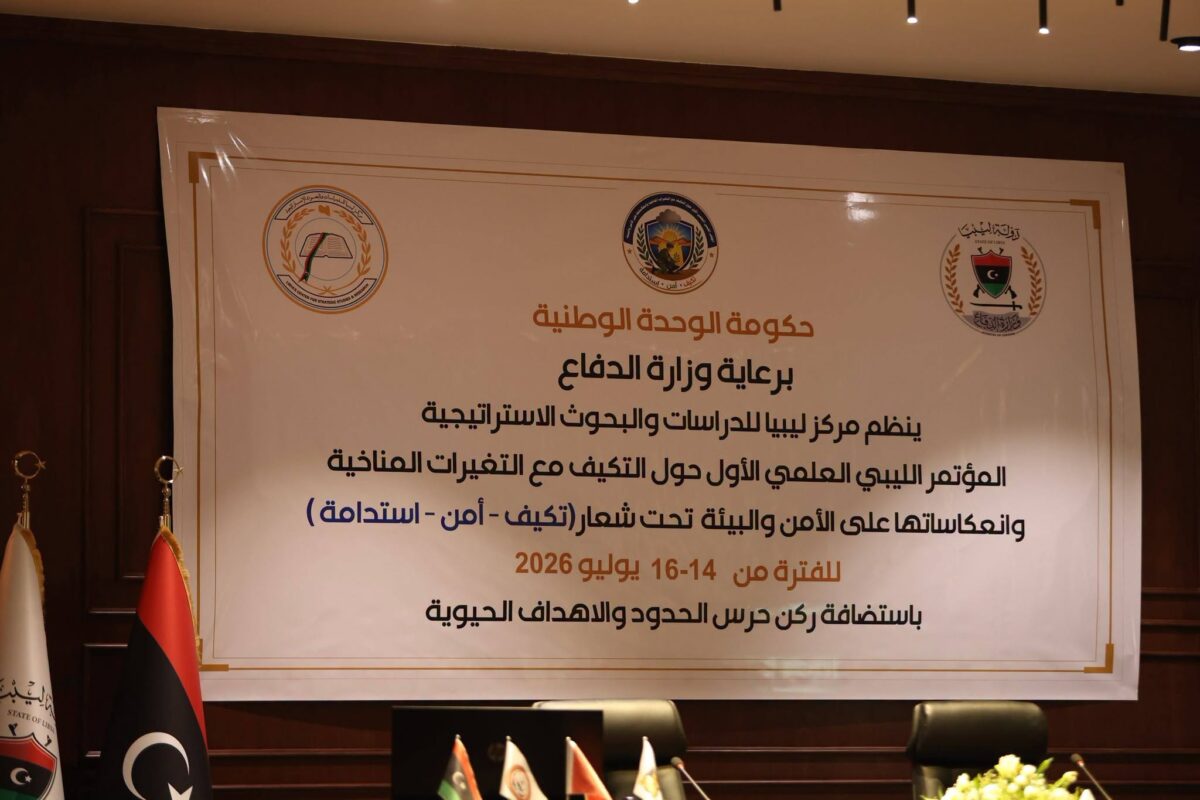
Under the patronage of the Ministry of Defense of the Government of National Unity, Libya has taken a significant step toward integrating climate resilience into its national security framework. The First Scientific Environmental Conference on Climate Change Adaptation and Its Implications for Security and the Environment opened July 14 in Tripoli, marking the first time Libya's military establishment has formally partnered with academic institutions to address environmental challenges as a security priority.
Organized by the Libya Center for Strategic Studies and Research, the three-day conference running through July 16 brings together senior military commanders, government officials, researchers, and international experts under the banner "Adaptation — Security — Sustainability." The event is hosted at the Border Guard and Vital Targets Headquarters, underscoring the military's growing role in environmental protection.
The conference drew a broad cross-section of Libya's leadership, including several chiefs of staff, the Inspector General of the Libyan Army, the Commander of the Counter-Terrorism Force, and heads of military bodies, alongside a representative of the Ministry of Defense. The civilian government was represented by the Minister of Water Resources, the Deputy Minister of Social Affairs, and the Deputy Minister of Education.
This high-level participation signals growing recognition across Libyan institutions that climate change is no longer solely an environmental issue — it is a national security matter requiring coordinated, multi-sectoral response.
The conference featured researchers from Iraq, Jordan, Algeria, and Tunisia, who presented studies detailing their countries' climate adaptation experiences. They showcased practical mechanisms for mitigating climate impacts in agriculture, industry, and infrastructure. Military officers holding advanced degrees presented specialized research alongside civilian academics from the Libyan Academy for Graduate Studies and other institutions.
This blend of military and academic expertise reflects a deliberate strategy to bridge the gap between operational security needs and scientific research.
Organizers emphasized that the conference comes amid growing global awareness of climate change's direct impact on state stability. According to the Stockholm International Peace Research Institute, Libya ranks among countries most exposed to climate-related security risks, with water scarcity, desertification, and extreme temperatures compounding existing political challenges.
The United Nations has also highlighted that climate cooperation may offer divided institutions opportunities for integration. The conference operationalizes this approach by creating a platform where military, civilian, and academic stakeholders collaborate on shared environmental threats rather than political divisions.
At the conclusion of the first day, participants stressed the importance of strengthening the military's role in supporting national environmental protection and sustainable development efforts. Key recommendations include:
The conference represents a paradigm shift for Libya, where decades of political instability have often overshadowed longer-term strategic challenges like environmental degradation. By framing climate adaptation as a security imperative under military patronage, Libyan authorities are sending a clear message: environmental threats do not wait for political settlements.
The participation of Arab regional partners positions Libya as a potential hub for climate security cooperation in North Africa, a region increasingly vulnerable to water stress, food insecurity, and climate-induced displacement. With temperatures in the Mediterranean basin rising faster than the global average, the urgency of such collaboration is clear.
With the conference continuing through July 16, additional working groups are expected to produce comprehensive policy recommendations that could shape Libya's environmental security architecture for years to come.
— Libya Press / Security Desk