
مزيل الرؤوس السوداء
وفر 25%! اشترِ مزيل الرؤوس السوداء بسعر 206.6 د.ل فقط في ليبيا. متوفر حالياً، ال
🛒 تسوق الآن Libya Press
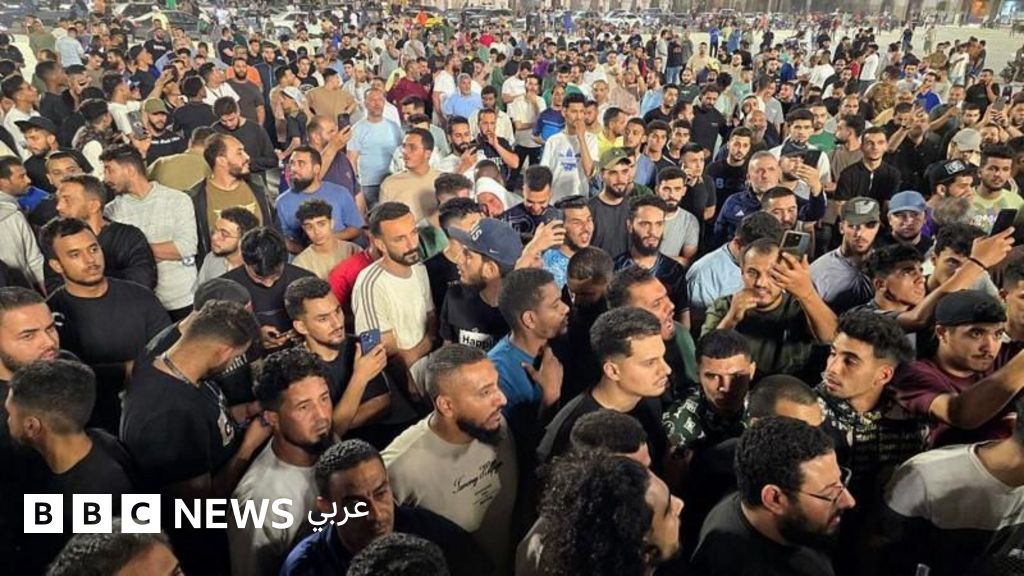
Protests have widened across western Libyan cities as popular movements declared civil disobedience, intensifying pressure on the Government of National Unity (GNU) amid worsening living conditions and a stalled political process. Sunday evening marked the beginning of what organizers describe as an escalating campaign to force the government out of office.
Popular groups in several western Libyan cities announced the launch of protests and a civil disobedience campaign under the slogan "Shut Down the Government." The movement calls on citizens, businesses, and public sector workers to cease cooperation with the GNU until it steps down, according to reports from Sky News Arabia.
The protests first erupted in Tripoli before spreading to other urban centers in the western region. Demonstrators have erected dirt barriers and blocked roads in several neighborhoods, signaling a shift from conventional protests toward organized civil resistance.
The underlying causes of the unrest are rooted in a severe deterioration of living standards across Libya. Citizens cite persistent electricity outages, a collapsing currency, soaring prices for basic goods, and a lack of basic public services as key grievances against the GNU.
According to Al-Ain News, the protests are "demanding the departure of the Government of National Unity against the backdrop of deteriorating living conditions and a faltering political track." The electricity crisis in particular has become a flashpoint, with many neighborhoods in Tripoli and surrounding areas experiencing daily blackouts lasting over 12 hours during the summer heat.
The political process in Libya has remained essentially frozen, with no clear path toward elections. The GNU, led by Prime Minister Abdul Hamid Dbeibeh, has faced mounting criticism for failing to deliver on its promise to hold national elections and establish a stable governance framework.
Euronews Arabic reported that protesters in Tripoli's Martyrs' Square have been chanting slogans demanding the government's fall and calling for a new political roadmap. The lack of progress toward a permanent constitution and the continued division of state institutions between rival administrations have deepened public disillusionment.
The protests represent one of the most significant challenges to the GNU since it took office. Civil disobedience as a tactic marks an escalation beyond the periodic demonstrations that have occurred in previous months. Organizers are leveraging social media networks to coordinate actions across multiple cities simultaneously.
Key demands from the protest movement include:
The unrest comes at a delicate moment for Libya's fragile stability. International stakeholders, including the United Nations Support Mission in Libya (UNSMIL), have urged restraint and called for dialogue. The widening scope of protests raises questions about whether the GNU can maintain control over the western region, traditionally its stronghold.
Analysts suggest that sustained civil disobedience could paralyze government operations in the capital and force either a cabinet reshuffle or early elections. However, the absence of a unified opposition and the fragmented nature of Libya's political landscape make the outcome uncertain.
As of Monday evening, the GNU had not issued an official statement addressing the civil disobedience campaign. Security forces have maintained a notable restraint, avoiding direct confrontation with protesters in most areas.
The coming days will be critical in determining whether the protest movement succeeds in forcing political change or whether it dissolves into the pattern of periodic unrest that has characterized post-2011 Libya. What is clear is that public patience with the status quo has reached a breaking point.
— Libya Press / Politics Desk