
مشط التدليك الكهربائي
وفر 15%! اشترِ مشط التدليك الكهربائي بسعر 240 د.ل فقط في ليبيا. متوفر حالياً، ال
🛒 تسوق الآن Libya Press
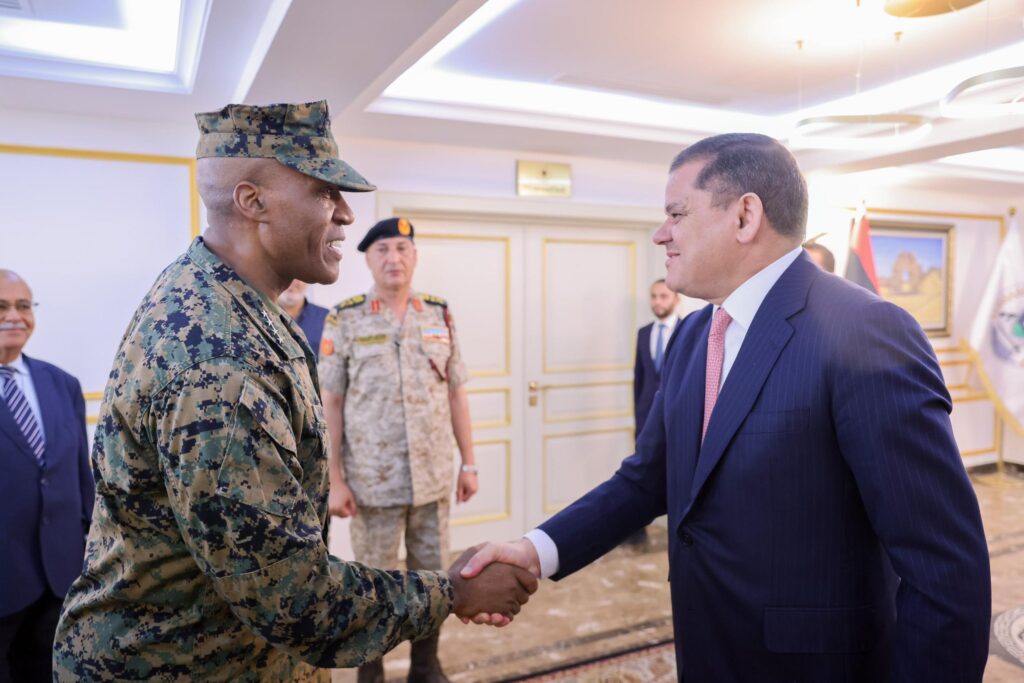
WASHINGTON — Undersecretary of Libya's Ministry of Defense, Lieutenant General Abdul Salam Al-Zoubi, launched his official visit to the United States on Thursday with substantive high-level discussions at the State Department, marking a significant step in bilateral security relations between Tripoli and Washington. The visit, confirmed by the Libyan News Agency (LANA), brought together senior Libyan and American officials to address pressing security challenges facing Libya and the broader North African region.
Al-Zoubi's visit began with direct talks at the US State Department, where he discussed developing security partnerships and military coordination. According to LANA, the Undersecretary met with senior American officials to explore avenues for enhanced defense cooperation, counterterrorism efforts, and institutional capacity building within Libya's armed forces. The Libyan delegation includes military intelligence officials, signaling the strategic importance Tripoli places on this diplomatic engagement.
The visit represents the most high-level defense dialogue between Libya and the United States in recent months, coming at a critical juncture as the Government of National Unity seeks to consolidate security arrangements across the country. Washington has maintained a keen interest in Libya's stability, viewing security sector reform as essential to preventing the resurgence of extremist groups and ensuring the protection of Libya's sovereign borders.
Lieutenant General Al-Zoubi was accompanied by the Director of the Military Intelligence Department, Major General Maher Hamza, underscoring the visit's focus on intelligence sharing and joint security operations. The two Libyan officials held discussions on developing frameworks for military intelligence coordination, a critical component in addressing cross-border threats and internal security challenges that have persisted since the 2011 revolution.
The United States has invested significantly in Libya's security architecture over the past decade, supporting training programs for Libyan military personnel and providing technical assistance for defense institutional reform. This latest engagement signals Washington's continued commitment to partnering with Libyan authorities on counterterrorism operations and border security management in the Sahel region.
The high-level defense talks carry significant implications beyond bilateral relations. Libya's security situation directly affects neighboring countries, including Tunisia, Egypt, and Chad, all of which face spillover effects from instability along Libya's porous southern borders. American military analysts view strengthened Libyan defense institutions as a stabilizing force across the entire Sahel and North African corridor.
Dr. Wolfram Lacher, a senior analyst at the German Institute for International and Security Affairs, noted that "sustained US engagement with Libya's defense ministry is essential for building institutional coherence in a country where armed factions have historically operated with limited central command coordination." This assessment underscores the strategic rationale behind Washington's willingness to host senior Libyan defense officials for comprehensive security discussions.
For Libyans, the Washington visit represents a tangible signal that the international community continues to invest in Libya's security future. Stronger defense ties with the United States could translate into enhanced training programs, intelligence capabilities, and material support for Libyan armed forces working to unify military command structures under a single national authority. The visit also reinforces Libya's position as a key security partner in North Africa, potentially attracting additional international support for stabilization efforts across the country.
Libyan citizens have long prioritized security and stability as their foremost concern, and high-level diplomatic engagement with Washington offers hope that international partnerships will accelerate progress toward a safer, more unified Libya. The outcomes of these talks are expected to influence Libya's security policy trajectory in the coming months.
The Libyan delegation is expected to continue its Washington program with additional meetings at the Pentagon and coordination sessions with US Africa Command officials. Analysts anticipate that concrete agreements on training programs and intelligence-sharing protocols may emerge from the visit, potentially announced in a joint statement before the delegation's departure. This visit sets the stage for deeper defense cooperation between Libya and the United States in 2026, offering a positive framework for advancing shared security objectives across the region.
— LibyaPress / Security Desk
===END_ENGLISH===