
مشط التدليك الكهربائي
وفر 15%! اشترِ مشط التدليك الكهربائي بسعر 240 د.ل فقط في ليبيا. متوفر حالياً، ال
🛒 تسوق الآن Libya Press
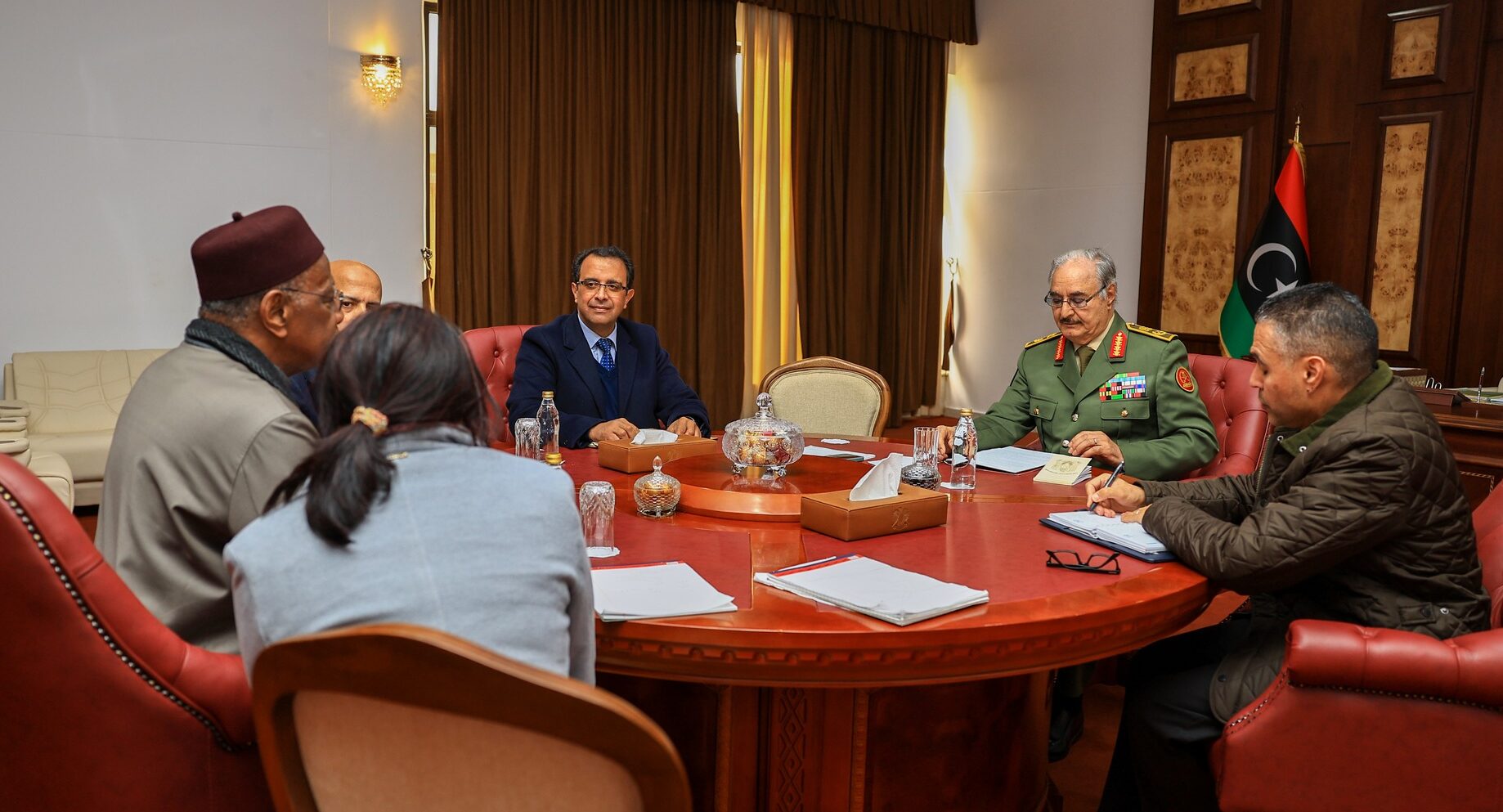
Sirte, July 13, 2026 — The 5+5 Joint Military Commission (JMC) has affirmed its full support for all efforts aimed at unifying the Libyan military institution, emphasizing the urgent need to strengthen trust among the country's parallel military components. In a statement issued Sunday following a landmark meeting in Sirte, the Commission called on all participants to intensify efforts toward ending the military division that has persisted since 2014.
The meeting brought together senior military figures from both sides of Libya's divide, including Chief of Staff of the Government of National Unity (GNU) Lieutenant General Salah Al-Namroush, Chief of Staff affiliated with the eastern command Khaled Haftar, members of the 5+5 Joint Military Commission, members of the 3+3 Joint Military Committee, and several field commanders. The UN Deputy Special Representative for Political Affairs, Stephanie Koury, also attended in a facilitative role.
The General Staff Headquarters in Tripoli announced that participants reached a concrete agreement to organize a joint military field exercise involving personnel from both sides in one of Libya's southern regions. This marks the first publicly confirmed joint training initiative between the eastern and western military commands in recent years.
According to the General Staff, the participants also agreed to authorize the heads of military branches to hold monthly coordination meetings with their respective departments. The goal is to strengthen institutional performance, improve communication between previously divided commands, and address administrative and financial challenges facing military personnel on both sides.
UNSMIL welcomed the Sirte meeting, describing it as "a new step that reflects the commitment of Libyan military leaders to continue efforts toward unifying the country's military institution and strengthening confidence-building measures." In a statement published Sunday, the mission said the meeting builds on a series of previous engagements and represents an important milestone in the military unification process.
The mission praised the positive atmosphere and the efforts made by the participants, while reaffirming its commitment to supporting this Libyan-led and Libyan-owned process through continued facilitation and coordination with international partners. UNSMIL has been actively facilitating the military track, co-chairing the Security Working Group of the Berlin Process alongside Italy.
On Monday, Presidential Council head Mohammed Menfi reinforced the significance of the Sirte outcome, telling Acting Chief of Staff Salah Al-Namroush that unifying the military institution "is a national priority that cannot be delayed." Menfi described a unified national army as the cornerstone of protecting Libya's sovereignty, securing its borders, and preserving citizens' security and the state's stability.
Al-Namroush briefed Menfi on the practical steps agreed upon in Sirte, emphasizing that the unification process is proceeding on national and professional foundations. The Presidential Council welcomed the Sirte meeting, stressing that strengthening military dialogue is essential for the country's security and stability.
The 5+5 Joint Military Commission was established following the October 2020 ceasefire agreement under the Berlin Process. It comprises five senior military officers representing the GNU and five representing the eastern command. The Commission has served as the primary mechanism for maintaining ceasefire stability and advancing military confidence-building measures, despite recurring political deadlocks that have delayed broader unification.
The Sirte meeting marks the latest in a series of engagements that have gained momentum in 2026, including the work of the 4+4 committee, which recently announced a final agreement ready for signing. Libya's military division has been one of the most intractable legacies of the 2014 civil conflict, with parallel command structures operating independently for over a decade. The unification process is widely seen as essential for internal stability and for addressing transnational threats including irregular migration and the presence of foreign mercenaries.
— Libya Press / Security Desk