
سكاكين الطبخ
وفر 24%! اشترِ سكاكين الطبخ بسعر 260 د.ل فقط في ليبيا. متوفر حالياً، الدفع عند ا
🛒 تسوق الآن Libya Press
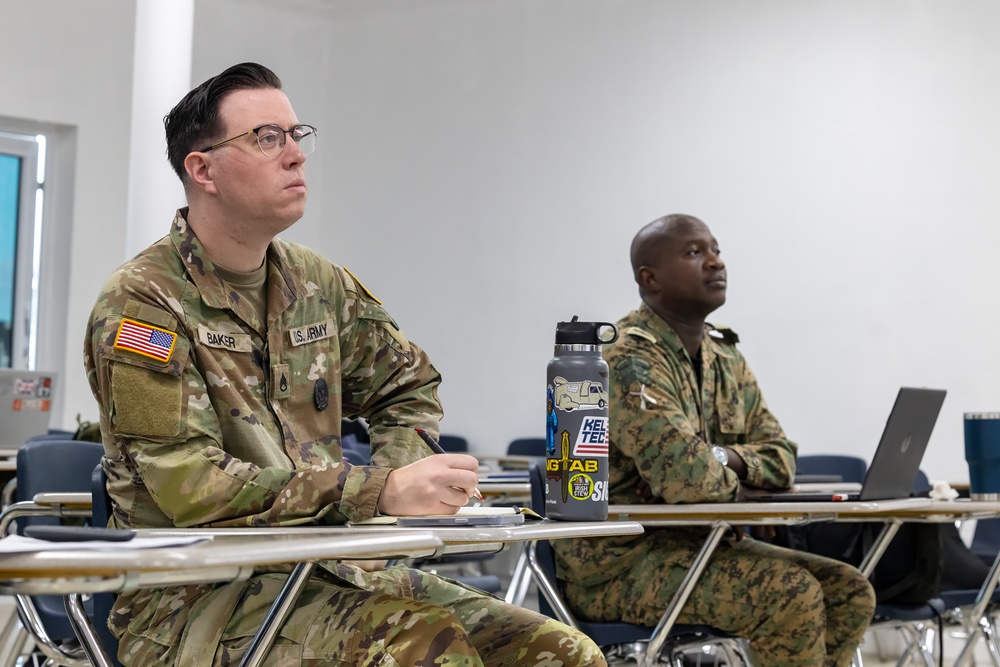
In a groundbreaking development for Libya's security landscape, U.S. Army Soldiers from the Southern European Task Force, Africa (SETAF-AF) conducted the first military-to-military subject matter expert exchange with representatives of both the Libyan National Army (LNA) and the Government of National Unity (GNU) in Benghazi from May 19–22, 2026. This marked the first time in 16 years that a conventional U.S. Army element has engaged directly with Libyan partner forces on Libyan soil.
The exchange brought together 21 military officers ranging from captain to colonel rank, representing both of Libya's distinct political entities. According to U.S. Army Maj. Miles Dunning, team lead for Civil Affairs Team Libya, the engagement was designed to build rapport between the two Libyan factions and lay the groundwork for future cooperation. "They get along together very well from what we've seen," Dunning said. "Both parties are amenable to a lasting peace and are eager to work with each other to continue these exchanges in the future."
Since the fall of Muammar Gaddafi in 2011, Libya has remained divided between competing political and military authorities. Various governments around the world recognize the LNA as Libya's legitimate government, while others back the GNU. The U.S. military's preferred end state is a unified Libya with a combined armed forces capable of combating terrorism across the region.
"What we're trying to do as SETAF-AF — and specifically civil affairs — is get both entities to the negotiating table with the overall goal to unify Libya under one government," Dunning explained. "The way we do that is by conducting military-to-military exchanges with both partner forces to facilitate a space where those forces can come together, cooperate, and have face-to-face conversations through knowledge exchanges."
The exchange covered critical military topics including the Sustainment Warfighting Function and its integration with other warfighting functions. Training coordinators translated all slides into Arabic to ensure full understanding among Libyan participants. The culminating tabletop exercise presented both partner forces with a scenario requiring them to plan a road-clearance operation through a fictitious country — a task that demanded coordination and joint problem-solving.
"Insights from this exchange will enable successful rapport building between the U.S. and both Libyan partner forces," Dunning said. "These exchanges offer a distinct opportunity to participate in open dialogue and will set the stage for future operations, increasing partner force cooperation and facilitating communication between the LNA and GNU."
For Libyans who have endured over a decade of division and instability, this exchange represents a tangible step toward the long-sought goal of national unity. The fact that both the LNA and GNU sent senior officers to train side by side — and did so cordially — signals a willingness to engage that has been rare in recent years. The U.S. military's role as a neutral facilitator, working with both entities simultaneously, provides a model for how external partners can support Libya's reconciliation without taking sides.
LibyaPress will continue to monitor developments as SETAF-AF proceeds with its planned monthly exchanges. A unified Libyan military capable of securing the country's vast borders would have significant implications for counterterrorism and regional security cooperation across North Africa.
— LibyaPress / Security Desk