
قطاعة خضراوات متعددة الوظائف 9 في 1 مع سلة تصفية
وفر 24%! اشترِ قطاعة خضراوات متعددة الوظائف 9 في 1 مع سلة تصفية بسعر 186.24 د.ل
🛒 تسوق الآن Libya Press
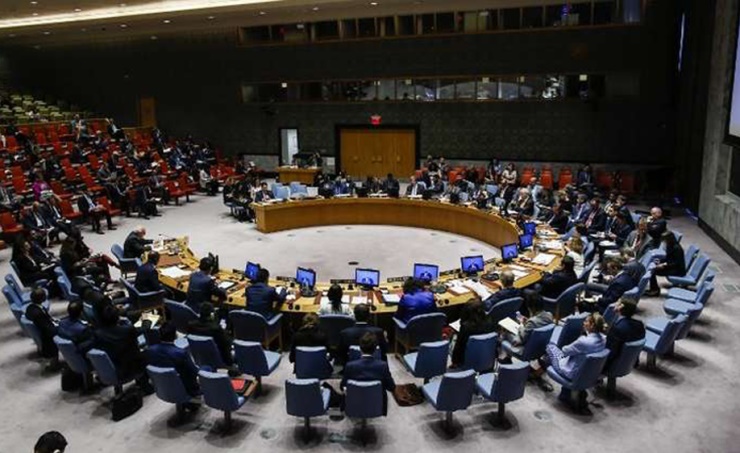
The United Nations Security Council pressed Libyan stakeholders today to accelerate progress toward holding long-delayed national elections, warning that the window for political stability is narrow. During a briefing at UN headquarters, the Council emphasized that Libya's political process has shown renewed but fragile momentum that must not be squandered. The session focused on three critical pillars: elections, security sector reform, and institutional unification.
Hanna Serwaa Tetteh, the Special Representative of the Secretary-General for Libya and head of the United Nations Support Mission in Libya (UNSMIL), briefed the Council on the latest developments. She outlined the UNSMIL roadmap designed to guide the country toward credible, inclusive elections. Tetteh stressed that further progress will require Libya's political and security actors to move beyond consultation and toward concrete, irreversible action.
Libya has remained divided since 2014 between rival governments and armed factions, with multiple failed attempts to hold national elections. The UNSMIL roadmap, first introduced earlier this year, represents the most structured effort to break the cycle of transitional governance that has persisted for nearly a decade. However, obstruction by entrenched political and military actors continues to threaten the process.
The August 2025 municipal elections offered a glimmer of hope, with thousands of Libyans casting ballots in dozens of municipalities across the country. Despite logistical challenges and localized violence, the elections demonstrated that Libyan citizens remain eager to participate in democratic processes. The Security Council today cited those municipal elections as proof that national-level voting is both feasible and urgently needed.
"The Libyan people have waited long enough. Every month without elections is another month of uncertainty for families, for businesses, for young people who see no future," Hanna Serwaa Tetteh told the Security Council during her briefing. "We cannot allow the momentum we have built to fade. The roadmap exists, the safeguards are being put in place, and the international community is watching."
Her remarks underscored the urgency felt within the UN mission and among ordinary Libyans who continue to suffer from deteriorating public services, currency instability, and the absence of a unified government capable of addressing basic needs.
For Libyans, the Security Council's renewed pressure carries significant weight. Elections represent the only viable path toward ending the country's governance crisis and unifying its institutions. Without a legitimate, elected government, Libya will remain vulnerable to foreign interference, militia violence, and economic collapse.
The international community's sustained attention, combined with UNSMIL's active mediation, provides Libyan political actors with a rare opportunity to demonstrate genuine leadership. Libyan civil society organizations have repeatedly called on both the Tripoli-based Government of National Unity and the eastern-based authorities to prioritize national interest over factional gains.
The Security Council is expected to review progress on Libya within 90 days, with particular attention to whether a credible electoral calendar has been established. The coming weeks will be decisive for Libya's trajectory. If political actors seize this moment, the country could finally move toward the stability its citizens deserve. The world is watching, and the Libyan people are ready. — LibyaPress / Politics Desk