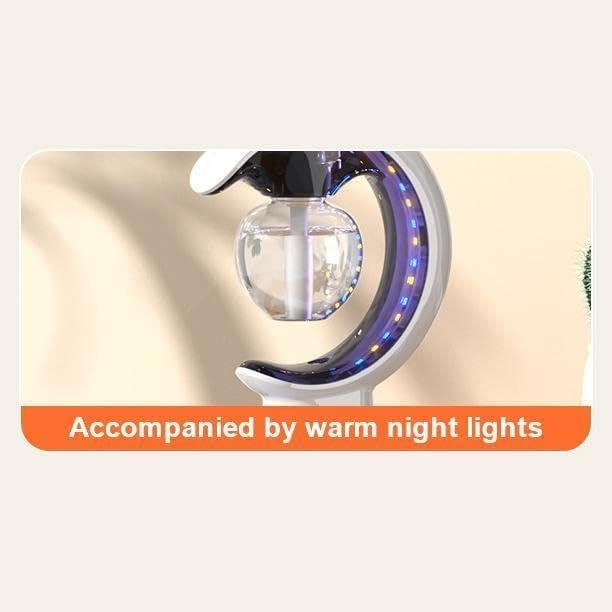
جهاز ترطيب مزود بمصباح طارد للبعوض
وفر 14%! اشترِ جهاز ترطيب مزود بمصباح طارد للبعوض بسعر 207.94 د.ل فقط في ليبيا.
🛒 تسوق الآن Libya Press
Tripoli — Libya's National Committee for Desert Locust Control convened an emergency meeting on Wednesday, July 15, 2026, to activate an urgent response plan following reports of suspected desert locust activity in the Ghat region near Libya's southwestern border with Algeria.
The high-level meeting, chaired by Eng. Abdulkarim Ibrahim Al-Turki who heads the committee's management, brought together directors of technical departments to coordinate a multi-agency field operation aimed at protecting agricultural land and vegetation cover in one of Libya's most vulnerable ecological zones.
Discussions centered on finalizing technical and logistical arrangements to ensure rapid deployment of specialized field teams for survey, monitoring and control operations, according to the committee's approved technical framework. Officials reviewed existing contingency protocols and assessed current stockpiles of pesticides, spraying equipment and protective gear for field personnel.
Al-Turki emphasized the need to raise readiness levels across all departments and accelerate coordination between field units. "We must enhance inter-departmental cooperation and expedite the field campaign as soon as preparations are complete, to protect agricultural crops and vegetation cover from the locust threat," he stated during the emergency session.
The committee also mapped out priority zones for initial survey operations, focusing on wadis and agricultural basins surrounding Ghat where conditions are most favorable for locust breeding.
Ghat, located in Libya's Fezzan region approximately 1,400 kilometers southwest of Tripoli, sits within the seasonal migratory path of desert locust swarms moving across the Sahel and Sahara. The area's oasis agriculture — including date palms, vegetables and cereal crops — is particularly vulnerable to locust infestations that can decimate entire harvests within hours if left unchecked.
Desert locusts (Schistocerca gregaria) rank among the most destructive migratory pests worldwide. A single square kilometer of swarm can consume the same amount of food in one day as approximately 35,000 people, according to data from the Food and Agriculture Organization (FAO). An average swarm can contain up to 50 million locusts per square kilometer, capable of destroying crops sufficient to feed 2,500 people for a full year.
At the conclusion of the meeting, Al-Turki formally called on the Government of National Unity, led by Prime Minister Abdul Hamid Dbeibeh, to provide the committee with enhanced technical capabilities, logistical support, transport vehicles and necessary equipment. The request aims to bolster the committee's capacity to mount rapid responses across Libya's vast and often difficult terrain.
The committee's appeal underscores a recurring challenge in Libya's locust control efforts: vast distances between urban centers, limited road infrastructure in southern regions, and periodic security concerns that have historically hampered rapid field deployments. The Ghat region itself lies more than a full day's drive from Tripoli, making airlift support potentially critical for any large-scale intervention.
Libya has experienced periodic desert locust outbreaks, with notable swarms recorded in 2004, 2012 and most recently during the 2019–2020 East Africa locust crisis that also impacted parts of the Maghreb. The country's southern territories — including Ghat, Murzuq, Ubari and Al-Kufra — serve as potential breeding grounds when seasonal rains create favorable conditions for locust reproduction.
The FAO operates a Desert Locust early warning system that continuously monitors environmental conditions. Libya's National Committee coordinates with regional bodies including the FAO's Commission for Controlling the Desert Locust in the Western Region and maintains communication channels with neighboring Algeria, Tunisia, Niger and Chad for cross-border surveillance and coordinated control measures.
Local authorities in Ghat have been placed on heightened alert. Farmers and residents across southwestern Libya are encouraged to report any unusual insect activity or crop damage to the nearest agricultural extension office or local municipal authorities. Early detection remains the single most critical factor in containing locust outbreaks before they escalate into full-scale swarm events.
The committee confirmed that specialized field teams are on standby and will deploy immediately once all equipment, transport and logistical arrangements are finalized.
— Libya Press / News Desk