
جهاز توجيه واي فاي محمول مزود بفتحة SIM
وفر 23%! اشترِ جهاز توجيه واي فاي محمول مزود بفتحة SIM بسعر 369 د.ل فقط في ليبيا
🛒 تسوق الآن Libya Press
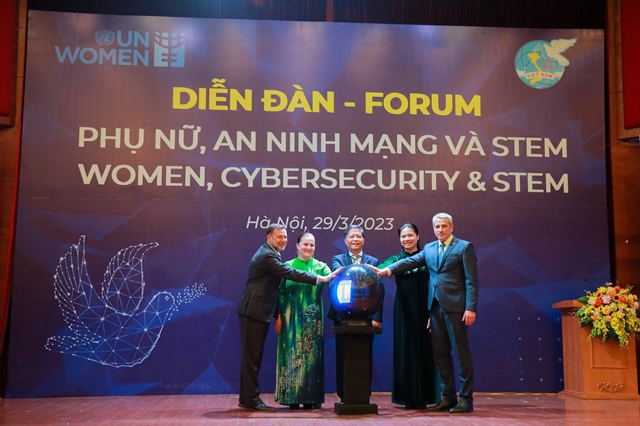
As cyber threats escalate worldwide, a stark gender gap persists in the cybersecurity sector. Women represent just 24 percent of the global cybersecurity workforce, leaving a talent shortfall of 2.8 million professionals — a gap that undermines digital security for entire societies. To address this challenge, UN Women, the Global Cybersecurity Forum, and the International Telecommunication Union have joined forces to launch the Women in Cyber Awards, a global initiative recognizing organizations that champion women's participation and leadership in cybersecurity.
The Women in Cyber Awards were established under the Women Empowerment in Cybersecurity initiative, launched by the Crown Prince of Saudi Arabia and implemented by the Global Cybersecurity Forum. The awards span four categories: Pipeline Builder, which honors programs that create early pathways for girls and young women; Advocacy Champion, recognizing efforts to raise the visibility of women in the field; Workforce Enablement, for organizations helping women enter and grow in cybersecurity careers; and Leadership and Entrepreneurship, supporting women in executive roles and cyber-led ventures. Applications are open worldwide to public and private sector organizations, academic institutions, and non-governmental bodies, with a submission deadline of July 1, 2026.
UN Women has emphasized that the underrepresentation of women in cybersecurity is not merely a pipeline problem but a systemic one. Economic and social barriers — from unequal access to education and training, to hiring biases, to the disproportionate burden of unpaid care work — continue to narrow women's pathways into the sector. A recent UN Women report on technology-facilitated violence against women and girls found that 45 percent of women journalists and media professionals now self-censor on social media to avoid online abuse, a 50 percent increase since 2020. Nearly one in four reported being diagnosed with anxiety or depression linked to online harassment, while 13 percent were diagnosed with post-traumatic stress disorder.
The rapid rise of generative AI has intensified the scale and sophistication of online attacks against women. Deepfake images, AI-generated videos, and nudification apps are being weaponized in deliberate campaigns to silence women in public life. Experts warn that without stronger regulatory frameworks and platform accountability, these threats will continue to deter women from pursuing visible roles in media, politics, technology, and security. The Women in Cyber Awards aim to counter this trend by spotlighting measurable, sustainable initiatives that have demonstrated impact over the past 24 months. As digital transformation accelerates across every sector, closing the gender gap in cybersecurity is no longer optional — it is essential for building resilient digital systems that protect everyone.
The initiative signals a growing recognition that inclusive cybersecurity strengthens global resilience. With applications open until July 1, organizations worldwide have an opportunity to showcase their contributions and help shape a safer, more equitable digital future for women and girls. The Global Cybersecurity Forum, headquartered in Riyadh, has positioned the awards as a cornerstone of its broader mission to foster international cooperation in cyberspace. By partnering with UN Women and the ITU, the forum aims to create a multiplier effect, encouraging governments and corporations to invest in gender-inclusive cybersecurity policies and training programs that can be replicated across regions.