
كم الركبة الضاغط
وفر 24%! اشترِ كم الركبة الضاغط بسعر 198 د.ل فقط في ليبيا. متوفر حالياً، الدفع ع
🛒 تسوق الآن Libya Press
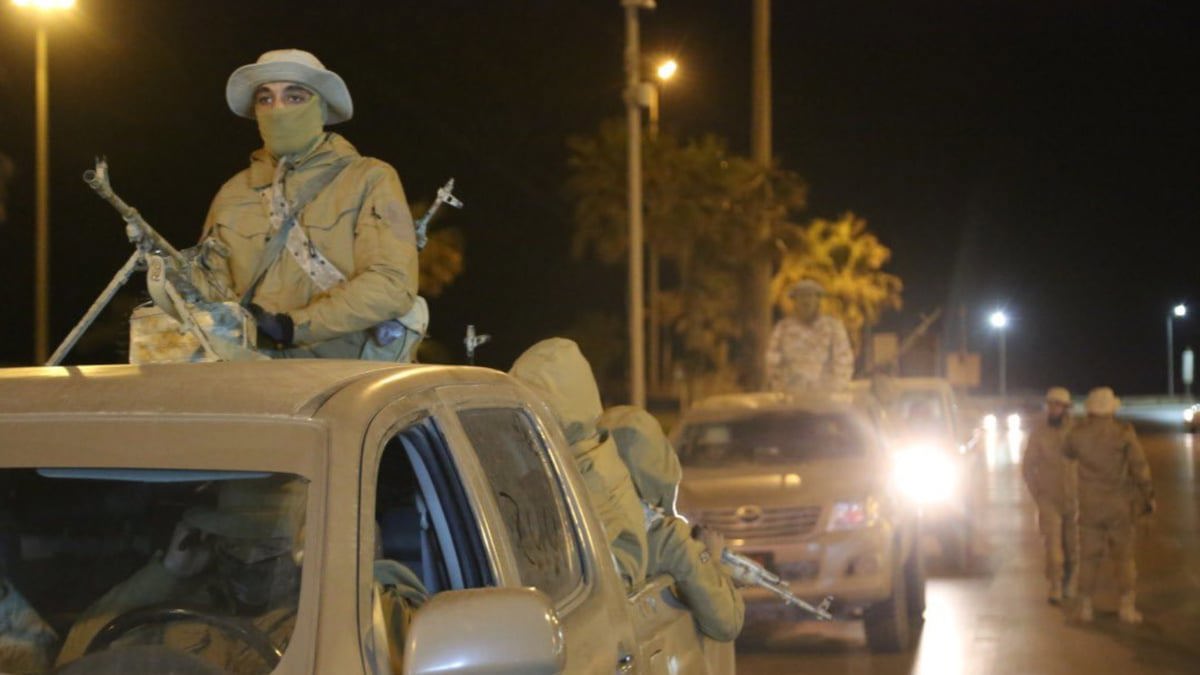
Libyan security forces have captured one of the most wanted figures in North African counter-terrorism. Hashim Abu Saderra, known by his alias "al-Khubayb," was the self-proclaimed governor of Sirte province for the Islamic State and is considered a principal architect of the 2015 massacre of Coptic Christians on the Mediterranean shore. His arrest represents one of the most significant counter-terrorism breakthroughs in Libya in nearly two years.
The arrest was announced on January 4, 2024, by the Organized Crime and Terrorism Combat Force under the interior ministry of Libya's Government of National Unity. Abu Saderra had evaded capture for years despite an extensive manhunt. Senior security officials described the operation as a "valuable catch" that dismantled a critical node in ISIS's Libyan network.
Abu Saderra rose to prominence as a key figure in the Islamic State's expansion across Libya between 2014 and 2016. He was appointed as the so-called "wali" or governor of Sirte province after the group seized control of the coastal city. Under his authority, ISIS governed Sirte as a de facto capital for the group's North African operations for more than a year before being driven out by Libyan forces and international air support.
His nickname "al-Khubayb" suggests tribal affiliations that helped him establish influence across central Libya's complex social landscape. Security analysts believe his deep knowledge of tribal networks made him particularly difficult to locate once he went underground after the fall of ISIS strongholds in 2016.
The atrocity most closely associated with Abu Saderra occurred in February 2015, when ISIS militants seized 21 Egyptian Coptic Christians from Sirte and executed them on a beach. The killings were filmed and distributed globally as a propaganda video that shocked the international community and prompted retaliatory airstrikes by Egypt.
Counter-terrorism researcher Ahmed al-Misrati, who tracks jihadist movements across North Africa, explained the broader significance. "Abu Saderra's capture closes one chapter but doesn't end the threat. His network's influence extends through central Libya's tribal corridors, and ISIS remnants continue to exploit ungoverned spaces between Sirte, Sabha, and the southern border regions. The real test is whether Libyan authorities can extract intelligence before his supporters attempt a rescue or retaliation."
The arrest carries immediate implications for Libya's fragile security landscape. The country remains split between rival administrations in Tripoli and eastern Libya, with armed factions controlling significant territory. ISIS and affiliated groups have used this fragmentation to maintain sleeper cells, particularly in central and southern regions where governance is weakest.
Libya's Interior Ministry stated that Abu Saderra is being interrogated and that the operation yielded intelligence about ISIS financing routes and arms smuggling networks. For ordinary Libyans, the capture is a reminder that figures responsible for the worst violence in the country's recent history can still be held accountable — even after years on the run.
The Government of National Unity faces pressure to ensure Abu Saderra faces a transparent legal process while leveraging the intelligence gathered. Regional partners including Egypt and Tunisia have expressed interest in accessing interrogation findings given the transnational nature of ISIS operations in North Africa. The coming weeks will reveal whether this arrest marks a turning point in Libya's counter-terrorism efforts or a symbolic victory in a much longer struggle.