
نظارات واقية للدراجات النارية
وفر 34%! اشترِ نظارات واقية للدراجات النارية بسعر 190.08 د.ل فقط في ليبيا. متوفر
🛒 تسوق الآن Libya Press
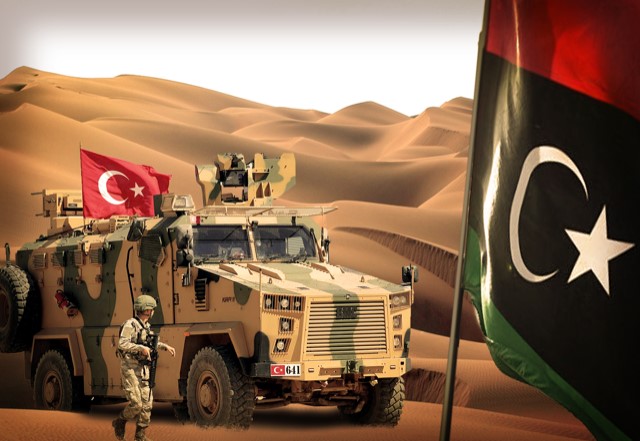
Turkey's expanding footprint in Libya has entered a new phase in June 2026, with multiple security and economic agreements signaling a decisive pivot toward eastern Libya. On June 27, 2026, Turkish officials confirmed the activation of new defense cooperation protocols with authorities in Benghazi, marking a significant shift from Ankara's previous western-focused engagement. This strategic repositioning has sparked intense debate among analysts and Libyan stakeholders alike.
The Turkish move represents a fundamental recalibration of Ankara's Libya policy. Since 2019, Turkey's involvement was primarily channeled through the UN-recognized Government of National Unity in Tripoli. However, recent months have witnessed a dramatic acceleration of bilateral ties with eastern Libyan institutions. Turkish defense delegations have visited Benghazi on three separate occasions since January 2026, according to statements obtained by LibyaPress from Libyan Ministry of Foreign Affairs sources.
The shift became unmistakable when Turkish and eastern Libyan officials signed preliminary agreements covering military training, maritime security coordination, and infrastructure development valued at an estimated $2.3 billion. These agreements, first reported by Sputnik Arabic on June 26, suggest Ankara is hedging its bets across Libya's divided political landscape rather than committing exclusively to any single faction.
Turkey's Libya pivot does not exist in isolation. Across the Sahel and North Africa, Ankara is recalibrating its alliances. Burkina Faso recently severed diplomatic relations with France, repositioning itself within new regional and international alliances — a shift that Turkish analysts view as creating opportunities for expanded Turkish influence across West Africa. Meanwhile, Turkey's partnership with Chad has encountered obstacles, according to Africa Intelligence, suggesting that Ankara's African strategy faces uneven results.
Dr. Aylin Unver Noi, a specialist in Turkish foreign policy at Istanbul's Gediz University, told LibyaPress: "Turkey is not abandoning Tripoli, but it is pragmatically diversifying its Libyan partnerships. The eastern region offers economic opportunities — particularly in energy infrastructure and reconstruction — that complement Turkey's Mediterranean strategy. This is realpolitik, not ideology."
For Libyans, the Turkish strategic repositioning carries profound implications. Libya's protracted political crisis, now entering its second decade, has made the country a battleground for competing regional powers. Turkey's deepening engagement with eastern authorities could either stabilize the country by bridging its divided institutions or further entrench the east-west split that has paralyzed governance since 2014.
Eastern Libyan political analyst Dr. Mansour Rashid told LibyaPress: "We welcome international partnerships that respect Libyan sovereignty. Turkey brings technical expertise and economic investment that our region desperately needs. But any foreign engagement must serve Libyan unity, not deepen division. The test will be whether these agreements translate into tangible benefits for ordinary Libyans in Benghazi, Tobruk, and beyond."
The economic dimension is particularly significant. Eastern Libya, home to the country's largest oil reserves and key port infrastructure, has suffered from chronic underinvestment. Turkish construction firms, which have completed over $1.8 billion in projects across Libya since 2020, are well-positioned to contribute to reconstruction efforts in the east — provided political conditions allow sustained operations.
Central to the Turkey-Libya equation is the 2019 maritime delimitation agreement, which delineated exclusive economic zones in the Eastern Mediterranean. This accord, signed with the Tripoli government, drew fierce opposition from Greece, Egypt, and eastern Libyan commander Khalifa Haftar, who rejected its legitimacy. Turkey's current balancing act — maintaining the agreement's legal standing while cultivating eastern relations — represents one of Ankara's most delicate diplomatic challenges.
Sources familiar with the negotiations, speaking on condition of anonymity, indicate that Turkish officials have proposed "supplementary protocols" that would extend maritime cooperation benefits to eastern Libyan coastal areas. If confirmed, this would represent a creative diplomatic solution — or, critics argue, an attempt to unilaterally modify international agreements without proper Libyan consensus.
The coming months will determine whether Turkey's Libya strategy evolves into a genuine partnership benefiting all Libyans or becomes another layer of external competition over the country's resources and territory. The scheduled UN envoy visit to Tripoli in July 2026, combined with planned Libyan-Turkish joint committee meetings, will provide critical indicators of Ankara's true intentions.
For LibyaPress readers, the key question remains: can Turkish engagement transcend the zero-sum logic that has defined foreign interference in Libya for over a decade? The answer depends not only on Ankara's diplomatic skill but on Libyans' ability to negotiate collectively and ensure that any external partnership serves national interest over factional advantage. Libya's future demands nothing less.
— LibyaPress / Politics Desk