
جهاز توجيه واي فاي محمول مزود بفتحة SIM
وفر 23%! اشترِ جهاز توجيه واي فاي محمول مزود بفتحة SIM بسعر 369 د.ل فقط في ليبيا
🛒 تسوق الآن Libya Press
The Asia Times newspaper has raised alarm bells over Russia's deployment of the Poseidon nuclear torpedo, describing it as an "invincible" strategic weapon that could fundamentally shift the global balance of underwater defense. The warning comes as Russia prepares to deploy the weapon aboard the newly launched nuclear-powered submarine Khabarovsk.
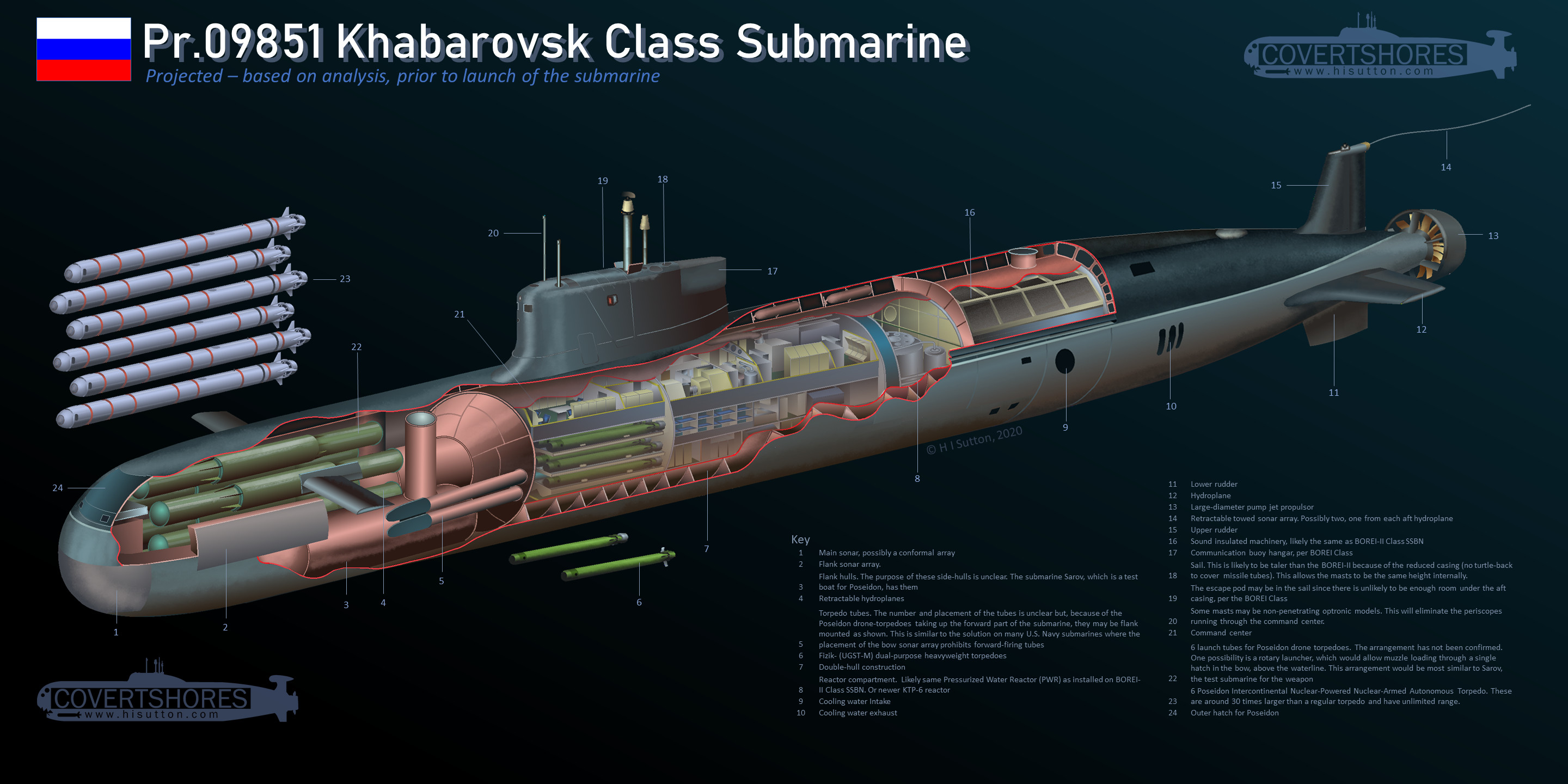
The Poseidon nuclear torpedo, first unveiled by President Vladimir Putin in 2018, is designed to bypass missile defense systems and deliver catastrophic strikes against coastal cities, infrastructure, and enemy aircraft carrier groups. In early November 2025, Russia's Defense Ministry announced that the Khabarovsk nuclear submarine — the specialized carrier for Poseidon torpedoes — had been launched into the water at Severodvinsk. The Khabarovsk is a highly advanced Russian nuclear submarine of Project 09851, built specifically as the primary platform for carrying and launching the massive Poseidon nuclear torpedoes, sometimes referred to as the "doomsday weapon" due to their ability to generate destructive tsunami waves. The submarine is believed to carry up to six Poseidon torpedoes in its side compartments, alongside a limited number of conventional torpedoes, confirming its unique strategic role.
Admiral Vyacheslav Popov, who commanded Russia's Northern Fleet from 1997 to 2001, stated that the launch of the Khabarovsk atomic submarine marks the beginning of the operational deployment of the "Poseidon-plus-submarine" system. The Asia Times described the weapon as increasingly being promoted as a deterrent tool for arms control and underwater warfare. Military analysts note that the Poseidon represents a new pillar of Russian maritime strategic deterrence, operating outside the framework of traditional ballistic missiles. The weapon's ability to travel underwater at high speeds while carrying a nuclear warhead makes it exceptionally difficult for existing defense systems to intercept.
The deployment of the Poseidon system raises serious concerns among Western defense establishments about the erosion of existing missile defense architectures. Unlike traditional intercontinental ballistic missiles, the Poseidon approaches targets from beneath the ocean surface, rendering many current defense systems ineffective. NATO member states are reportedly reassessing their naval defense strategies in response to this emerging threat. The weapon also complicates arms control negotiations, as it falls outside the scope of existing treaties covering nuclear weapons delivery systems.
As Russia continues to expand its strategic arsenal with next-generation weapons like Poseidon, the international community faces mounting pressure to develop new frameworks for nuclear deterrence and arms control in an era of rapidly evolving military technology.