
رقعة تصحيح أظافر القدم
وفر 31%! اشترِ رقعة تصحيح أظافر القدم بسعر 160.13 د.ل فقط في ليبيا. متوفر حالياً
🛒 تسوق الآن Libya Press
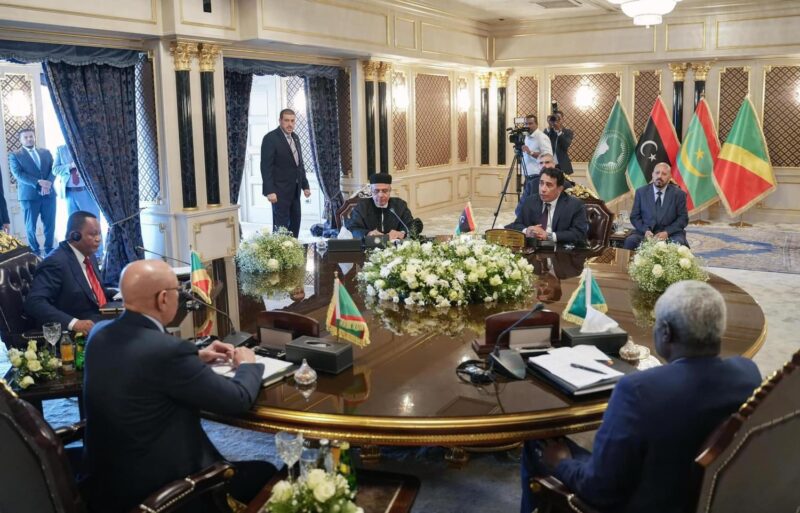
The African Union Commission has officially welcomed the signing of Libya's tripartite agreement between the country's three rival councils, calling it a significant breakthrough in efforts to resolve the North African nation's long-running political transition. H.E. Mahmoud Ali Youssouf, Chairperson of the African Union Commission, described the agreement as a landmark step that builds on recent progress, including an earlier deal to unify the country's divided institutions. The signing took place in June 2025 and marks one of the most consequential diplomatic developments in Libya in recent years.
The agreement, formally titled the "Document of Principles: Roadmap for Ending the Transitional Period," was concluded between three key Libyan councils: the House of Representatives based in the east, the High Council of State in Tripoli, and the Tripoli-based Government of National Unity framework. According to statements from the African Union Commission, the roadmap outlines a structured plan to guide Libya out of its protracted transitional phase and toward lasting political stability. The deal builds on earlier achievements this year, including the adoption of an agreement to unify Libya's divided executive and legislative bodies.
"H.E. Mahmoud Ali Youssouf, Chairperson of the African Union Commission, warmly welcomes the landmark signing of the Document of Principles: Roadmap for Ending the Transitional Period," the AU Commission stated in an official release. Youssouf described the tripartite roadmap as a significant step toward Libya's long-term political transition, building on earlier achievements this year. He emphasized that the agreement represents a collective commitment by Libya's major political institutions to move beyond years of division and establish a unified path forward for the country's governance.
The African Union's endorsement carries substantial weight for Libya's political process. As the continent's premier multilateral institution, the AU's public backing signals international legitimacy for the tripartite framework and increases pressure on all parties to implement its provisions. For ordinary Libyans, who have endured more than a decade of institutional division since the 2011 uprising, this agreement offers a rare glimmer of hope that the country's three competing power centers can finally work toward a shared political future. The agreement also strengthens the continental diplomatic architecture supporting peace in North Africa, where Libya's instability has had ripple effects across the Sahel region and the Mediterranean.
Libya has remained politically fragmented since the fall of the Gaddafi regime, with rival administrations in the east and west competing for legitimacy and control over the country's vast oil resources. The existence of three separate councils — the Tobruk-based House of Representatives, the Tripoli-based High Council of State, and the Government of National Unity — has been a persistent obstacle to holding national elections and establishing a unified government. Previous international mediation efforts, including those led by the United Nations Support Mission in Libya, have struggled to bridge the divide between these institutions. The tripartite agreement represents a rare moment of consensus among all three bodies, facilitated in part by sustained African Union engagement alongside UN and regional partners.
While the signing of the tripartite agreement is a critical milestone, implementation will determine its real impact. The roadmap is expected to outline concrete timelines for institutional unification, constitutional preparations, and ultimately national elections. The African Union Commission has indicated its readiness to continue supporting Libya through this process, alongside the United Nations and key regional actors. For Libya's political class and its 7 million citizens, the coming months will test whether this landmark agreement can translate from diplomatic text into tangible governance reforms. The international community will be watching closely as Libya takes what many hope will be its most decisive step yet toward lasting peace and democratic transition.
— LibyaPress / Politics Desk