
شنطة مفك كهربائي
وفر 20%! اشترِ شنطة مفك كهربائي بسعر 225 د.ل فقط في ليبيا. متوفر حالياً، الدفع ع
🛒 تسوق الآن Libya Press
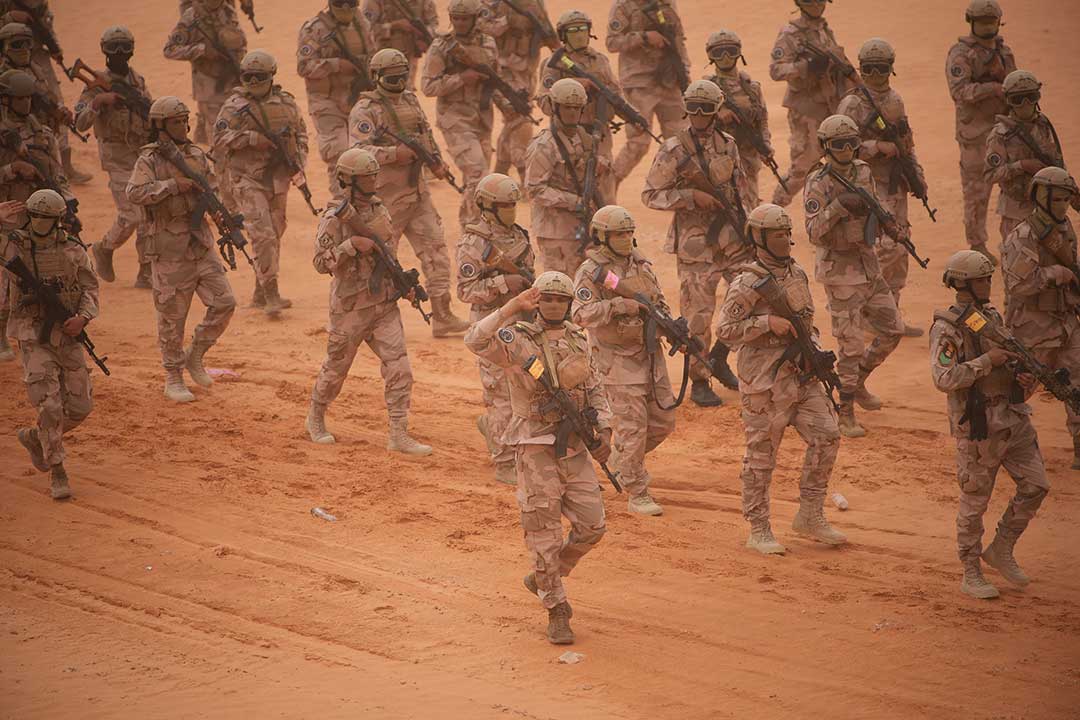
The Libyan city of Sirte has hosted a landmark military event as the US-led Flintlock 2026 special operations exercise kicked off with participation from more than 30 nations. For the first time in the exercise history, Libyan military forces from both the country rival eastern and western factions trained side by side on home soil — a development hailed as a historic step toward national reunification.
Since 2005, Flintlock has served as US Africa Command premier annual special operations exercise, bringing together African and European nations to strengthen counterterrorism capabilities. But this year edition marked a watershed moment: soldiers from the Tripoli-based Government of National Unity and forces aligned with Khalifa Haftar eastern administration wore the same uniform and operated under a joint command structure during the drills in Sirte.
Lieutenant General John Brennan, Deputy Commander of US Africa Command (AFRICOM), traveled to Sirte to observe the opening ceremony and training scenarios. Speaking to journalists, Brennan emphasized the significance of the moment. The Libyan people deserve unified security forces to protect them and their interests, he said. Security breeds prosperity.
The training scenario involved a counterterrorism operation in which Libyan and US special forces jointly rescued hostages held by simulated terrorist groups. The exercise was observed by senior military officials and diplomats, including Italy Ambassador to Libya, Gianluca Alberini.
The significance of Flintlock 2026 extends well beyond counterterrorism training. Libya has become a critical arena for geopolitical competition among major powers, driven by the country vast oil reserves, gold deposits, and strategic mineral resources.
Russia has been steadily expanding its footprint in Libya. Since 2024, Moscow has doubled its military deployment across West Africa, reopened its embassy in Tripoli, and reportedly transferred personnel and military equipment to an abandoned base near the Chad-Sudan border. The Africa Corps — Russia rebranded successor to the Wagner Group — has operated in Libya since 2019, delivering military hardware and collaborating with Haftar-aligned forces in the east.
China, meanwhile, has pursued a strategy focused on securing long-term access to critical minerals across the African continent by acquiring major mining assets, adding another dimension to the international competition for influence in Libya.
US defense officials acknowledged that the exercise reflects the intersection of American security and economic interests in the region, consistent with the US national security strategy that identifies economic security — including securing access to critical supply chains and materials — as a top priority.
Analysts note that the magnitude of potential economic investment in a reunified Libya serves as a powerful incentive for the rival administrations to move toward integration. Unifying Libya military could also help minimize Russia growing influence in the country.
Italian Ambassador Alberini stressed that a unified Libya would be able to provide stability for the entire region, calling increased US engagement a big factor in the reunification process. He acknowledged that building a truly united Libya remains a gradual process requiring sustained international commitment.
The exercise takes place against a turbulent regional backdrop. Following military coups in Mali, Burkina Faso, and Niger, Western forces were largely expelled from the Sahel as successive juntas turned to Russia for security partnerships. Neither Washington nor European capitals want this scenario replicated in Libya or other neighboring states.
British officials have expressed concern over the significant Russian military presence in Libya on NATO southern flank, underscoring the broader strategic stakes of the Flintlock exercise.
Flintlock 2026 concluded on May 6, 2026, leaving a historic imprint on Libya military reunification trajectory and sending a clear signal to competing powers that the North African nation is moving toward stability — one carefully coordinated exercise at a time.