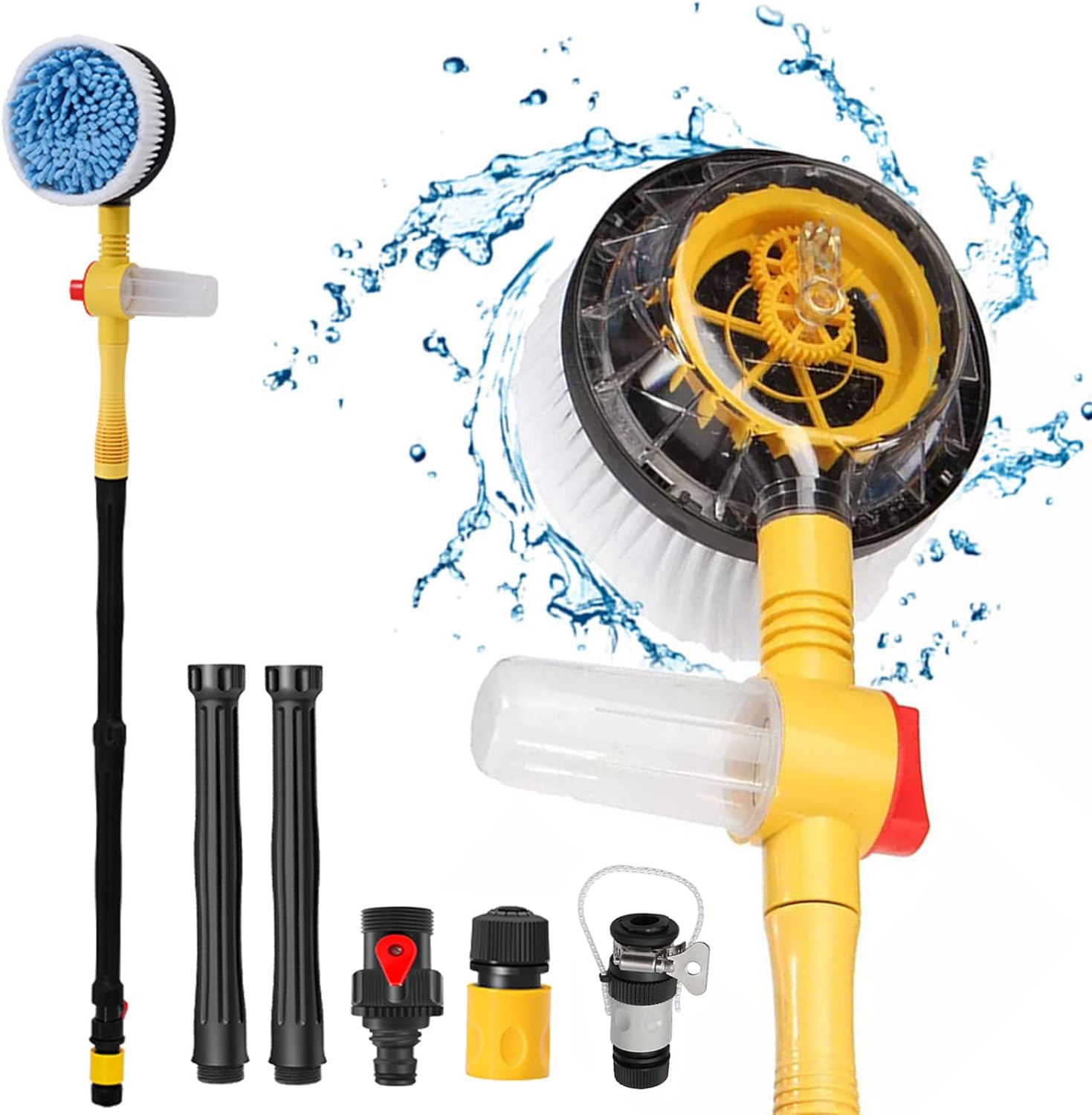
فرشاة غسيل سيارات أوتوماتيكية دوارة بزاوية 360 درجة
وفر 9%! اشترِ فرشاة غسيل سيارات أوتوماتيكية دوارة بزاوية 360 درجة بسعر 274.95 د.
🛒 تسوق الآن Libya Press
After years of reduced exploration activity, the Ghadames Basin is once again capturing the attention of international investors and regional energy stakeholders. Oil experts confirm that recent developments — including a major exploration agreement signed with a Qatari holding group — are reshaping the outlook for this strategically important oil region in western Libya.
The Ghadames Basin spans southwestern Libya and extends into Algeria and Tunisia. It is Libya's second-largest sedimentary basin for hydrocarbon potential, holding significant untapped oil and gas reserves. For years, political instability and investment bottlenecks had slowed exploration campaigns in the region.
However, recent diplomatic and commercial momentum has shifted the narrative. According to Libyan oil expert Khaled Al-Kadiki, the basin "has returned to the forefront of regional and international interest after years of declining exploration activity." His assessment follows the signing of a new exploration and production sharing agreement (EPSA) covering Area 47 within the basin.
The National Oil Corporation (NOC), in partnership with the Libyan Investment Authority (LIA), signed the Area 47 agreement with Qatar-based UCC Holding. The deal, reported by Attaqa Net on July 8, 2026, marks one of the most significant foreign investment pacts in Libya's energy sector in recent years.
UCC Holding, headquartered in Doha, brings both capital and technical expertise to the table. The agreement is designed to accelerate exploration activities, with initial seismic surveys and drilling operations expected to begin before the end of 2026. Industry analysts view this as a strong vote of confidence in Libya's hydrocarbon potential despite ongoing political complexity.
The revival of interest in the Ghadames Basin carries significant implications for Libya's economy. Oil revenues remain the backbone of the nation's budget, accounting for over 90% of public income. Expanding production capacity is a stated priority for the current government and the NOC.
"This agreement could unlock billions of barrels in recoverable reserves that were previously considered uneconomical to develop," the Akhbar Libya 24 report noted on July 11. Local experts estimate the basin holds up to 2.5 billion barrels of oil equivalent in proven and probable reserves, with much more potential in deeper formations.
The renewed investment activity is expected to generate thousands of direct and indirect jobs in western Libya, alongside infrastructure improvements in surrounding communities including Nalut, Ghadames, and other towns near the basin.
The Ghadames Basin revival also fits into a broader pattern of North African energy competition. Algeria and Tunisia, which share the basin's geological structures, have ramped up their own exploration programs in recent years. Libya's renewed activity positions it to claim a larger share of cross-border hydrocarbon resources.
Additionally, as European nations seek to diversify energy sources away from Russian supplies, Libya's proximity to European markets gives it a strategic logistics advantage. The Ghadames Basin, in particular, could feed into existing export infrastructure via pipelines to the Mediterranean coast, reducing time-to-market for new production.
Despite the optimism, challenges remain. Security conditions in parts of western Libya remain uneven, and the broader political landscape continues to require careful navigation. The NOC has historically managed to maintain operational neutrality, but infrastructure funding and maintenance backlogs could constrain rapid scaling.
Nevertheless, industry observers believe the Qatari-backed agreement provides a replicable model for future foreign investment in Libya's energy sector. If successful, the Ghadames Basin revival could serve as a blueprint for unlocking other under-explored basins across the country.
The coming months will be critical. As seismic crews mobilize and drilling plans take shape, the world will be watching whether the Ghadames Basin can deliver on its long-promised potential — and whether Libya can sustain a new era of energy investment.
— Libya Press / Business Desk