
جهاز تنظيف الأسنان بالماء
وفر 23%! اشترِ جهاز تنظيف الأسنان بالماء بسعر 248 د.ل فقط في ليبيا. متوفر حالياً
🛒 تسوق الآن Libya Press
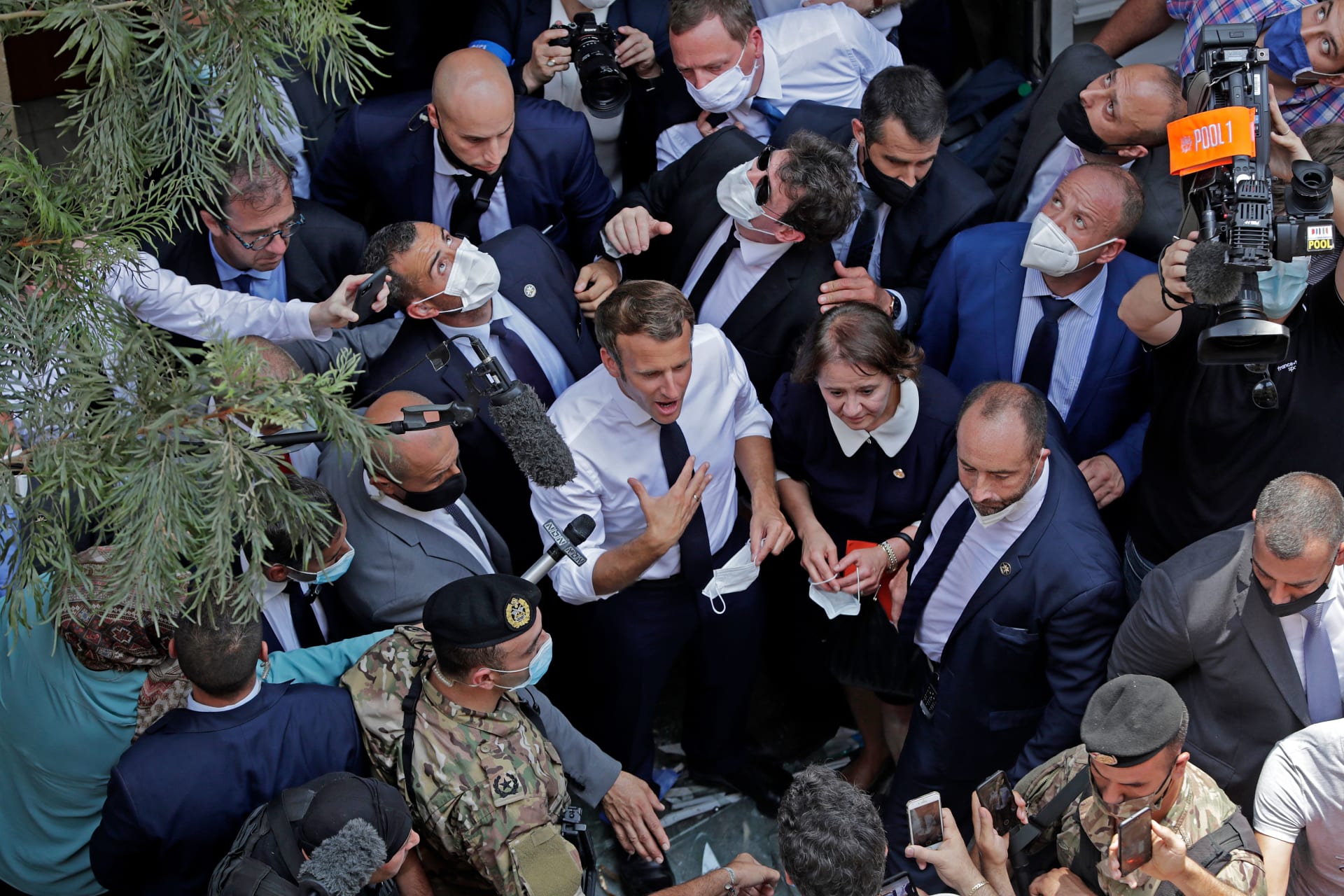
Major General Saddam Haftar, deputy commander of Libya's "General Command" military forces, met French President Emmanuel Macron at the Élysée Palace in Paris on Sunday. The meeting marks the latest in a series of high-profile diplomatic visits by Haftar to European capitals, following an official trip to Moscow earlier this year. According to a statement from the General Command's media office, Haftar praised the bilateral relations between Libya and France, particularly in the security and military domains.
The visit underscores France's continued diplomatic engagement with eastern Libyan military leadership, even as the country remains divided between rival governments in Tripoli and Benghazi. Macron's office confirmed the meeting took place but did not release detailed communiqués — a pattern consistent with France's cautious approach to Libyan political actors.
According to the General Command's media bureau, the talks focused on three core areas: bilateral security cooperation, counter-terrorism coordination in the Sahel region, and support for stability pathways in Libya. Haftar specifically commended the "development" in Libya-France relations across multiple fields, with emphasis on military and security dimensions.
For his part, Macron stressed the importance of continued dialogue and coordination between Paris and eastern Libyan leadership. The French president reaffirmed France's support for processes that contribute to consolidating stability in Libya and developing mutual cooperation serving shared interests, according to Libya's al-Wasat news outlet, which first reported the meeting.
France has maintained relationships with multiple Libyan factions since the 2011 intervention that toppled Muammar Gaddafi. Paris officially supports the Tripoli-based Government of National Unity and UN-led political processes. However, French military operations in the Sahel — particularly in Chad, Niger, and southern Libya — have required practical coordination with eastern Libyan forces controlled by the Haftar family.
This dual-track approach has drawn criticism from Tripoli-based officials and some European allies. The Tripoli government has repeatedly accused France of providing covert military support to General Command forces, allegations Paris denies. Sunday's public meeting at the Élysée Palace, however, signals that France is increasingly willing to engage eastern Libyan leadership openly, not just through back channels.
For ordinary Libyans, the Paris meeting is a reminder that their country's future is still being shaped in foreign capitals. Libya has endured over a decade of division since 2011, with two competing governments, fragmented institutions, and foreign powers pursuing conflicting agendas on Libyan soil. France, Turkey, Russia, Egypt, and the UAE all maintain active military or political interests in the country.
The fact that Saddam Haftar — not an elected official, but a military commander — is meeting heads of state in Paris, Moscow, and London raises fundamental questions about Libya's sovereignty and the path to legitimate governance. Libyans in both the east and the west deserve a political process led by civilians, not negotiated between foreign-backed military figures. Every diplomatic meeting that bypasses Libya's fractured but legitimate institutions makes that goal harder to achieve.
The immediate question is whether this meeting produces any concrete outcomes — a joint security framework, a French commitment to support Libyan elections, or simply a photo opportunity. Libya's political horizon remains uncertain: elections promised for 2022 have yet to materialize, and the country's two governments show no sign of genuine reconciliation. What is clear is that Libya's international partners are actively shaping the country's trajectory. Libyans must demand a seat at that table — not as spectators, but as the principal architects of their own future.
— LibyaPress / Politics Desk