
قطاعة الخضر
وفر 22%! اشترِ قطاعة الخضر بسعر 250 د.ل فقط في ليبيا. متوفر حالياً، الدفع عند ال
🛒 تسوق الآن Libya Press
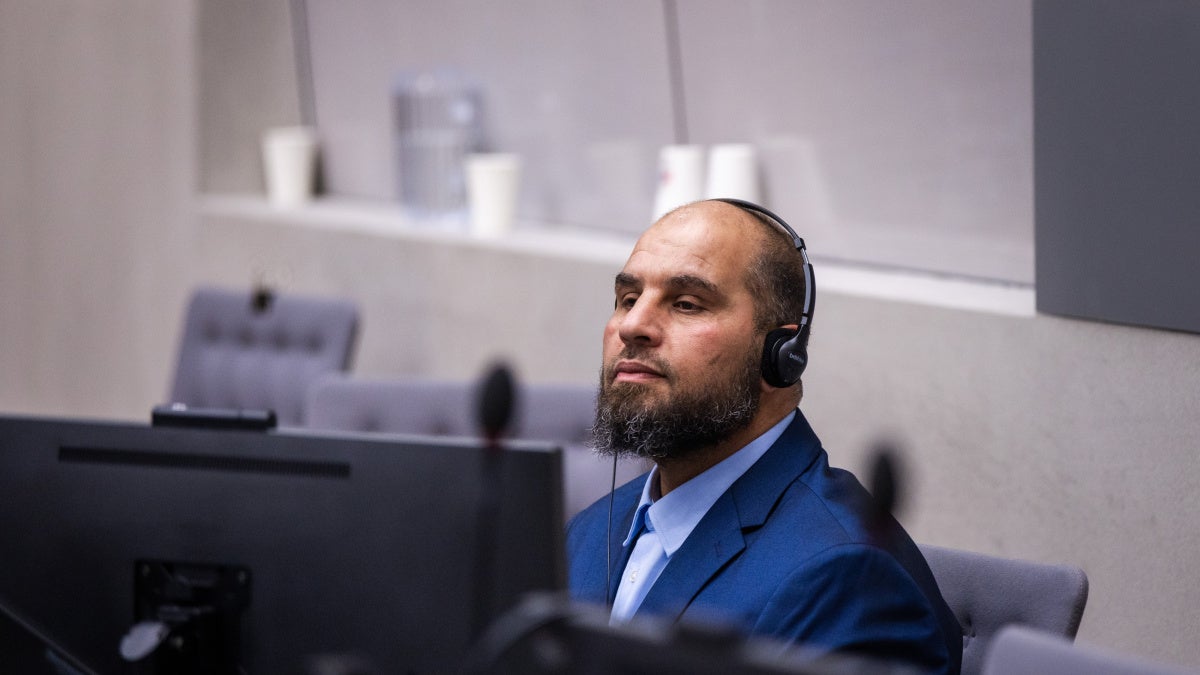
The International Criminal Court (ICC) in The Hague opened a historic confirmation-of-charges hearing on May 19, 2026, against Khaled Mohamed Ali El Hishri, a former senior militia figure accused of crimes against humanity and war crimes at Tripoli's notorious Mitiga Prison. This marks the first case from the ICC's 15-year Libya investigation to reach this critical judicial phase, offering a glimmer of hope to thousands of victims who have waited more than a decade for accountability. El Hishri, arrested by German authorities in July 2025 and surrendered to the court in December, faces 17 counts including torture, rape, murder, enslavement, and persecution.
El Hishri was a senior member of the Deterrence Apparatus for Countering Terrorism and Organized Crime (al-Radaa), a Tripoli-based militia formerly known as the Special Deterrence Force and affiliated with the Libyan Presidential Council. The ICC Office of the Prosecutor alleges he directly committed, ordered, and facilitated atrocities against both Libyan and non-Libyan detainees at Mitiga Prison between 2014 and 2020. The charges encompass torture and cruel treatment, rape and other forms of sexual violence, murder, enslavement, imprisonment, and outrages upon personal dignity. The prosecution notably recognizes the intersectional nature of the crimes, with victims targeted based on nationality, race, gender, migration status, and perceived political opposition.
The United Nations Security Council referred the situation in Libya to the ICC prosecutor in 2011, authorizing investigations into serious crimes following the country's uprising. Since then, the ICC has issued public arrest warrants for 14 individuals related to the Libya investigation. Four have since died or were killed, and eight others remain at large. El Hishri's case is the first to progress to a confirmation-of-charges hearing, a crucial procedural step in which judges determine whether sufficient evidence exists to proceed to a full trial.
Human Rights Watch called the hearing a "long-awaited breakthrough" for victims of serious crimes in Libya. Alice Autin, international justice researcher at Human Rights Watch, stated: "Finally seeing a suspect on the docket at the ICC, 15 years after the end of Libya's 2011 revolution, sends a powerful message to thousands of victims that their struggle for justice has not been forgotten." A coalition of civil society organizations, including the Women's Initiative for Gender Justice, issued a joint statement standing in solidarity with survivors and emphasizing the hearing's significance as a step toward truth, reparation, and deterrence.
Survivors of Mitiga Prison have also spoken out. A South Sudanese survivor said: "El Hishri's arrest bridges a distance many of us survivors thought would never close." A Libyan survivor, identified as F.A., expressed cautious hope: "The announcement of El-Hishri's arrest has revived our hopes of obtaining justice and redress for the harm we endured over years of injustice, detention, humiliation, and ill-treatment." The case has also drawn attention to the broader system of abuse, with European Union-funded cooperation with Libyan authorities coming under scrutiny for enabling the interception and return of migrants to facilities where such atrocities occurred.
Despite this landmark step, significant obstacles remain. Libya's cooperation with the ICC has been largely inadequate, with some Libyan authorities opposing the trial of nationals outside the country. Libya is not an ICC member state, though it accepted the court's jurisdiction from 2011 to 2027. Eight other ICC suspects in the Libya case remain at large. The case of Osama Elmasry Njeem, an alleged co-perpetrator at Mitiga Prison, highlights these challenges: after Italy arrested him in January 2025, authorities returned him to Libya instead of surrendering him to the ICC, prompting the court to find Italy in breach of its cooperation obligations.
Looking ahead, the ICC judges' decision on whether to confirm the charges is expected in the coming weeks. If confirmed, the case would proceed to trial — a process that could take years. Meanwhile, human rights organizations are urging Libyan authorities and the international community to build on this momentum by pursuing domestic accountability measures, ending the pervasive impunity that continues to fuel violence across Libya's fragmented detention system, and ensuring that the remaining ICC suspects face justice.
The El Hishri hearing represents more than a single prosecution — it is a test of whether the international justice system can deliver accountability in one of the world's most protracted and complex conflict situations. For the survivors of Mitiga Prison and countless other victims across Libya, the outcome will signal whether the promise of "never again" can translate into meaningful justice.