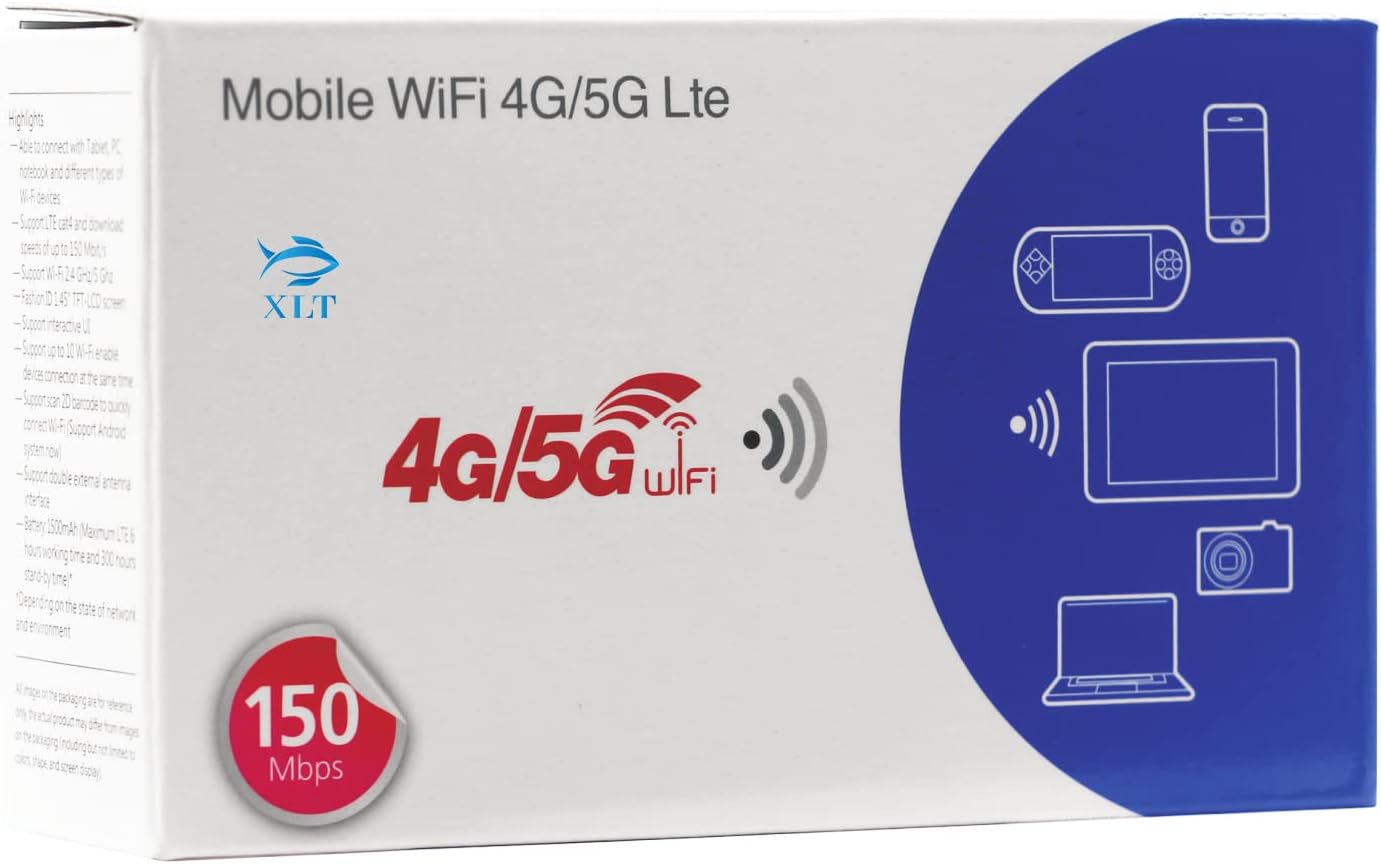
جهاز توجيه واي فاي محمول مزود بفتحة SIM
وفر 23%! اشترِ جهاز توجيه واي فاي محمول مزود بفتحة SIM بسعر 369 د.ل فقط في ليبيا
🛒 تسوق الآن Libya Press
As North Africa races toward next-generation mobile connectivity, Libya finds itself at a critical crossroads. While Tunisia, Egypt, and Morocco have already launched commercial 5G services, Libya's telecom sector remains largely anchored to 4G LTE infrastructure, still recovering from over a decade of conflict. A recent academic study examining Libya's 5G and 6G development highlights both the challenges and the untapped potential of the country's telecommunications landscape.
Libya's mobile market is dominated by two state-owned operators: Al Madar and Libyana, which together serve approximately 6.5 million subscribers in a country of roughly 7 million people. Mobile penetration stands at around 93%, but 4G LTE coverage reaches only an estimated 35-40% of the population, concentrated in major cities like Tripoli, Benghazi, and Misrata. By contrast, Tunisia launched its first commercial 5G network in 2024 through Orange Tunisie and Ooredoo, achieving 25% population coverage within the first year. Egypt's three major operators — Vodafone Egypt, Orange Egypt, and Etisalat — began 5G rollouts in 2025, targeting urban centers along the Nile Delta and the Red Sea coast. Morocco's Maroc Telecom completed its 5G trials in late 2024 and expects nationwide coverage by 2027.
Libya's fixed broadband infrastructure tells a similar story of underdevelopment. Fiber-to-the-home penetration remains below 3%, compared to 18% in Tunisia and 12% in Egypt. The country's international internet bandwidth, estimated at 120 Gbps, lags far behind Egypt's 1.2 Tbps and Morocco's 600 Gbps. These gaps reflect not only the destruction caused by years of civil conflict but also chronic underinvestment in network modernization. The Libyan Post, Telecommunications, and Information Technology Company (LPTIC), which oversees both Al Madar and Libyana, has estimated that rebuilding and upgrading the national telecom infrastructure will require investments exceeding $2.5 billion over the next five years.
Telecom analysts say Libya's delayed 5G rollout is not surprising given the country's political instability, but warn that the gap is widening at an alarming rate. "Every year that Libya delays its 5G transition, the cost of catching up increases exponentially," said one regional telecoms consultant familiar with North African markets. "The country risks falling into a digital divide that could take a decade to bridge." The recent academic paper on next-generation mobile networks in Libya emphasizes that cybersecurity readiness is a critical gap, noting that Libyan research institutions have only begun preliminary work on 6G security frameworks while their counterparts in Egypt and Tunisia are already participating in European Union-funded 6G research consortia.
Libyan officials have acknowledged the need for modernization. The Ministry of Communications has stated that a national digital transformation strategy is under development, with 5G spectrum allocation expected to be addressed by the end of 2026. However, experts caution that spectrum licensing alone is insufficient. "You need regulatory clarity, foreign investment frameworks, and a stable security environment before any serious operator will commit capital to 5G infrastructure in Libya," noted a telecommunications policy researcher at a Libyan university. The country's regulatory framework for telecoms still dates largely from the pre-2011 era and lacks provisions for modern spectrum management, infrastructure sharing, and data protection.
The road to 5G — and eventually 6G — in Libya is paved with significant obstacles. Beyond the political fragmentation that continues to divide the country between rival administrations in Tripoli and eastern Libya, the telecom sector faces acute challenges including damaged infrastructure, limited foreign direct investment, and a shortage of skilled engineers. An estimated 40% of Libya's telecom towers sustained damage during the conflicts of 2011-2020, and many have yet to be fully repaired. International sanctions and banking restrictions further complicate equipment procurement from major vendors like Ericsson, Nokia, and Huawei.
Despite these hurdles, there are reasons for cautious optimism. Libya's young, tech-savvy population — with a median age of 28 — represents a strong demand driver for mobile broadband services. The country's oil revenues, which reached $22 billion in 2024, could fund infrastructure investment if political stability improves. Regional partnerships with Egypt and Tunisia on cross-border fiber connectivity are also progressing, which would boost Libya's international bandwidth and reduce latency. If Libya can achieve a lasting political settlement and attract strategic telecom investments, analysts believe the country could leapfrog directly from limited 4G to targeted 5G deployments in key economic zones by 2028-2029, setting the stage for broader 6G research participation by the early 2030s.
The window of opportunity, however, is narrowing. As Libya's neighbors accelerate their digital transformations, the cost of inaction grows steeper with each passing year. The country's ability to harness next-generation mobile technology will depend not just on infrastructure investment, but on resolving the fundamental governance and security challenges that have held Libya back for over a decade.