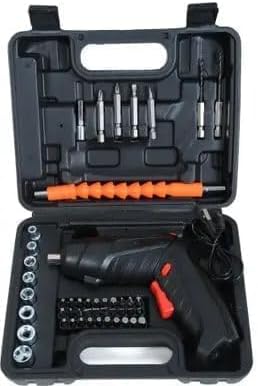
شنطة مفك كهربائي
وفر 20%! اشترِ شنطة مفك كهربائي بسعر 225 د.ل فقط في ليبيا. متوفر حالياً، الدفع ع
🛒 تسوق الآن Libya Press
Libya achieved a historic milestone in 2025 as oil production climbed to 1.37 million barrels per day, the highest level in 12 years, Prime Minister Abdulhamid Dbeibah announced at the Libya Energy and Economy Summit (LEES) 2026 in Tripoli. The record output marks a major turnaround for the North African nation, which has struggled with political instability and infrastructure disruptions for over a decade. The achievement signals renewed confidence among international energy investors and positions Libya as a growing force in global oil markets.
Speaking at the summit opening, Dbeibah said production began at several new oil fields across the country in 2025, including Iravn, Mutahandush, al-Khayr, Hamada 47, and Sinawan. Libya also launched its first oil and natural gas exploration licensing round in 17 years, attracting strong interest from international energy companies, with tender results expected in early February. On the deals front, Dbeibah announced that agreements between Libya's National Oil Corporation (NOC) and France's TotalEnergies, alongside US-based ConocoPhillips, would be amended to run for 25 years with investments exceeding $20 billion. A memorandum of understanding with US energy giant Chevron was also signed, covering exploration, field development, and production opportunities, in addition to a cooperation agreement with Egypt on exploration, production, and related logistics services.
Energy analysts view the production surge as a critical step toward Libya's goal of reaching 2 million barrels per day in the medium term. As an OPEC member ranking among the world's top 10 countries in proven oil reserves — estimated at 48.4 billion barrels — Libya holds enormous untapped potential. The country's proven natural gas reserves stand at approximately 1.5 trillion cubic meters. The involvement of major international players like TotalEnergies, ConocoPhillips, and Chevron underscores growing foreign confidence in Libya's energy sector stability. Industry experts note that the amended agreements, with their 25-year horizons and multi-billion-dollar commitments, represent some of the most significant foreign investments in Libya's oil and gas sector in recent memory.
Despite the record output, Libya faces ongoing challenges including political fragmentation between rival governments in the east and west, aging pipeline and port infrastructure, and the need for sustained security at oil installations that have repeatedly been targeted by armed groups. Integrating renewable energy sources into the national energy mix remains a key priority, with Libya's high solar exposure and vast geographic area offering significant potential for solar and wind projects. Stabilizing production levels, upgrading export infrastructure, and maintaining the security conditions necessary for continued foreign investment will determine whether Libya can sustain this momentum and move toward its ambitious long-term production targets.
Libya's 2025 production record represents more than a statistical achievement — it is a signal that the country's vast hydrocarbon resources, combined with renewed international partnerships, could reshape its economic future and strengthen its position within OPEC and global energy markets for years to come.