
قالب يدوي لتغليف الزلابية
وفر 25%! اشترِ قالب يدوي لتغليف الزلابية بسعر 180 د.ل فقط في ليبيا. متوفر حالياً
🛒 تسوق الآن Libya Press
Benghazi, Libya — January 22, 2012. Abdul Hafiz Ghoga, the vice-chairman of Libya's National Transitional Council (NTC), announced his resignation on Sunday following days of intense anti-government protests that rocked the eastern city of Benghazi. The departure of one of the interim government's most prominent figures exposed deep fractures within Libya's post-revolution leadership and signaled growing public frustration with the pace of reform.
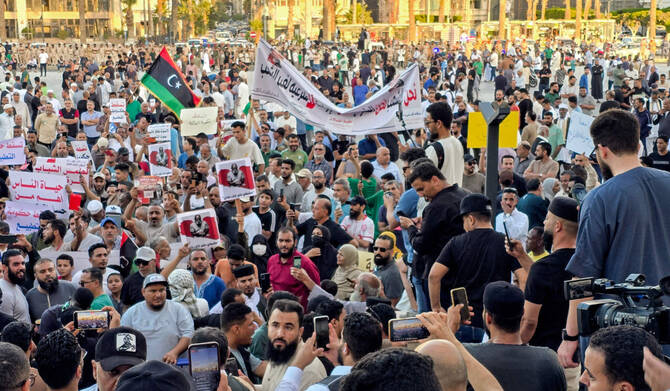
Less than five months after the fall of Muammar Gaddafi's four-decade rule, Libya's transitional authorities faced their most serious crisis of legitimacy. Thousands of university students flooded the streets of Benghazi — the cradle of the 2011 uprising — demanding Ghoga's removal and denouncing what they described as the NTC's failure to deliver on the promises of the revolution.
Protesters accused Ghoga and several other NTC members of being former Gaddafi loyalists who had opportunistically switched sides during the conflict. The anger was not limited to personnel issues. Benghazi residents voiced broader grievances: allegations of corruption, the slow pace of institutional reform, and the perception that former regime insiders were being rewarded while wounded revolutionaries who fought to topple Gaddafi were being sidelined.
The demonstrations escalated dramatically on Saturday when rioters hurled stones and hand grenades at the NTC compound in Benghazi, breaching the complex while senior officials were inside. It was the most violent display of public anger directed at the interim government since Gaddafi's ouster in October 2011.
Ghoga himself had been physically confronted by protesters just days earlier, requiring security personnel to pull him to safety after he was manhandled during a public appearance. The scenes underscored the volatile atmosphere in a city that had borne the brunt of the armed conflict and expected to be at the center of Libya's political rebirth.
In his resignation announcement, delivered in an interview with international media, Ghoga struck a conciliatory tone. "My resignation is for the benefit of the nation and is required at this stage," he said. A human rights lawyer by training, Ghoga had served as the NTC's public face during the final months of the armed uprising, frequently appearing in international press briefings.
His departure, however, raised urgent questions about the NTC's ability to govern. As vice-chairman, Ghoga held one of the highest positions in Libya's interim power structure. His resignation threatened to embolden further dissent and deepen mistrust between the governing council and the population it claimed to represent.
NTC Chairman Mustafa Abdel Jalil addressed the crisis from Benghazi, urging protesters for patience and warning that Libya risked entering a "bottomless pit" of instability. He suggested that "hidden hands" were behind the demonstrations — a claim that did little to calm public sentiment.
In the wake of the unrest, an NTC committee convened at a secret location in Benghazi and announced that the release of Libya's election law would be delayed by one week, pushing the deadline to January 28. The law was intended to establish the framework for electing a 200-member national assembly tasked with drafting a new constitution — Libya's first functioning legislature in four decades.
The national assembly elections were scheduled to take place before June 23, but the political turmoil cast doubt on whether the NTC could meet that timeline. Under Gaddafi's rule, Libya had no working parliament for forty years, making the transition to democratic governance an enormous institutional challenge.
The resignation of Abdul Hafiz Ghoga represented more than a single political departure. It was a stark reminder that Libya's revolution was far from complete. The country's transitional leaders faced the monumental task of building democratic institutions from scratch while managing the expectations of a population that had sacrificed enormously for change.
As Libya navigated this fragile period, the world watched closely. The stakes extended far beyond Benghazi — the stability of an entire nation, and the broader trajectory of post-Arab Spring transitions across the region, hung in the balance.