
مضخة مياه الشرب
وفر 30%! اشترِ مضخة مياه الشرب بسعر 167.04 د.ل فقط في ليبيا. متوفر حالياً، الدفع
🛒 تسوق الآن Libya Press
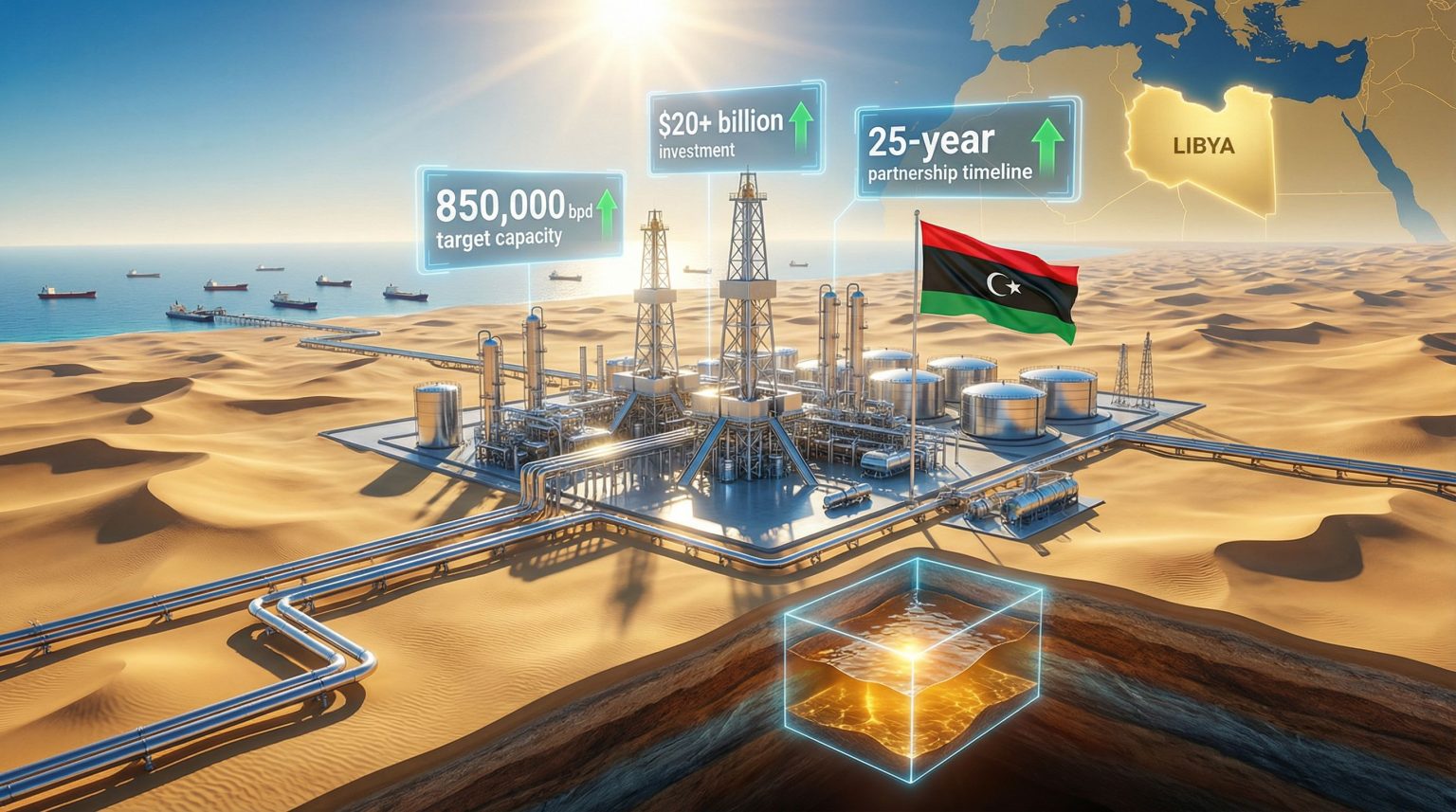
Libya will place upstream oil and gas investment at the centre of its energy strategy with the launch of a dedicated Upstream Hub at the Libya Energy & Economic Summit (LEES) 2027, scheduled for January 23–25 in Tripoli. The move comes as the country shifts from its first upstream licensing round in 17 years into an execution-focused growth phase, backed by an $18 billion project pipeline.
The summit, now in its fifth edition, is expected to draw international energy executives, policymakers, and investors to the Libyan capital. Organisers confirmed that the new Upstream Hub will serve as a dedicated platform for licensing rounds, exploration data showcases, and direct engagement between Libya's National Oil Corporation (NOC) and global energy firms.
In June 2026, Libya concluded its first upstream licensing round since 2009, awarding exploration and production-sharing agreements to several international oil companies. The round was widely viewed as a critical test of Libya's ability to attract foreign investment after years of political instability.
Libya holds Africa's largest proven crude oil reserves, estimated at over 48 billion barrels, yet production has fluctuated significantly due to periodic blockades and maintenance constraints. The successful closure of the bidding process has generated renewed confidence in the sector.
Libya's energy sector is advancing a project pipeline valued at approximately $18 billion, encompassing upstream development, gas monetisation, and solar energy integration. The country has set an annual production target of 2 million barrels per day (bpd), up from current output levels averaging between 1.1 and 1.3 million bpd in recent months.
LEES 2027 will focus on three strategic pillars: upstream acceleration, natural gas megaprojects, and renewable energy development. The gas monetisation agenda is particularly significant, as Libya seeks to capture a larger share of the Mediterranean gas market and meet growing domestic power demand.
Libya holds substantial natural gas reserves estimated at 53 trillion cubic feet. The European Union's continued search for alternative gas supplies following the Russia-Ukraine conflict has increased Libya's strategic relevance as a potential supplier to Southern Europe. Industry observers expect LEES 2027 to include discussions on pipeline modernisation and new export routes.
Beyond hydrocarbons, LEES 2027 will also spotlight Libya's solar energy potential. The country receives among the highest solar irradiance levels in the Mediterranean basin, presenting significant opportunities for utility-scale photovoltaic projects. Integrating renewables into Libya's energy mix is seen as a dual strategy: freeing more oil and gas for export while addressing chronic electricity shortages.
Despite the ambitious agenda, significant hurdles remain. Libya's security environment, bureaucratic complexity, and the absence of a unified legal framework for hydrocarbons continue to pose risks for investors. However, the relative stability since the 2020 ceasefire, combined with the success of the 2026 licensing round, has created a window of opportunity.
International oil companies active in Libya, including Eni, TotalEnergies, and Repsol, are expected to expand their footprints if fiscal terms remain competitive. LEES 2027 organisers have emphasised that the Upstream Hub is designed to provide transparency, streamline regulatory approvals, and showcase seismic data to prospective investors. The summit is co-organised by the NOC and the Ministry of Oil and Gas.
With global energy demand remaining robust and Libya seeking to reclaim its position as a leading African oil producer, the January summit represents a pivotal moment for the country's economic future.
— Libya Press / Economy Desk