
قطاعة الخضر
وفر 17%! اشترِ قطاعة الخضر بسعر 264.96 د.ل فقط في ليبيا. متوفر حالياً، الدفع عند
🛒 تسوق الآن Libya Press
The recent dispute over the appointment of a new head of Libya's General Intelligence Service has evolved beyond an internal administrative disagreement within the Presidential Council. It has become a genuine test of whether state institutions are still committed to the rules upon which they were established. This confrontation reveals the fragility of Libya's power-sharing framework that was designed to prevent a return to conflict.
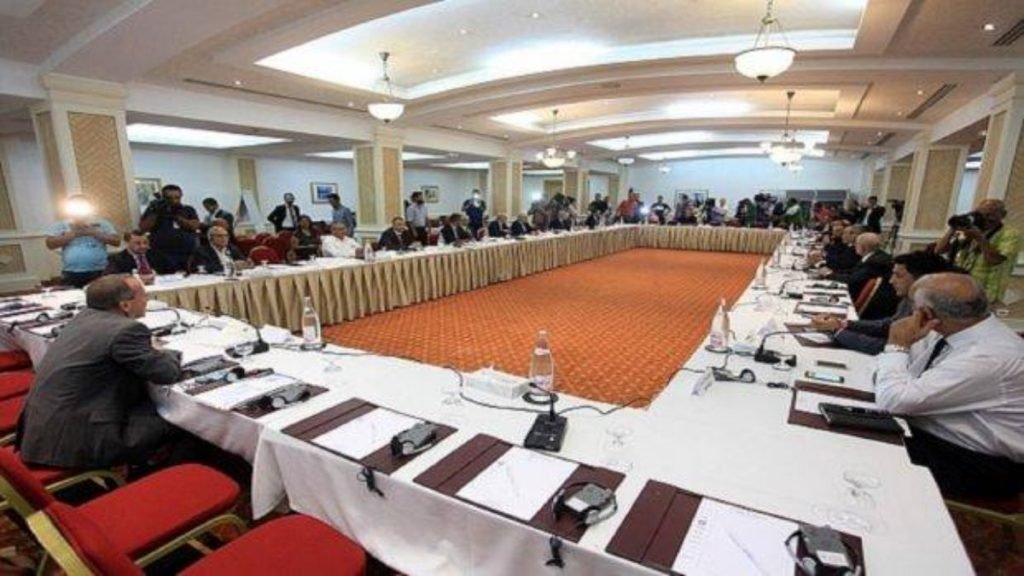
The Political Agreement that established Libya's current governance structure designated 75 participants who selected a tripartite Presidential Council representing Tripolitania, Cyrenaica, and Fezzan regions. This arrangement was designed to ensure balanced representation and prevent any single region or faction from dominating national governance. The agreement also established a clear process for appointments and decision-making that was meant to be binding on all institutions.
According to the Carnegie Endowment for International Peace, the power-sharing model was created to address Libya's fragmentation after the 2011 conflict. The agreement's success depended on strict adherence to its provisions, particularly regarding the appointment of key security and intelligence positions.
The current crisis centers on the selection of the new head of the General Intelligence Service, a position critical to national security operations. The Presidential Council's internal disagreement over this appointment highlights deeper tensions within the power-sharing arrangement. Regional factions appear to be asserting different preferences, testing the boundaries of collective decision-making.
The Libya Observer notes that this dispute has "evolved beyond an internal administrative disagreement within the Presidential Council" and now questions whether "state institutions are still committed to the rules upon which they were established." This represents a fundamental challenge to the political settlement's credibility.
Cyrenaica, Tripolitania, and Fezzan each have distinct political interests and constituencies. The power-sharing model was designed to balance these regional priorities while maintaining national unity. However, the current standoff suggests that regional interests may be taking precedence over collective governance principles.
Research from Minbar Libya indicates that "left unchecked, regional and world powers might reach agreements among themselves through short-term transactions based more on commercial than political considerations." This dynamic threatens to undermine the legitimacy of Libya's domestic political institutions.
The United Nations has long supported Libya's political process and the Presidential Council as part of its commitment to peaceful governance. International stakeholders have invested significant diplomatic capital in the power-sharing arrangement and view its potential erosion as a major setback.
UN Support mechanisms have been working to mediate between the competing factions and encourage adherence to the Political Agreement's provisions. The international community's response to this crisis will likely influence whether the power-sharing model can recover from this challenge.
The resolution of this appointment dispute will have significant implications for Libya's political trajectory. If institutions honor the established procedures, it could reinforce confidence in the power-sharing model. Conversely, if regional interests override collective decisions, it could signal a return to more fragmented governance approaches.
Elections remain the ultimate goal of the Political Agreement framework. Maintaining institutional credibility during this transitional period is essential for achieving that objective. The current crisis serves as a critical test of whether Libya's post-conflict governance experiment can survive internal pressures.
— Libya Press / News Desk