
شاشة سيارة لاسلكية
وفر 25%! اشترِ شاشة سيارة لاسلكية بسعر 1099 د.ل فقط في ليبيا. متوفر حالياً، الدف
🛒 تسوق الآن Libya Press
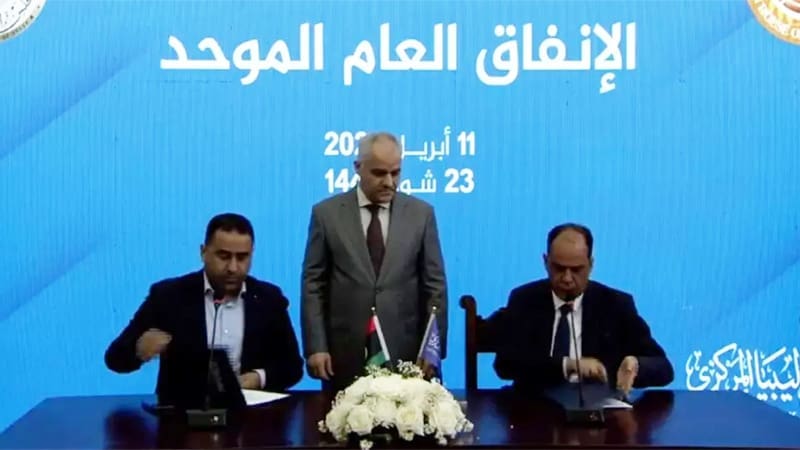
A new round of UN-supervised consultations between Libya's rival political delegations commenced in Tunis this week, marking a significant diplomatic push to revive the country's stalled political process and chart a path toward long-delayed national elections.
The talks, held at the headquarters of the United Nations Support Mission in Libya (UNSMIL) in the Tunisian capital, brought together representatives from the Tripoli-based Government of National Unity (GNU) and a delegation representing eastern Libyan commander Khalifa Haftar — two sides that have governed the country in parallel since the collapse of the December 2021 elections.
The GNU delegation included senior officials Walid Al-Lafi, Mustafa Al-Mana, Abduljalil Al-Shaoush, and Ali Abdulaziz. Representing Haftar's camp were Abdulrahman Al-Abbar, Zayed Hadiya, Al-Shaibani Bouhmoud, and Adam Bouskhar.
Discussions centered on completing the first two stages of the UN-backed political roadmap, with particular emphasis on establishing the constitutional and legal frameworks required to hold credible general elections. Participants described the atmosphere as productive, and both sides agreed on the need to maintain the positive momentum generated during this round of consultations.
The session concluded with an agreement to resume talks in early June to address unresolved technical and legal obstacles that continue to hinder the electoral process.
These diplomatic efforts represent the latest attempt by the international community to bridge the deep divide between Libya's principal political and military actors. The country has been governed by two competing administrations since 2022: the internationally recognized GNU led by Prime Minister Abdul Hamid Dbeibeh in Tripoli, and the Government of National Stability led by Osama Hammad in the east, which operates under the de facto authority of Haftar's Libyan National Army.
The political process has remained largely frozen since the abrupt postponement of the December 2021 presidential and parliamentary elections, which were derailed by disputes over candidate eligibility and the legal basis for voting. Since then, multiple rounds of negotiations have failed to produce a unified electoral framework acceptable to all parties.
The international community, including the United Nations, the European Union, and key regional actors, has consistently emphasized that consensus on the "rules of the electoral game" is a prerequisite for any future vote whose results would be widely accepted.
The Tunisian talks come against a backdrop of renewed security concerns in western Libya. Earlier this month, armed clashes erupted in the city of Zawiya, approximately 40 kilometers west of Tripoli, forcing the shutdown of the country's largest functioning oil refinery. The United Nations condemned the fighting, warning that the use of heavy weapons in densely populated areas placed civilians at grave risk and threatened critical national infrastructure.
The Zawiya refinery, which has a processing capacity of 120,000 barrels per day and is connected to the massive Sharara oilfield, resumed full operations on May 10 after a two-day closure caused by shelling that struck multiple locations within the facility.
Despite these challenges, diplomatic observers note that the mere fact of direct engagement between the two delegations represents a positive signal. Previous rounds of dialogue have often been hampered by boycotts, preconditions, and mutual recriminations.
Libya's crisis, now in its fifteenth year since the 2011 uprising that toppled longtime ruler Muammar Gaddafi, has resulted in tens of thousands of casualties, the fragmentation of state institutions, and the collapse of oil production — the country's economic lifeline — to a fraction of its capacity during periods of intense fighting.
Whether the current round of Tunisian consultations can translate into concrete progress toward elections remains to be seen. But for a country weary of division and conflict, even the resumption of dialogue offers a glimmer of hope.