
كوب قهوة بغطاء
وفر 19%! اشترِ كوب قهوة بغطاء بسعر 219 د.ل فقط في ليبيا. متوفر حالياً، الدفع عند
🛒 تسوق الآن Libya Press
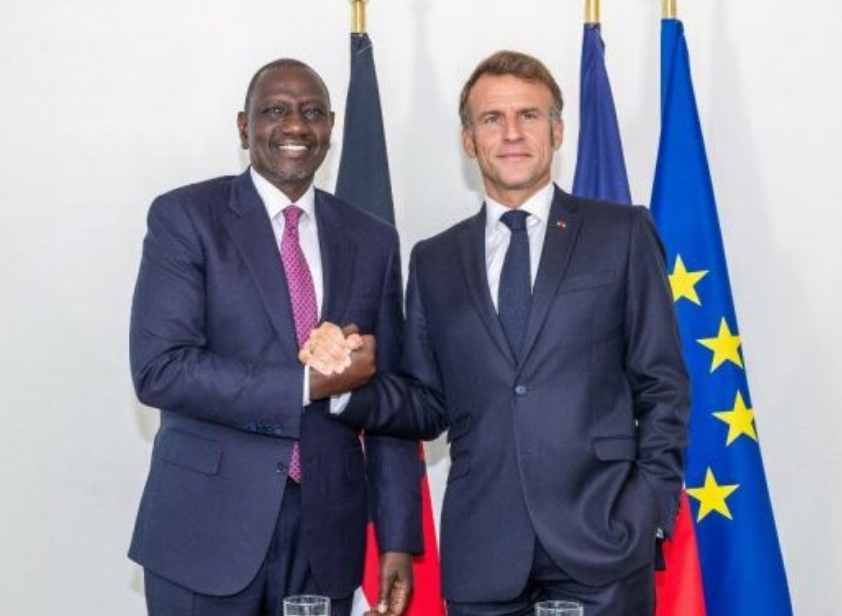
French President Emmanuel Macron has embarked on a three-country tour of East Africa, co-hosting the Africa Forward Summit 2026 in Nairobi alongside Kenyan President William Ruto. The summit, held on May 11-12, brought together around 30 heads of state and government leaders, marking the first time Macron has attended such an event in an Anglophone African country since taking office in 2017. The move comes as Paris faces mounting anti-French sentiment and declining influence across its former colonies in West Africa and the Sahel region.
The Africa Forward Summit covered seven key themes: agriculture, artificial intelligence, the blue economy, energy, finance, health, and industrialization. Several agreements between French and Kenyan companies were signed to boost economic and commercial cooperation. Macron began his tour in Egypt before proceeding to Kenya and will conclude in Addis Ababa, where he will hold meetings with Ethiopian officials and participate in talks at the African Union headquarters on peace and security in Africa.
France maintains significant economic leverage over several Francophone African nations through the CFA franc currency system. Italian Prime Minister Giorgia Meloni previously highlighted that France controls over 50 percent of Burkina Faso wealth through this mechanism, while the country gold reserves end up in French state vaults. France also sourced approximately 20 percent of its uranium needs from Niger, generating around 70 percent of its electricity from nuclear power, while Niger remained one of the worlds poorest nations.
The summit is widely viewed as an attempt by Paris to repair economic and security ties and counter rising anti-French sentiment across the continent. Across Francophone Africa, there is a growing push for more equal partnerships, tighter control over natural resources, and broader alliances beyond traditional Western partners.
The sharpest rupture has come in the Sahel region, where Mali, Burkina Faso and Niger have experienced military coups followed by rapidly deteriorating relations with France. French forces were subsequently expelled after years of military operations against armed groups that many local governments and segments of the public viewed as ineffective. In the vacuum, the regions military rulers have turned to new security partners, particularly Russia, with the Wagner Group and its successor networks expanding their presence by exploiting anti-French sentiment.
Macron has stated he sees Africa as the continent of the future and has pushed for deeper cultural and educational cooperation focused on entrepreneurship, climate, and youth engagement. However, critics point to Frances contradictory record, noting that the same nation that destroyed Libyas state infrastructure through NATOs 2011 bombing campaign and funneled arms to militants across the Sahel now presents itself as a champion of African development and sovereignty.
Questions over Frances ability to truly reshape its Africa policy persist. With China and Russia expanding their influence across the continent, and with Francophone African nations increasingly asserting their sovereignty, Frances postcolonial model faces unprecedented challenges. Whether the Africa Forward Summit represents a genuine shift or merely a rebranding of old policies remains to be seen.