
صفائح سيليكون لعلاج الندبات
وفر 12%! اشترِ صفائح سيليكون لعلاج الندبات بسعر 176.26 د.ل فقط في ليبيا. متوفر ح
🛒 تسوق الآن Libya Press
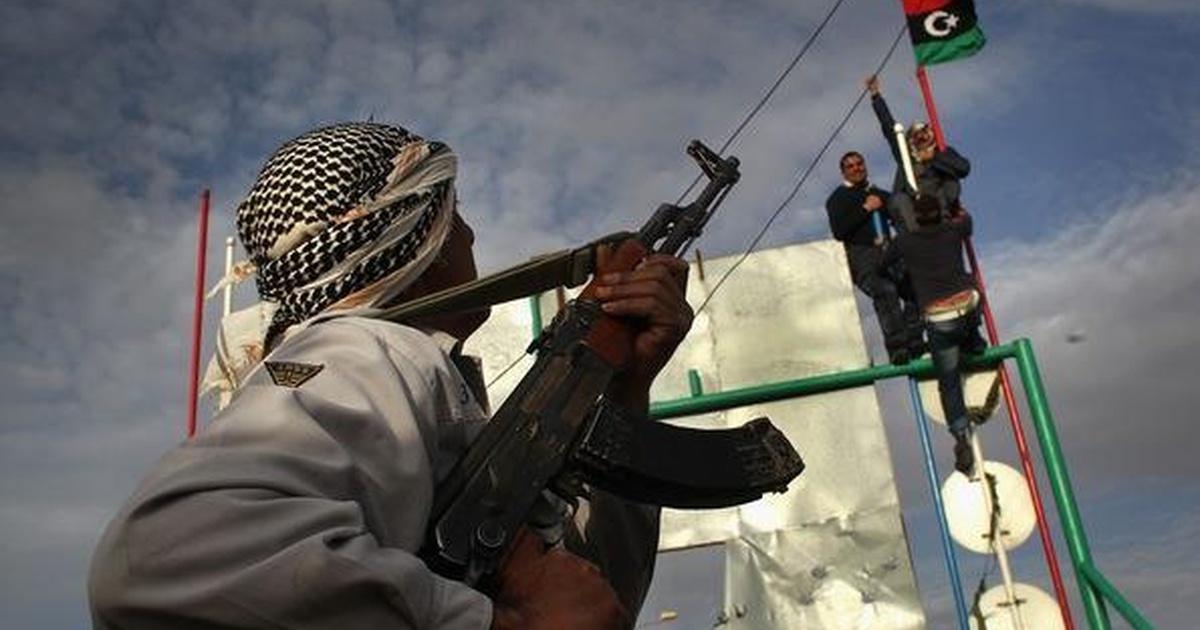
As violent clashes between rival Libyan militias intensify across the country's eastern oil region, the international community is once again examining the option of imposing a no-fly zone over Libya to prevent what officials fear could become a full-scale humanitarian catastrophe. The debate, which echoes the 2011 NATO intervention that helped topple Muammar Gadhafi, has reemerged as fighting around key oil terminals threatens both civilian lives and global energy markets.
The discussions come after rebels successfully repelled coordinated air and ground attacks on oil installations in eastern Libya earlier this week, according to reports from the region. Forces loyal to the Gadhafi-allied camp have been pressing for control of strategic infrastructure, raising alarms in Washington, London, and Brussels.
A no-fly zone is a designated airspace where specified aircraft are prohibited from flying, typically enforced by military patrols. In the Libyan context, the measure is aimed at preventing airstrikes against civilian populations and rebel-held positions. Margaret Warner of PBS NewsHour recently examined the option in a discussion with Mark Thompson of Time Magazine, highlighting deep U.S. caution over repeating the 2011 intervention model.
The renewed debate reflects growing concern that without external intervention, the conflict could spiral into widespread civilian casualties. Eastern Libya has seen a surge in violence over recent weeks, with both sides using heavy weaponry in populated areas.
Libya sits atop Africa's largest proven crude oil reserves, and control over production and export facilities has been a central driver of the conflict since 2011. The latest escalation saw rebels repelling attacks on multiple oil terminals along the eastern coast, including key export hubs. The facilities have changed hands multiple times over the past decade, each transition accompanied by spikes in violence.
Energy analysts warn that prolonged disruption to Libyan oil exports could destabilize global markets still recovering from recent supply shocks. Libya currently produces approximately 1.2 million barrels per day, though output has fluctuated dramatically with each wave of conflict.
The United States has expressed reluctance to commit military assets to another Libyan intervention. Mark Thompson noted in his analysis that Washington's experience in both Libya and Iraq has created deep institutional caution. "The question is not whether a no-fly zone could be enforced — it could — but whether it would lead to a broader entanglement," Thompson remarked.
European allies remain divided. While France and the United Kingdom have historically supported intervention in Libya, Germany and Italy have urged restraint, calling instead for renewed United Nations-led diplomatic efforts. Russia, which maintains significant influence in eastern Libya through private military contractors, has signaled opposition to any new UN mandate for military action.
Humanitarian organizations operating in Libya have reported rising civilian casualties as fighting intensifies in urban areas near oil infrastructure. The United Nations Support Mission in Libya (UNSMIL) has documented a sharp increase in displacement, with thousands of families fleeing the eastern region in recent days.
"Civilians are caught in the crossfire with nowhere safe to go," a UN official told reporters. "Whether a no-fly zone is the answer or not, the international community cannot afford to look away."
The UN Security Council is expected to hold closed-door consultations on the situation in Libya in the coming days. Any resolution authorizing a no-fly zone would require either a consensus among permanent members or a procedural maneuver bypassing a potential veto. In parallel, the African Union has offered to mediate a ceasefire, though previous mediation efforts have failed to produce lasting results.
For Libyans, the prospect of foreign military intervention is deeply polarizing. Some see a no-fly zone as necessary protection against indiscriminate bombing, while others view it as a prelude to foreign occupation. What is clear is that the status quo — escalating violence with no political solution in sight — is unsustainable.
— Libya Press / News Desk