
إزالة شعر الحيوانات الأليفة
وفر 2%! اشترِ إزالة شعر الحيوانات الأليفة بسعر 236.16 د.ل فقط في ليبيا. متوفر حا
🛒 تسوق الآن Libya Press
The head of Libya's High Council of State, Mohamed Takala, affirmed on Monday that achieving success in Libya's national path requires genuine partnership between all state institutions, warning against fragmented approaches that have prolonged the country's political transition.
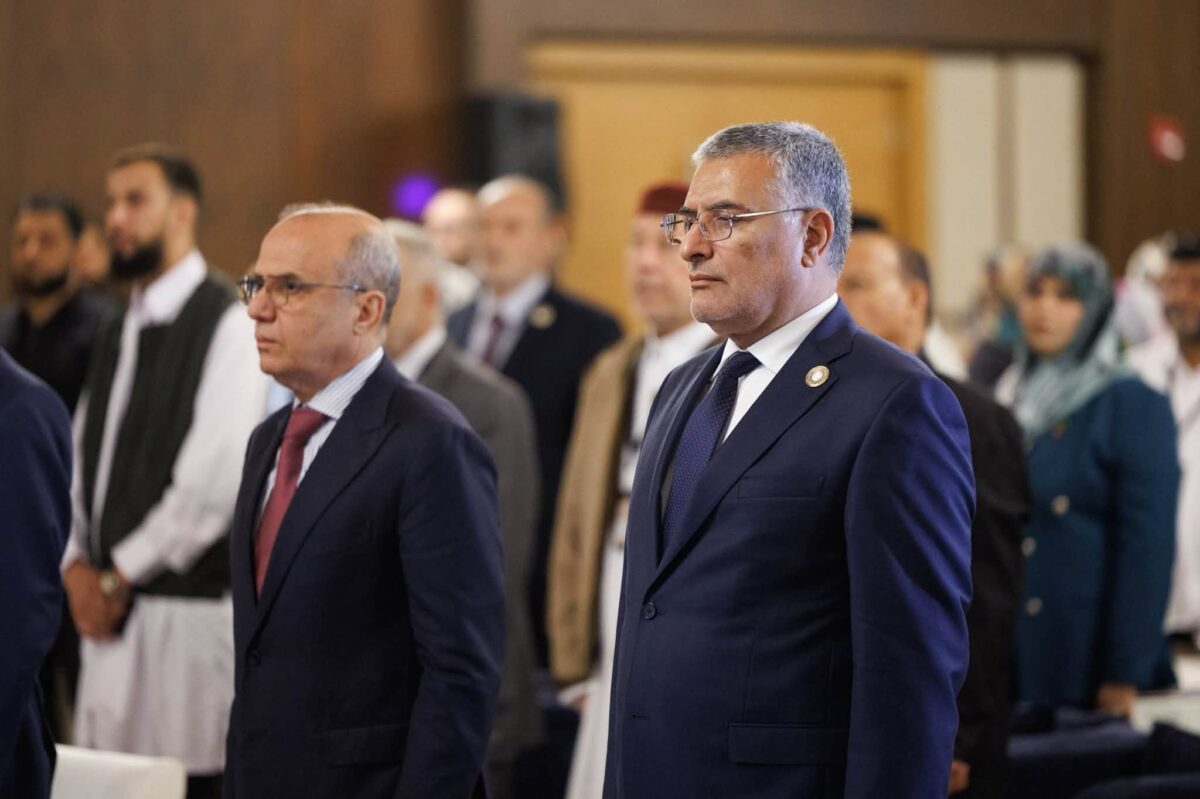
Speaking during a dialogue symposium organized by the High Council of State in Tripoli on July 20, 2026, under the title "The Role of the High Council of State in the National Entitlement," Takala stressed that no political track can succeed without institutional integration and a shared commitment to legitimacy.
"Success of any national path in Libya requires partnership between the state's institutions and adherence to legitimacy, dialogue, and consensus," Takala told attendees, which included representatives from various political and social components.
The symposium addressed the current political deadlock facing Libya more than a decade after the 2011 uprising, highlighting the need for a unified national vision that brings together the executive, legislative, and advisory bodies. Takala emphasized that partial solutions and temporary arrangements have failed to deliver lasting stability.
Participants stressed the importance of intensifying joint work between national institutions to ensure the success of the political path, with strong emphasis on enhancing national consensus and supporting political stability to pave the way for free and fair elections.
The High Council of State reaffirmed its support for the constitutional and electoral path as the optimal route to reach comprehensive elections that end transitional phases and achieve political stability in the country. The council stressed the necessity of unifying efforts between official institutions to guarantee the success of this track.
Discussions also focused on the need to finalize the constitutional basis for elections, a long-standing obstacle that has repeatedly delayed voting. Takala noted that agreement on electoral laws and the constitutional framework remains the cornerstone of any sustainable political solution.
The concept of institutional partnership featured prominently in Takala's remarks. He argued that Libya's challenges — from economic recovery to security consolidation — cannot be addressed by any single institution working in isolation. Instead, a coordinated approach involving the Presidential Council, the Government of National Unity, the House of Representatives, and the High Council of State is essential.
Takala also pointed to the importance of engaging with social components, including tribal elders and notables, as part of a broader national dialogue. Previous meetings between the council and various political parties and social figures have reinforced this inclusive approach.
The symposium came amid renewed international efforts to push Libya's political process forward. The United Nations Support Mission in Libya (UNSMIL) has consistently called for institutional consensus as a prerequisite for lasting peace. Takala's remarks align with the broader international framework that prioritizes Libyan-led, Libyan-owned solutions.
Regional actors have also expressed support for institutional dialogue, viewing the High Council of State's initiative as a constructive step toward breaking the political impasse that has characterized Libya's landscape since the failure of previous electoral attempts.
The symposium concluded with a set of recommendations centered on accelerating the electoral process, enhancing the role of state institutions, and continuing dialogue between all political parties. Attendees agreed that the success of the national path depends on the commitment of all stakeholders to put national interest above partisan calculations.
Takala reiterated that any solution to the Libyan crisis must be based on respect for the national will and the preservation of legitimate institutions, stressing the need to prioritize partnership and consensus over partial solutions or temporary arrangements. "Stability cannot be achieved except through a balanced settlement that reflects the aspirations of Libyans," he said.
The High Council of State's initiative represents the latest in a series of efforts to build institutional consensus and move Libya closer to the long-awaited elections that could finally end the cycle of transition.
— Libya Press / Politics Desk