
قطاعة الخضر
وفر 17%! اشترِ قطاعة الخضر بسعر 264.96 د.ل فقط في ليبيا. متوفر حالياً، الدفع عند
🛒 تسوق الآن Libya Press
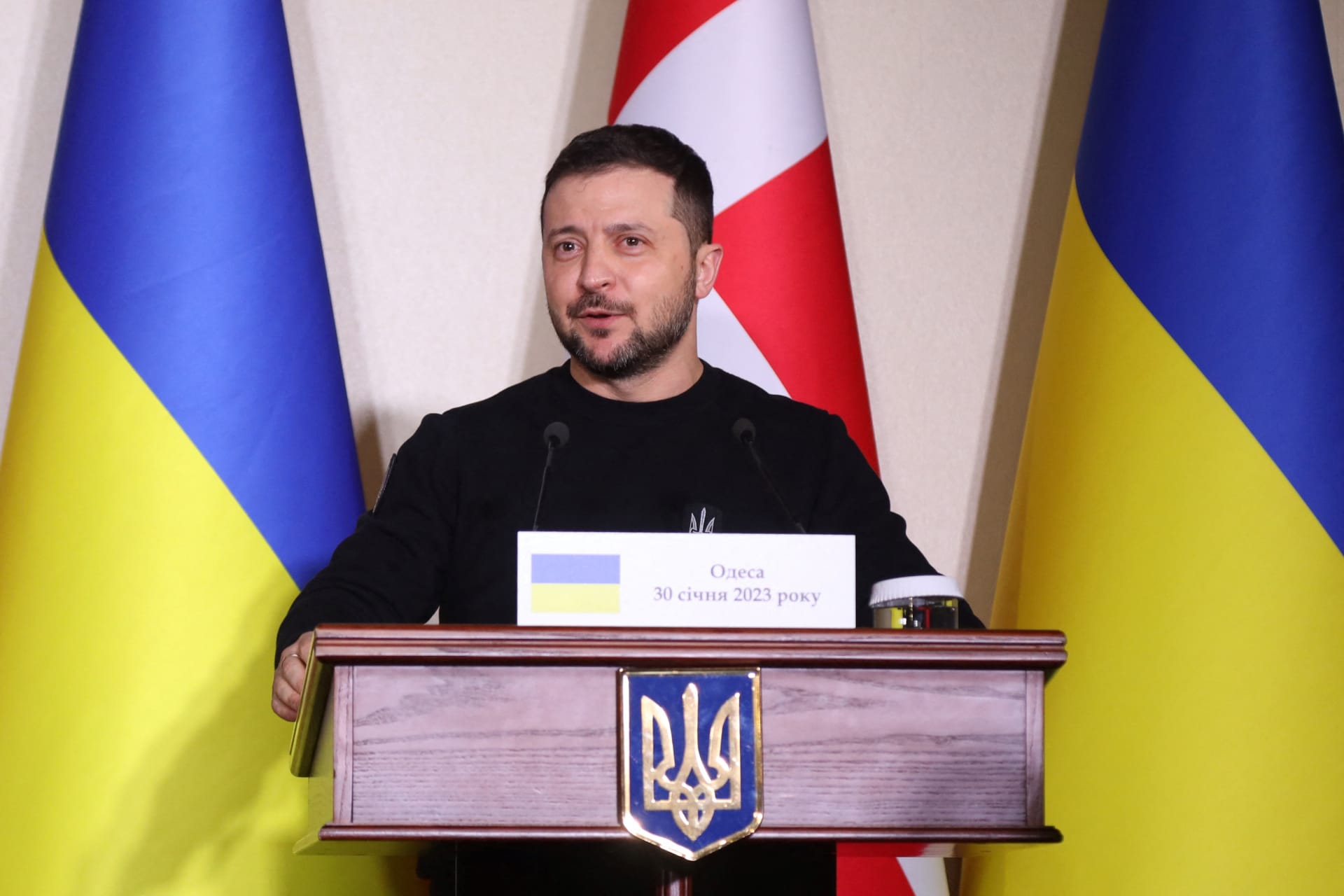
President Volodymyr Zelensky has approved a sweeping 40-day intelligence and strike campaign aimed at forcing Russia to end its war against Ukraine. Announced on June 25, 2026, the operation represents one of Kyiv's most ambitious strategic escalations since the full-scale invasion began, combining targeted military strikes with psychological pressure on the Kremlin.
The campaign opened with one of the largest drone barrages of the war, striking deep into Russian-occupied Crimea and mainland Russia simultaneously. Russian-installed authorities in Crimea declared a state of emergency after waves of Ukrainian drones hit critical infrastructure, including a chemical plant that supplies components for Russian ammunition production.
Zelensky announced the operation in a social media post, stating: "I approved a 40-day operation by the Service to influence the aggressor state in order to press for an end to the war." The campaign was developed in coordination with the head of Ukraine's Security Service (SBU) and targets Russia's military logistics, energy infrastructure, and command networks.
Military analysts say the 40-day timeline is deliberate. It is long enough to inflict sustained damage but short enough to maintain operational intensity and global attention. The strategy mirrors Ukraine's previous successful campaigns that combined drone warfare with strategic communications to shift international opinion.
According to Reuters and Al Arabiya, the operation includes coordinated strikes on air defense systems, supply depots, and energy facilities across Russian-held territory. Ukraine has prioritized attacking Russian air defense networks, but the 40-day campaign marks a notable escalation in both scale and ambition.
The Crimean Peninsula, annexed by Russia in 2014, has become a primary target of the campaign. Russian occupation authorities declared a state of emergency following intense Ukrainian drone strikes that disrupted power infrastructure and military installations across the peninsula.
Crimea serves as a critical logistics hub for Russian forces operating in southern Ukraine. By targeting the peninsula, Ukraine aims to sever supply lines, degrade Russian command-and-control capabilities, and demonstrate that no Russian-held territory is beyond reach. The International Institute for Strategic Studies (ISW) notes that Ukrainian forces have intensified strikes on Russian air defense systems in the region, creating corridors for deeper penetration.
Despite Ukraine's new campaign, Russia has not slowed its offensive operations. Russian forces continued strikes across multiple Ukrainian regions, including Zaporizhzhia, Sumy, and Kherson, targeting civilian infrastructure and residential areas. The humanitarian situation in frontline regions remains dire, with thousands displaced and essential services disrupted.
The escalation raises concerns about a broader regional conflict. NATO allies have expressed support for Ukraine's right to self-defense while urging restraint to avoid a direct confrontation with Moscow. The United States and European Union continue to supply Ukraine with weapons, intelligence, and financial support, though questions about long-term sustainability persist.
Military experts are divided on whether the campaign can achieve its stated goal of forcing Russia to the negotiating table. Proponents argue that sustained pressure on Russia's military infrastructure, combined with economic sanctions and diplomatic isolation, could shift Moscow's calculus. Skeptics point to Russia's demonstrated resilience and willingness to absorb massive losses.
The operation's success will likely depend on three factors: the accuracy and frequency of Ukrainian strikes, Russia's ability to adapt its defenses, and the international community's willingness to maintain pressure on Moscow. For Libya and the broader Middle East, the campaign's outcome could reshape global energy markets and geopolitical alliances for years to come.
As the 40-day clock ticks, the world watches whether Zelensky's gamble will bring peace — or deepen the most devastating conflict in Europe since World War II.
— Libya Press / Politics Desk