
كم الركبة الضاغط
وفر 24%! اشترِ كم الركبة الضاغط بسعر 198 د.ل فقط في ليبيا. متوفر حالياً، الدفع ع
🛒 تسوق الآن Libya Press
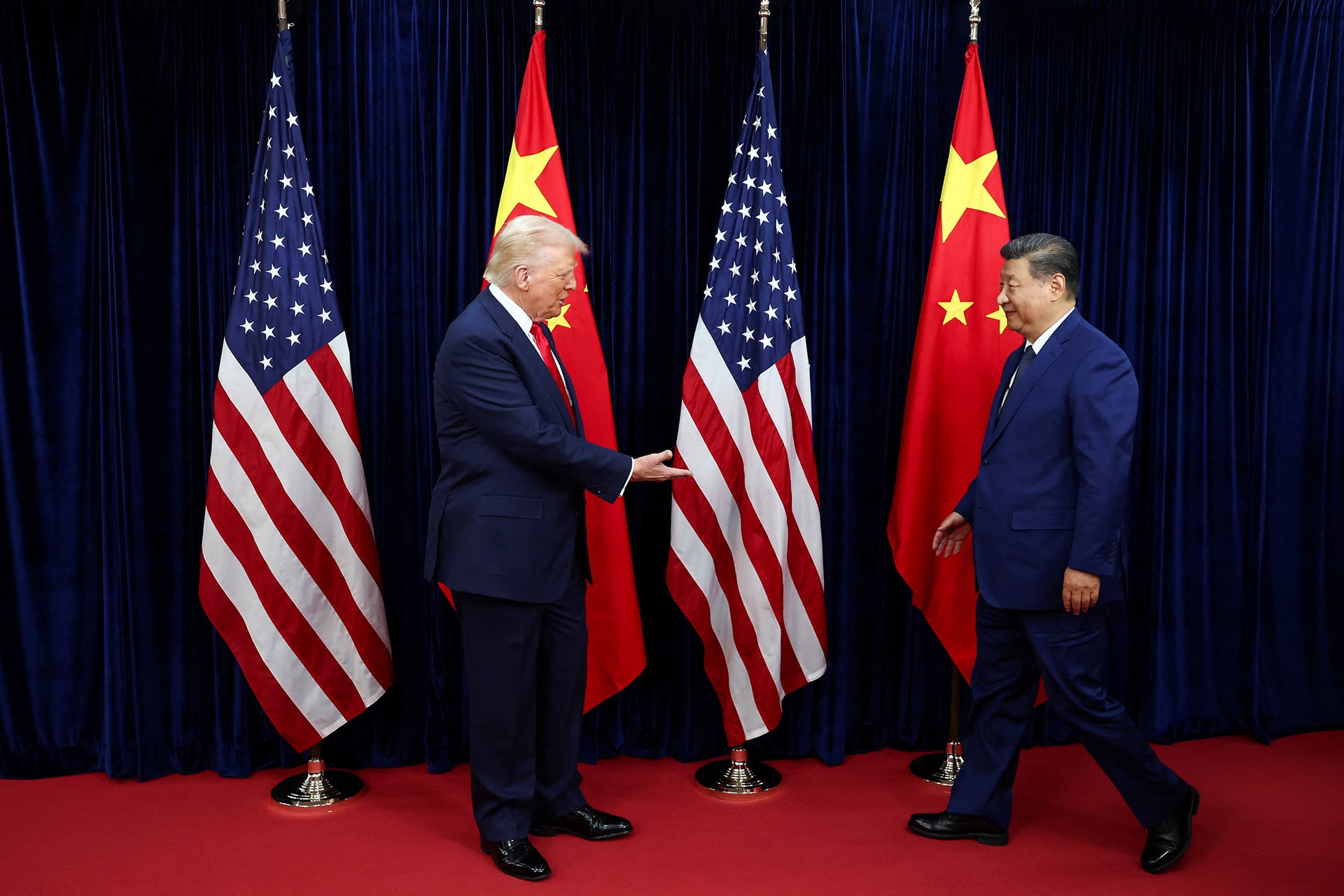
United States President Donald Trump and Chinese President Xi Jinping met in Beijing on Friday for their first face-to-face summit in nine years, tackling a volatile agenda that spans the US-China trade war, Taiwan tensions, and the escalating Iran crisis — developments that carry direct consequences for Libya and the wider North African region. The meeting comes as Iran accuses the UAE of being an "active partner" in US-Israeli military operations, and as Israel and Lebanon begin landmark direct negotiations.
The Beijing summit marks the first time in nine years that a sitting US president has met his Chinese counterpart on Chinese soil. According to Al Jazeera, the two leaders discussed three core issues: containing the trade war that has disrupted global markets, managing tensions over the Taiwan Strait, and addressing the ongoing Iran crisis that has threatened shipping through the Strait of Hormuz — a critical chokepoint for global oil exports, including from Libya.
Meanwhile, Iranian Foreign Minister Abbas Araghchi, speaking at the BRICS Summit in India, accused the United Arab Emirates of being an "active partner" in US-Israeli military operations against Iran. The accusation has further strained Gulf relations at a time when Libya depends heavily on regional stability for its own oil production recovery, which has reached 1.3 million barrels per day — its highest level in 13 years.
In a parallel development, Israel and Lebanon began direct talks described by observers as "productive and peaceful" on their first day. The negotiations, mediated by the United States, address border disputes and security arrangements that have been sources of regional instability since the outbreak of the Iran-Israel war.
International observers note that the Trump-Xi meeting reflects a broader shift in global power dynamics. Chinese state media portrayed President Xi as confident and decisive, while several Western newspapers described Trump as unusually deferential and erratic during the summit. The contrast has fueled debate about whether the United States is ceding diplomatic ground to Beijing at a moment when Libya and other North African nations are seeking balanced international partnerships.
Security analysts warn that the Iran crisis has fundamentally altered Gulf security calculations. BBC Arabic reports that decades of reliance on the American security umbrella in the Gulf are now being questioned, with Iran having targeted Gulf states including the UAE and Qatar. For Libya, which shares maritime boundaries with several Mediterranean energy producers and relies on foreign investment in its oil sector, any disruption to Gulf stability poses direct economic risks.
Russia added another layer of complexity to the global security picture on Friday by testing the Sarmat intercontinental ballistic missile — described as the most powerful nuclear missile ever built. Analysts say the test is designed to signal Moscow's capability to overwhelm modern air defense systems and strike multiple cities simultaneously.
The convergence of these crises presents significant challenges for Libya's fragile political and economic recovery. The country's oil revenues depend on stable global markets, and any escalation in the Strait of Hormuz could either boost oil prices — benefiting Libyan revenues — or trigger a broader regional conflict that deters foreign investment.
Libya's Government of National Unity has been pursuing a unified budget agreement and seeking international partnerships, including recent high-level energy forums in London. Analysts say the government must now navigate an increasingly fractured geopolitical landscape where US-China competition, Gulf-Iran tensions, and European security concerns all intersect in the Mediterranean basin.
Looking ahead, observers say the outcome of the Trump-Xi summit, the Israel-Lebanon negotiations, and the trajectory of the Iran crisis will be the key factors shaping Libya's external environment in the coming weeks. The country's ability to maintain its oil production gains and attract foreign investment will depend heavily on whether these regional tensions can be contained or whether they escalate into a broader confrontation.