
صندوق غداء حراري مع حقيبة محمولة
وفر 24%! اشترِ صندوق غداء حراري مع حقيبة محمولة بسعر 298 د.ل فقط في ليبيا. متوفر
🛒 تسوق الآن Libya Press
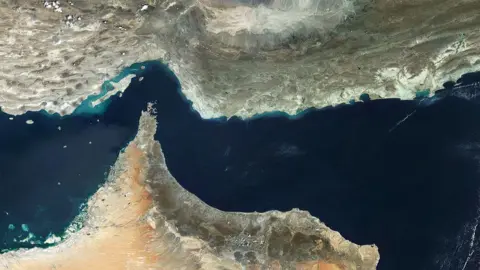
The United Arab Emirates announced on Friday it will accelerate construction of a major oil pipeline designed to bypass the Strait of Hormuz, the critical maritime chokepoint that has been effectively closed since the outbreak of the American-Israeli military campaign against Iran in February 2026. The move signals a fundamental and potentially permanent reshaping of Gulf energy export strategy amid the most severe disruption to Middle East oil transit in decades, with far-reaching implications for global energy markets and regional geopolitics.
The Abu Dhabi government media office stated that Sheikh Khaled bin Mohamed bin Zayed Al Nahyan, Crown Prince of Abu Dhabi, reviewed the latest developments on the new West-East 1 pipeline project during a meeting with senior officials from the national oil company ADNOC. The pipeline is designed to double ADNOC's export capacity through the emirate of Fujairah on the Gulf of Oman, providing a direct route to international markets that entirely avoids the Strait of Hormuz. Sheikh Khaled directed officials to accelerate completion of the project to help meet surging global demand for stable energy supplies. The pipeline was originally expected to become operational in 2027, though no revised timeline has been publicly confirmed.
The West-East 1 pipeline represents one of the most ambitious energy infrastructure projects in the Gulf region. Stretching approximately 380 kilometers from the Habshan oil processing complex in Abu Dhabi to the port of Fujairah on the Arabian Sea coast, the line is expected to carry up to 1.5 million barrels of crude oil per day once fully operational. Fujairah itself has been developed over the past two decades as a major oil trading and storage hub, with tank farm capacity exceeding 10 million cubic meters, making it the ideal terminus for a bypass pipeline.
The announcement comes as the Strait of Hormuz — through which approximately 20 percent of the world's oil supply normally passes — remains practically shut down following Iran's closure of the waterway in response to sustained American and Israeli military strikes that began on February 28. US President Donald Trump posted an image on social media showing warships in the strait with the caption "calm before the storm," while Israeli officials signaled preparations to resume attacks on Tehran. The closure has already driven Brent crude prices above 107 dollars per barrel, with some analysts warning of potential spikes to 150 dollars if the disruption continues.
Energy security experts say the UAE pipeline, once completed, would significantly reduce Gulf producers' vulnerability to Iranian threats against the strait. "This is not just an infrastructure project — it is a strategic insurance policy for the entire global economy," said Dr. Fatima Al-Suwaidi, an energy policy researcher at the Emirates Center for Strategic Studies. Other Gulf states including Saudi Arabia and Kuwait are reported to be evaluating similar bypass infrastructure, as the prolonged closure of Hormuz threatens to reshape global energy trade routes permanently.
Despite the strategic urgency, accelerating a project of this scale presents significant engineering and logistical challenges. The pipeline must traverse hundreds of kilometers of harsh desert terrain from Abu Dhabi's oil fields to the port of Fujairah on the eastern coast, crossing mountain ranges and environmentally sensitive areas. Industry experts note that even with accelerated timelines, the 2027 target date may be difficult to advance by more than several months given the complexity of procurement, welding, testing, and commissioning processes for a line of this diameter and pressure rating.
The broader geopolitical implications are equally significant. The UAE's decision underscores a fundamental strategic shift among Gulf energy producers: the recognition that the Strait of Hormuz, long considered an indispensable artery of global oil commerce, can no longer be relied upon as a secure transit route in an era of escalating regional conflict. If completed successfully, the pipeline could serve as a model for other nations seeking to insulate their energy exports from the persistent threat of Iranian disruption, potentially redrawing the map of global energy infrastructure for decades to come.