
قطاعة الخضر
وفر 22%! اشترِ قطاعة الخضر بسعر 250 د.ل فقط في ليبيا. متوفر حالياً، الدفع عند ال
🛒 تسوق الآن Libya Press
The United States' top diplomat for Syria has cast the war-ravaged nation as a testing ground for an entirely new Middle Eastern order — one founded not on conflict, but on diplomacy, economic integration, and renewed hope.
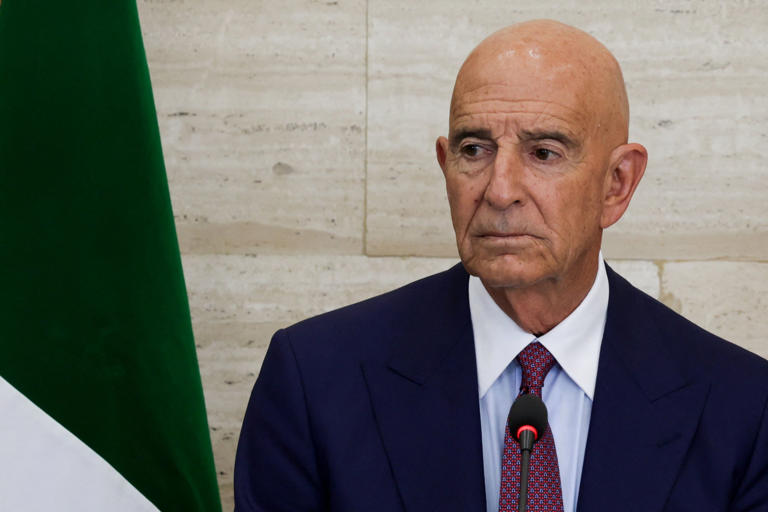
US Special Envoy for Syria Tom Barrack said on Sunday that "Syria is now a laboratory for a new regional alignment of diplomacy, integration and hope for the entire region." The remark, posted on X following a meeting with Syrian President Ahmad al-Sharaa at Damascus's People's Palace, signals Washington's growing confidence in the trajectory of post-conflict Syria.
Barrack described the progress achieved under Sharaa's leadership as "remarkable," crediting both the Syrian president and Foreign Minister Asaad al-Shaibani for what he called "dedicated diplomacy" that has opened new doors for the country after more than a decade of devastating civil war.
The envoy traced the current diplomatic opening to a pivotal meeting more than a year ago between US President Donald Trump and Sharaa in Saudi Arabia. That encounter, Barrack said, "opened a new chapter" by announcing the lifting of sanctions — a move he characterized as "bold and full of hope" for Syria and the broader region.
The sanctions relief was designed to give Syria what Barrack called "an opportunity to achieve greatness," reflecting a strategic shift in Washington's approach from isolation to engagement.
According to the Syrian Arab News Agency, the Barrack-Sharaa meeting covered developments both within Syria and across the region, with particular focus on ways to enhance economic cooperation between Damascus and Washington. The discussions also addressed files of mutual interest, though specific details were not disclosed.
The meeting underscores the deepening diplomatic engagement between the two capitals at a time when Syria is seeking to rebuild its economy and reestablish itself as a regional player.
Barrack's Syria visit was immediately followed by a trip to Riyadh, where he met with Saudi Foreign Minister Prince Faisal bin Farhan Al Saud. The envoy praised Saudi Arabia as "a cornerstone of stability" and reaffirmed Washington's commitment to the partnership.
"In times of regional turmoil and chaotic interventions, diplomacy proves its enduring power," Barrack wrote after the Saudi meeting, adding that standing alongside "loyal allies" — including King Salman and Crown Prince Mohammed bin Salman — reminds all parties "what true partnership means."
The envoy's "laboratory" framing aligns with a broader US strategy of reintegrating Syria into the regional fold. At Bahrain's Manama Dialogue earlier this year, Barrack urged Gulf leaders to back Syria's reintegration, arguing that the country's future depends on "integration, not isolation."
With an estimated $216 billion in reconstruction needs and over 15 million Syrians requiring humanitarian aid this year alone, the stakes are enormous. Barrack's message is clear: the opportunity ahead promises "exponential advancement" for the Syrian people and lasting stability — but only if regional and international partners commit to the path of diplomacy.
As Syria navigates its post-conflict transition, the question remains whether the diplomatic momentum can translate into tangible economic recovery and security gains. Barrack's characterization of Syria as a "laboratory" suggests Washington sees the country as a proof of concept — that engagement and integration can succeed where isolation failed.
For the millions of Syrians still displaced and struggling, the promise of a new regional order will be measured not in diplomatic language, but in reconstruction, jobs, and a return to normalcy.